
Your wash basin gets used more than almost anything in the house. Every morning, half-awake, five or six times a day. So it’s odd how little thought most people give it until it’s already on the wall and something about it starts to bug them. The height that makes you hunch. The glass bowl you’re forever wiping. The faint drain smell nobody can explain.
Most basin advice online won’t help you dodge any of that. It’s a catalogue with the prices taken out. A basin gets called “elegant” and “space-saving,” and the goal is to get you to the buy button, not to warn you off the thing that’ll annoy you for the next ten years.
This guide does the opposite. Every type, every material, the sizes and heights that matter, and the cheap little fittings that decide whether you love the basin or quietly resent it. Where I’ve got an opinion, you’ll get it plainly. Let’s go.
Answer these five things first
Sort these out before you fall for a shape in a showroom. They’ll cut the options down fast.
Space comes first. Measure the wall, and measure the door swing, before you look at a single product. A basin that fits the wall but sits in the door’s path is a daily elbow.
Then, who’s using it. A family bathroom with kids and grandparents is a different problem from a guest loo used twice a month. Traffic decides how tough and how forgiving the basin needs to be.
Next, your plumbing. Existing water and waste points, or a full rip-out where you can put them anywhere? Moving pipework is the expensive part. The basin itself is often the cheap bit.
Then the question people skip and later regret: how much cleaning are you actually willing to do? Not in theory. In real life, on a Tuesday, when you’re tired.
And last, the room’s style. The basin should belong in the bathroom, not shout over it. A rough stone bowl in a crisp modern space, or a slick floating basin in an old cottage, can land wrong.
Keep those five answers in your head. Everything below runs through that filter.
The types of wash basins, ranked by how often I’d actually recommend them
There are more shapes than most people expect, and the differences are practical, not decorative. Here’s the honest read on each.
Wall-hung (wall-mounted)
If I had to point most people to one type, it’s this. The basin bolts straight to the wall and floats, with the pipes running behind it.
Clearing the floor is the biggest single thing that makes a small bathroom feel bigger, and mopping under a floating basin beats mopping around a column every time. Best of all, you set the height. You’re not stuck with whatever the factory decided.
The one non-negotiable: the wall has to carry it. Stud or hollow wall means proper bracing or a concealed support frame behind the plaster, and this is not the place to save an hour. A heavy basin sagging off a weak wall takes the tiles with it when it goes. The trap also sits on show underneath unless you box it in, so budget for a decent one rather than a bare plastic bend.
Semi-pedestal (half pedestal)
Quietly the cleverest option on this list, and hardly anyone asks for it by name. The basin hangs on the wall like a wall-hung, but a short shroud drops down behind it to hide the trap and pipes without reaching the floor.
You get the floating look, the easy floor cleaning, and tidy hidden plumbing, all at once. For a small or mid-size bathroom, it’s hard to beat. Same rule as wall-hung applies, though: the wall does the lifting, so brace it properly.
Pedestal
The old faithful. A column runs from bowl to floor, hiding the pipes and taking some of the weight.
It’s a safe pick for a traditional bathroom and it needs no strong wall or cabinet. But let’s not oversell it. You get zero storage, it plants a fat column in the middle of your floor, and the height is fixed by the manufacturer, so a tall adult and a small child both have to live with the same compromise. Fine. Just a bit dated, and a bit wasteful of space.
Countertop / vessel (table-top)
The influencer basin. The bowl sits on top of the counter like a mixing bowl on a table, and yes, it photographs beautifully. You also get a full vanity underneath for storage and the widest choice of materials anywhere.
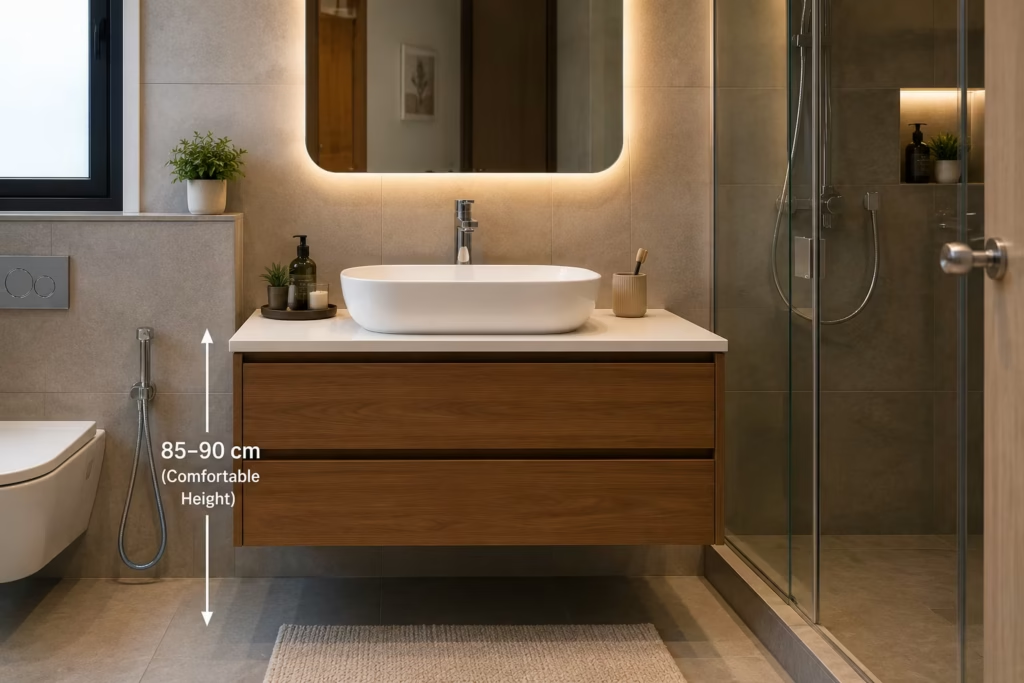
Now the warning, because this is the one people get catastrophically wrong. The bowl adds its whole height on top of the counter. Drop a tall vessel bowl onto a standard-height vanity and the rim ends up somewhere near your ribs. Everyone in the house then splashes water down their forearms twice a day, and there’s no fixing it short of ripping the cabinet out. A vessel basin only works if the cabinet under it was built lower on purpose. More on that in the sizing section, because it catches out more people than everything else combined.
Under-counter (undermount)
The grown-up version of the vessel idea. The bowl fits underneath the counter, so the worktop itself, usually stone or solid surface, forms the rim.
It’s the cleanest look going, and wiping the counter straight into the bowl with no lip in the way feels great every single day. The cost is that it needs a proper water-tolerant worktop and careful sealing at the joint, because that seam is exactly where water works its way in over the years. This is a fitted-kitchen level of job, not a swap-it-on-a-Sunday one.
Semi-recessed
The fix for shallow spaces. Half the bowl sits inside the counter, the front half pokes out over the edge. So you get a usable basin without a deep cabinet eating into the room. Powder rooms and narrow en-suites love it. The catch is obvious once you see it: the front sticks out, so don’t put it where you’ll walk into it.
Corner basin
Does one job and does it well. Tucks into a corner where a normal basin won’t go. In a cramped cloakroom or an under-stairs loo, a corner basin is the difference between having a sink and not. It’s small by design, so treat it as a solution, not a centrepiece.
Console and integrated basins
A console basin perches on a slim frame, often two front legs, for that open, slightly vintage, boutique-hotel feel. An integrated basin is moulded as one continuous piece with its worktop, no seam at all. The integrated one is the easiest thing in the world to keep clean because there’s no joint for gunk to hide in. The whole surface wipes down as one.
Here’s the shortlist side by side:
| Basin type | Hides plumbing? | Floor space | Storage below | Best for |
|---|---|---|---|---|
| Wall-hung | Partly (trap shows) | Frees it | No | Small bathrooms, custom height |
| Semi-pedestal | Yes | Frees it | No | Small rooms wanting a clean look |
| Pedestal | Yes | Takes it | No | Traditional rooms, no strong wall |
| Countertop / vessel | No | Vanity footprint | Yes | Style-led spaces with a lower cabinet |
| Under-counter | Via cabinet | Vanity footprint | Yes | Seamless, higher-budget fit-outs |
| Semi-recessed | Partly | Frees some | Some | Shallow counters, narrow rooms |
| Corner | Via base/wall | Minimal | No | Tiny cloakrooms |
| Console / integrated | Partly | Some | Some | Period looks, easy cleaning |

Materials: what to buy, and what to walk past
The material decides the look, the lifespan, and how much of your weekend you’ll hand over to cleaning it. This is where I’ll be blunt.
Ceramic (vitreous china): just buy this for the main bathroom
Most basins are glazed ceramic, and for the room that takes real daily punishment, stop overthinking it and get ceramic. It shrugs off stains and hard water, wipes clean in seconds, laughs at bathroom humidity, comes in every shape going, and it’s the friendliest on the wallet. It’ll chip if you drop a heavy bottle corner-on, and a chip is hard to hide, but that’s about the only knock. For a family bathroom, ceramic is the right answer, and there’s nothing boring about being right.
Glass: gorgeous, and a bit of a diva
A tempered glass bowl catches light like nothing else and looks stunning in the showroom. Then you get it home and it shows every fingerprint, every water spot, every fleck of toothpaste. In a hard-water area, it’ll spot the same day you clean it. My take: glass belongs in a guest cloakroom that gets light use, where it can look lovely without wrecking your mornings. Put it in a busy family bathroom and you’ll grow to hate it.
Natural stone (marble, granite, onyx): beautiful, high-maintenance, know what you’re signing up for
A basin carved from stone is heavy, solid and full of character, and no two are alike. It’s also porous, which means sealing and re-sealing, and it’s fussy about what touches it. Acidic stuff, some cleaners, certain cosmetics, even a few soaps, can etch or mark the surface. If you want one, go in with your eyes open and keep it sealed. Our guide on how to remove stains from marble covers dealing with marks without dulling the finish. Stunning basin. Not a fit-and-forget one.
Solid surface, resin and quartz: the smart-money modern pick
These engineered materials get moulded into sleek, seamless shapes, including the matte finishes everyone’s after right now. They feel warmer than ceramic, take sharp contemporary designs, hide the odd scuff better than glass or polished stone, and ask far less of you than natural stone. Those one-piece integrated basin-and-counter units are usually this stuff. Quality varies a lot between products, so judge the specific one in front of you, not the category.
Stainless steel: the workhorse
Hospitals and restaurants use it because it’s near indestructible and easy to keep hygienic. At home, it suits an industrial or utility look and takes a beating happily. It scratches, it water-spots, and it reads as functional rather than warm, so it’s as much a style call as a practical one.
Acrylic: the budget pick that behaves like one
Light, cheap, and moulds into unusual shapes. Grand for a low-use spot or a tight budget. Just know it scratches over time and the surface goes dull faster than ceramic under daily use. You get what you pay for, and that’s fine as long as you knew going in.
At a glance:
| Material | Durability | Maintenance | Look | Best suited to |
|---|---|---|---|---|
| Ceramic (vitreous china) | High | Low | Clean, classic | Almost any bathroom |
| Solid surface / resin / quartz | High | Low–moderate | Sleek, modern, matte | Contemporary, seamless designs |
| Natural stone | High | High | Luxurious, unique | Statement basins, careful owners |
| Glass | Moderate | High | Striking, light-catching | Low-use guest and powder rooms |
| Stainless steel | Very high | Moderate | Industrial, utilitarian | Utility spaces, heavy use |
| Acrylic | Low–moderate | Moderate | Basic, versatile shapes | Budget builds, light use |
Height and size: the boring numbers that decide your comfort
Nobody gets excited about this part, which is precisely why it goes wrong. Rush it and you’ll feel it every morning.
Height
For most adults, you want the rim sitting 800 to 850 mm off the finished floor. That’s roughly 32 to 34 inches, and it lands near an average adult’s elbow, which is what keeps you from hunching and keeps water off the floor. Build around that number.
The basin type changes how you hit it:
Wall-hung and semi-pedestal let you choose, so aim for that 800 to 850 mm band and tune it to the household. Little kids in the house? Drop toward 780. A family of tall adults? Nudge up to 860. Pedestal basins land in the same band but you’re stuck with the maker’s height; take it or leave it.
Vessel basins are the trap again. Because the bowl sits on top, you set the counter lower so the final rim still comes out around 850 to 900 mm. Get this wrong and you’re back to splashing your sleeves. I’ll keep saying it because people keep doing it.
For a wheelchair user or anyone with limited mobility, go wall-hung, keep the rim around 800 mm or a touch under, and leave open clear space underneath so the basin can be used seated. It’s the single best reason to pick wall-hung.
Width and depth
Basins come in rough size brackets. Match the bracket to the room, not to your ambitions.
| Size band | Width | Suits |
|---|---|---|
| Compact | Under ~400 mm | Cloakrooms, powder rooms, tight corners |
| Standard | ~400–600 mm | Most family and main bathrooms |
| Large | ~600–800 mm | Roomier bathrooms, comfier daily use |
| Double | Beyond ~1200 mm (paired) | Shared master baths, twin basins |
Depth matters as much as width. A deeper bowl splashes less and copes with filling a bucket or a proper hand-wash. A shallow designer bowl looks elegant and throws water straight back at you and the mirror. And whatever you pick, the vanity or counter wants to be around 500 to 550 mm deep so the basin sits right with room to reach the taps.
The cheap fittings that make or break the whole thing
Nobody photographs these. Nobody swoons over them in the showroom. And they’re exactly what you’ll notice every day if they’re wrong. Slow down here.
Tap holes
Count the pre-drilled holes, because they decide which taps will fit. One hole takes a single mixer tap, the common tidy setup. No hole means the tap comes out of the wall, which means the wall plumbing has to be roughed in before you tile, so that’s an early-in-the-job decision, not a late one. Three holes are for a traditional separate hot, cold and spout set.
The rule is dead simple: the basin and the tap have to agree. A single-hole basin can’t take a three-piece set. A no-hole basin needs its wall pipework sorted in advance. Buying the two separately without checking is a classic way to earn yourself a return and a week’s delay.
The waste, and the overflow it has to match
The waste is the drain fitting in the bottom of the bowl. A pop-up waste opens and shuts on a lever so you can fill the basin. A slotted or free-flow waste has no plug and just drains.
Here’s the bit that trips people: if your basin has a moulded overflow slot, and most ceramic ones do, you need a slotted waste so that overflow can actually drain. Pair a no-overflow waste with an overflow basin and the water has nowhere to go. Match them or regret it.
The trap, which is not optional
Under the waste sits the trap, a bent section that holds a small plug of water. That water is the only thing between you and drain gas rising into the room. Skip it or let it dry out and your bathroom will smell, guaranteed, sooner or later. On a wall-hung or vessel basin, the trap is on view, so spend the little extra on a chrome bottle trap instead of a bare plastic one. It’s on display. The cheap one looks cheap.
Matching the basin to your actual bathroom
Now put it together with the room in front of you.
Small bathroom or en-suite: go wall-hung, semi-pedestal, semi-recessed or corner, and keep the bowl compact. The floor you can see is the floor that feels bigger.
Busy family bathroom: ceramic, a sensible standard width, a deep enough bowl to kill the splashing, height dialled to the household. This is a fit-and-forget zone. Don’t put your high-maintenance showpiece here.
Powder room or guest loo: this is your playground. Low use means a glass or stone vessel bowl can look fabulous without punishing you at the sink every day. Make a small statement and enjoy it.
Shared master bathroom: if the wall allows it, twin basins. Two people getting ready at once is a small luxury that earns its keep every single morning.
And treat the basin as part of the room, not a lone object. It should sit happily with your floor, your wall tiles and the rest of the suite. While you’re planning, our guide to the best tiles for bathroom floors sorts the surface underneath, and if you’re weighing a wall-hung toilet to match a floating basin, our wall-hung vs floor toilet comparison runs the same trade-offs.
The mistakes that come up again and again
Skip these, and you’re ahead of most:
Dropping a tall vessel bowl on a standard-height counter. The rim ends up too high, and then it’s splash city forever. Lower the cabinet or pick a shorter bowl.
Treating the trap as a place to save money, or leaving a bare plastic one on a basin where it shows. Wrong on smell, wrong on looks.
Buying basin and tap separately without checking the holes. A no-hole basin with a deck tap, or a single-hole basin with a three-piece set, means the whole thing goes back.
Choosing a basin that’s too big for the room. It looks generous on screen and crowds you in the flesh, especially near a door. Measure, then measure again.
Forgetting the overflow-and-waste match. Overflow basin, slotted waste. Simple, and constantly ignored.
Hanging a heavy basin on a weak wall. Brace it, or watch it pull away and bring the tiles down with it.
Bottom line
The best wash basin isn’t the prettiest one in the showroom. It’s the one that fits your space, your plumbing and the way your house actually runs.
Start with the boring questions: how much room, who uses it, what pipework you’ve got, how much cleaning you’ll really do. Let those steer you to the type. For most homes, the sane answer is ceramic, in a wall-hung or semi-pedestal, set at 800 to 850 mm, with a proper trap and matched tap holes and waste. Save the glass and stone showstoppers for the guest loo where they can look great and behave badly without wrecking your routine.
Whatever you land on, get the unglamorous stuff right. The height, the trap, the waste, the tap holes. That’s the part you live with at seven in the morning, and it’s the part the catalogue never mentions.
FAQ
What is the standard height for a wash basin? Aim for the rim at 800 to 850 mm (about 32 to 34 inches) off the floor. Wall-hung and semi-pedestal basins let you fine-tune it to your household; pedestals are more or less fixed by the maker. For a vessel basin, set the counter lower so the finished rim still lands around 850 to 900 mm.
Which wash basin material is easiest to look after? Ceramic. It resists stains and hard water and wipes clean fast. Solid surface and resin are close behind and give you that modern seamless look. Glass and natural stone are the needy end: lovely to look at, but they mark easily and want regular attention.
What type of wash basin is best for a small bathroom? Wall-hung, semi-pedestal, semi-recessed or corner. Clearing the floor is the biggest thing that makes a small bathroom feel bigger, and a compact bowl keeps room to move. For a really tight cloakroom, a corner basin is usually the answer.
Do I actually need a bottle trap under my basin? You need a trap of some sort, full stop. The water it holds seals off drain gas and stops the smell. A bottle trap is just the neat, compact version, and on a wall-hung or vessel basin where it’s visible, a chrome one looks far better than bare plastic.
Why does my wash basin smell? Nearly always the trap. Either there isn’t a working one, the water seal has dried out from not being used, or a connection isn’t sealed and gas is sneaking through. Running the tap to refill the seal often clears it. If it lingers, get the trap and joints checked.
Can I put a vessel basin on any counter? No, and this is the most common basin mistake going. A vessel bowl sits on top, so it adds its height to the counter’s. On a normal-height cabinet, the rim ends up too high and you splash. The cabinet has to be built lower to suit the bowl.
How wide should a wash basin be? Depends on the room. Under about 400 mm for cloakrooms and tight corners, 400 to 600 mm for most family bathrooms, 600 to 800 mm where you’ve got the space to spare. Don’t oversize it. A basin that looks generous online will crowd a real bathroom.
Pedestal or semi-pedestal, what’s the difference? A full pedestal runs to the floor and carries some of the weight while hiding the pipes. A semi-pedestal is a short shroud that hangs off a wall-mounted basin to hide the trap without touching the floor. The semi-pedestal gives you the floating look and easy floor cleaning, but the wall has to take the load.
