
There’s a spilled glass of red wine on your marble, and your first instinct is to grab whatever’s under the sink and scrub. Don’t.
That instinct is exactly how a small mark becomes permanent damage. Reach for vinegar, lemon or a bleach spray and you won’t just fail to lift the stain — you’ll burn a dull patch into the stone that’s harder to fix than the stain itself.
Removing stains from marble is absolutely doable. But it’s a game of patience and the right method, not muscle. Get it right and most marks lift cleanly. Get it wrong and you’ve made two problems out of one.
So before you touch that mark, let’s figure out what you’re actually dealing with.
First: is it a stain or an etch?
This is the single most important thing to understand, and almost nobody does. Marble marks come in two completely different types, and they need opposite treatments.
A stain is something that has soaked into the stone. Marble is porous, so liquids like coffee, oil or wine seep into the tiny pores and leave a patch of colour — usually darker than the surrounding marble.
An etch is surface damage, not colour. Marble is made of calcium carbonate, which reacts with anything acidic. When lemon juice, vinegar, wine or a fizzy drink touches it, the acid eats into the polish and leaves a dull, slightly rough mark — often lighter than the marble around it, because the shine is gone.
Here’s the quick test: if the mark is darker and the surface still feels smooth, it’s a stain, and this guide will walk you through lifting it. If the mark is dull or lighter and you can almost feel the roughness, it’s an etch — that’s a polishing problem, and we cover it near the end.

The golden rules before you touch anything
Whatever the stain, these rules keep you from making it worse:
- Never use acids. No vinegar, no lemon, no acidic bathroom cleaners. They etch marble on contact.
- Never use bleach. It can turn marble yellow and strip its finish.
- Skip anything abrasive. No scouring pads, no scrubbing brushes, no gritty powders. They scratch.
- Blot, don’t wipe. Wiping a fresh spill spreads it. Press a clean cloth straight down to lift it.
- Act fast. The longer a stain sits, the deeper it sets. Fresh spills often wipe away with nothing more than a soft cloth.
- Test first. Whatever product you plan to use, try it on a hidden corner before the visible stain.
For everyday cleaning between stains, stick to warm water with a few drops of mild dish soap or a proper pH-neutral stone cleaner, and a soft microfibre cloth. That’s it.
Match the treatment to the stain
Different stains need different chemistry. Here’s the map.
| Stain type | What causes it | Looks like | Treat with |
|---|---|---|---|
| Organic | Coffee, tea, wine, fruit, food | Brown/yellow tint | Hydrogen peroxide poultice |
| Oil-based | Cooking oil, grease, butter, cosmetics | Dark, greasy patch | Degreaser or acetone poultice |
| Rust/metal | Cans, nails, iron furniture legs | Copper/orange ring | Stone-safe rust remover |
| Hard water | Mineral deposits, standing water | Pale rings, cloudiness | Buff with polishing powder |
| Ink/dye | Pens, markers | Sharp coloured mark | Peroxide (light) or acetone (dark) |
| Mould/mildew | Damp, poorly ventilated areas | Black/green spots | Diluted hydrogen peroxide |
Whatever the type, the workhorse technique for anything that’s soaked in is the poultice. Learn this one method and you can tackle most deep stains.
The poultice method, step by step
A poultice is just a damp paste that sits on the stain, and as it dries it draws the trapped stain back out of the stone. It’s slow — think overnight, not minutes — but it’s the gentlest thing that actually works on set-in marks.
You’ll need an absorbent powder (baking soda works for most home jobs) and the right liquid for your stain type (see the fixes below).
- Clean the area with plain water and let it dry.
- Mix the paste to a thick, peanut-butter consistency using your powder and the matching liquid.
- Spread it about a centimetre thick over the stain, going slightly beyond the edges.
- Cover with plastic wrap and tape down the edges. Poke a few small holes so it can breathe and dry.
- Wait 24 to 48 hours. As the paste dries, it pulls the stain up into itself. Don’t rush it.
- Remove and rinse. Peel off the wrap, gently scrape the dried paste away with a plastic or wooden edge (never metal), then rinse with water and dry with a soft cloth.
- Repeat if needed. Stubborn stains often take two or three rounds. That’s normal.
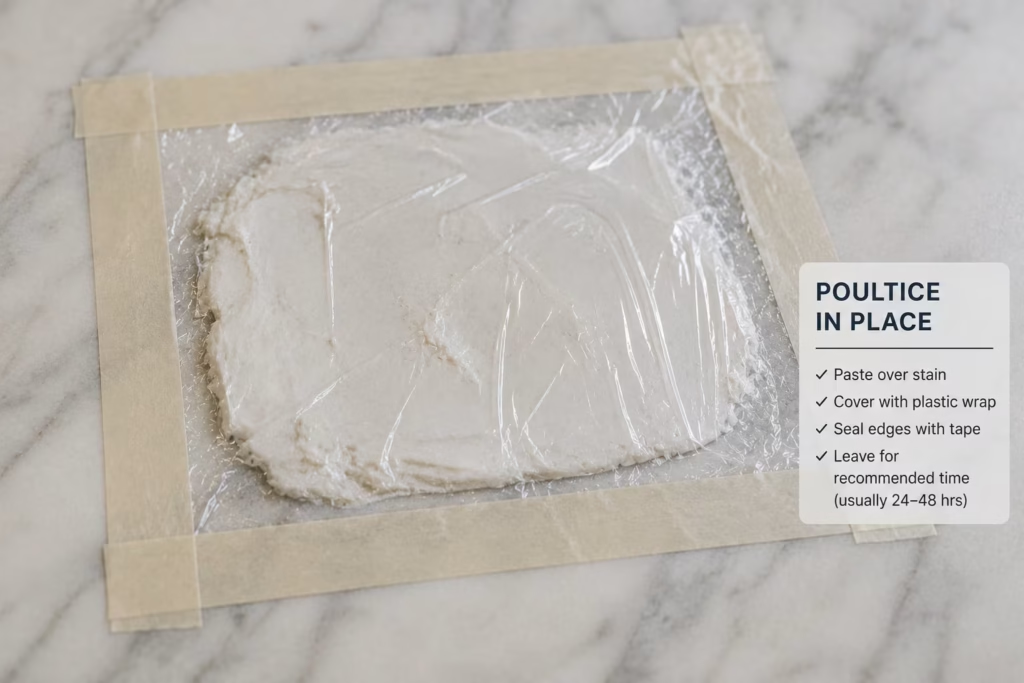
That’s the core skill. Now here’s the right liquid to mix in for each kind of stain.
Organic stains: coffee, tea, wine and food
These are the most common marks on any marble surface, and usually the easiest to shift. They leave a brownish or yellowish tint.
Make your poultice with hydrogen peroxide instead of water. A stronger 6–12% peroxide works better than the 3% drugstore bottle — but this is important: peroxide can lighten coloured or dark marble, so only use it on white or light stone, and always test a hidden spot first.
For dark marble, lean on repeated gentle cleaning with dish soap and water, or call a professional rather than risk bleaching the colour.
Oil and grease stains
Cooking oil, butter, grease, lotions and cosmetics leave a dark, sometimes shadowy patch because the oil has soaked in.
The trick with oil is that you need to dissolve it, not bleach it. Make your poultice with a bit of acetone or a stone-safe degreaser mixed into the absorbent powder, then follow the same cover-and-wait steps. The solvent breaks down the grease while the powder pulls it out.
A quick first attempt before the full poultice: a paste of baking soda and a little water left on the spot for a few hours can draw out fresh grease surprisingly well.
Rust and metal marks
Rust is the villain of the bunch. Those orange or copper rings come from metal left sitting on damp marble — a can, a nail, an iron planter, the legs of a metal stool.
Rust stains are the hardest to remove and sometimes won’t come out fully, especially if they’ve been there a long time. Avoid generic rust removers — most are acidic and will etch the marble while they work. Use only a rust remover specifically formulated for natural stone, follow its instructions exactly, and test first.
If it’s an old, deep rust stain, this is often a job worth handing to a stone-restoration professional. And the real fix is prevention: keep metal objects off bare marble.
Hard water marks and rings
Cloudy patches, pale rings and mineral spotting usually come from hard water or standing water left to dry on the surface.
Good news — these often aren’t deep stains at all, just deposits and light dulling on top. Try buffing gently with a dedicated marble polishing powder, following the product’s directions. For light water rings, dry 0000-grade steel wool used very lightly can also lift them. Then get into the habit of drying the surface after every clean.
Ink, dye and mould
Ink and marker: use a hydrogen peroxide poultice on light marble, or dab acetone on dark marble. Go slowly and test first.
Mould and mildew: common in bathrooms and damp corners. Use a mould treatment made for stone, or a diluted hydrogen peroxide solution — never harsh bleach. Improving ventilation stops it coming back. On that note, marble is a high-maintenance choice for constantly wet areas in the first place; if you’re still planning a wet room, purpose-made tiles are far more forgiving — see our guide to the best tiles for bathroom floor.
What if it’s an etch, not a stain?
If you worked out earlier that your mark is dull and light rather than dark — that’s an etch, and no poultice will fix it, because there’s no colour to draw out. The polish itself is damaged.
For light etching, a marble polishing powder (sometimes sold as an etch remover) can often restore the shine — you dampen the spot, work the powder in with a soft cloth as directed, and buff. Deep or widespread etching needs professional honing and re-polishing.
This is also why granite gets chosen for hard-working kitchen surfaces: it simply doesn’t etch the way marble does. If you’re weighing stone for a new project, our marble vs granite comparison breaks down exactly where each one belongs.
When to call a professional
Some jobs are worth handing over:
- Old, deep rust stains that resist a stone-safe remover
- Large or numerous etch marks across a floor
- Valuable, antique or honed-finish marble you don’t want to gamble with
- A whole floor that’s lost its shine and needs restoring
Professionals can grind, hone, re-polish and re-seal marble back to better-than-new. For a treasured floor, that’s money well spent — and cheaper than a botched DIY that forces a replacement.
How to stop stains coming back
Removing a stain is the cure. Sealing and good habits are the prevention — and prevention is far easier.
- Seal the marble. A penetrating (impregnating) sealer soaks in and slows liquids from reaching the pores. Reseal periodically — a simple water-drop test tells you when it’s due: if water stops beading and soaks in, it’s time.
- Wipe spills immediately. Especially coffee, wine, oil and anything acidic. Blot, don’t wipe.
- Use coasters, trivets and mats. Under glasses, hot pans and toiletry bottles.
- Pad furniture legs and keep metal objects off bare marble to avoid rust and scratches.
- Dry after cleaning. Never leave standing water to dry on the surface.
- Clean gently, always. pH-neutral cleaner or mild dish soap, soft cloth, no acids, no abrasives.
Do these few things and stains become rare events rather than a running battle. The same care principles apply to the joints too — if your marble is laid in tiles, keeping those lines clean matters, and our guide on how to clean grout covers that side.
Bottom line
The secret to removing stains from marble isn’t a magic product — it’s diagnosing the mark first, then being patient with the right method.
Work out whether it’s a stain (dark, soaked in) or an etch (dull, light, surface damage). For stains, reach for the poultice: baking soda plus hydrogen peroxide for organic marks, a solvent for oil, a stone-safe remover for rust — applied, covered, and left to draw the stain out over a day or two. For etches, a polishing powder restores the shine.
Above all, never fight marble with acids, bleach or scrubbing. Treat it gently, seal it, wipe spills fast — and it’ll stay beautiful for decades.
FAQ
How do you get stains out of marble? Identify the stain type, then apply a poultice — a thick paste of an absorbent powder plus the right liquid (hydrogen peroxide for coffee, wine and food; a solvent for oil; a stone-safe remover for rust). Spread it over the stain, cover with plastic wrap, leave 24–48 hours so it draws the stain out, then rinse. Repeat if needed.
Can you use vinegar to clean marble stains? No. Vinegar is acidic and will etch marble, leaving a dull mark that’s worse than the original stain. The same goes for lemon juice and acidic cleaners. Use only pH-neutral cleaners or mild dish soap on marble.
Are marble stains permanent? Most aren’t, if you treat them correctly and reasonably soon. Deep or old rust stains are the exception and sometimes can’t be fully removed. Etch marks aren’t stains at all — they’re surface damage that’s fixed by polishing, not cleaning.
Does baking soda remove marble stains? It can help. Baking soda is a gentle, non-acidic absorbent, which makes it a good base for a poultice — mixed with water for light stains, or with hydrogen peroxide for organic ones. Apply it as a paste, don’t scrub it in dry, and rinse well afterwards.
How do I remove oil stains from marble? Use a poultice made with acetone or a stone-safe degreaser rather than water, since oil needs to be dissolved, not bleached. Cover it, leave it to dry over a day or two, then rinse. A baking-soda-and-water paste can lift fresh grease before it sets.
Why does my marble have dull, light marks that won’t wash off? Those are etch marks, not stains — acid has damaged the polish. Washing won’t help because there’s no colour to remove. A marble polishing powder restores light etching; deeper areas need professional honing.
Is hydrogen peroxide safe for marble? On white and light marble, yes — it’s the go-to for organic stains. But it can lighten coloured or dark marble, so always test a hidden spot first, and choose a different method for dark stone.
How do I stop my marble staining in the first place? Seal it with a penetrating sealer and reseal when water stops beading. Then wipe spills immediately, use coasters and trivets, keep metal off the surface, and clean only with gentle, pH-neutral products.
