
Ten years ago this wasn’t much of a contest. You wanted a hard floor that lasts, you laid tile, end of story. Vinyl meant the thin, peeling stuff in a rented kitchen.
That’s over. Modern vinyl (LVT and SPC) looks convincing, feels good underfoot, and goes down in a weekend. It’s eaten a huge chunk of the flooring market for a reason. But tile didn’t get worse, and there are rooms where I still wouldn’t put anything else.
So this is the real vinyl vs tiles comparison, not a spec-sheet dump. What each one actually is, where each one wins, where each one lets you down, and a room-by-room call at the end so you’re not left going “yes but which do I buy.” Let’s settle it.
The short version, if you’re in a hurry
Here’s my verdict before the detail, because you came for an answer.
Vinyl (LVT/SPC) wins on comfort, warmth, noise, price, and how easy it is to fit yourself. It’s the smart pick for bedrooms, living rooms, home offices, basements, and any floor you want warm and quiet underfoot.
Tile wins on lifespan, toughness, heat resistance, and genuine wet-area performance. It’s the pick for bathrooms, showers, heavy-traffic entrances, sunrooms, and anywhere you want a floor that’ll outlive the mortgage.
Most homes are better off using both, room by room, instead of forcing one everywhere. If someone tells you one of these is simply “better,” they’re selling something.
Now the why.
What “vinyl” actually means now (LVT, SPC, WPC)
First, clear up the alphabet soup, because the labels confuse everyone.
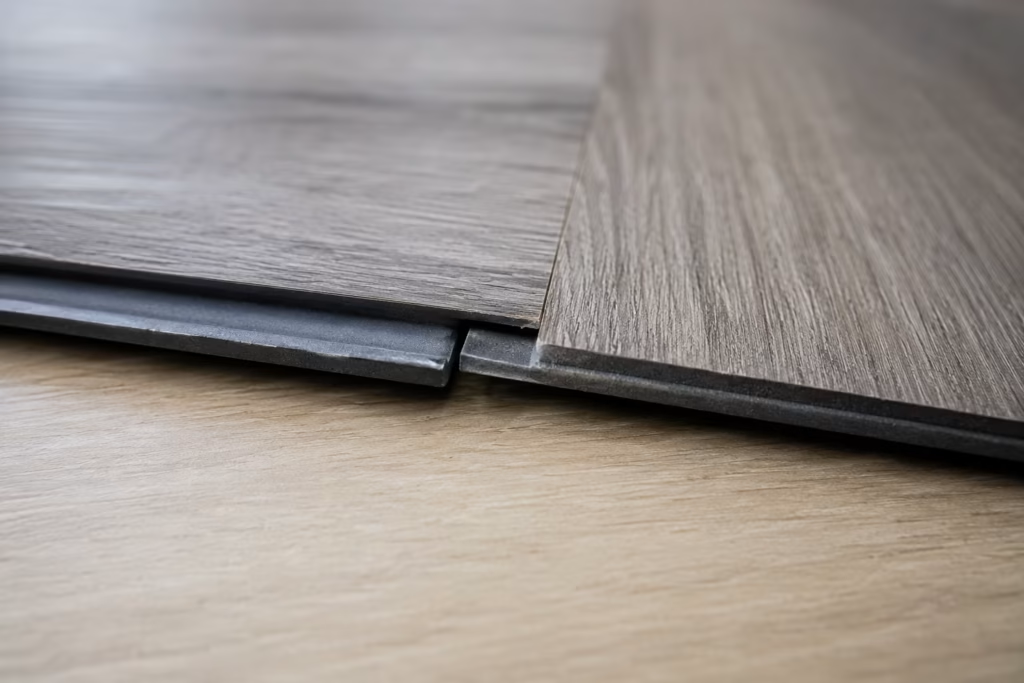
LVT stands for Luxury Vinyl Tile (you’ll also see LVP, Luxury Vinyl Plank, which is the same thing in a long plank shape). It’s the whole category. A modern vinyl floor is built in layers: a tough transparent wear layer on top, a printed design layer under that which does the wood or stone impression, a core that gives the plank its body, and a backing underneath.
The important part is the core, and that’s where SPC and WPC come in. They’re not different products from LVT, they’re two kinds of core inside it.
SPC means Stone Plastic Composite. The core is roughly 60% limestone powder mixed with PVC and stabilisers, pressed dense and hard. No foaming. This makes SPC thin, rigid, incredibly dent-resistant, and barely bothered by temperature swings. It’s the tougher, more stable one. The trade-off is it’s harder and colder underfoot, and it does nothing to hide a bumpy subfloor unless you add an underlay.
WPC means Wood Plastic Composite. The core swaps some of that stone for wood-like material and a foaming agent, so it’s thicker, softer, warmer and more comfortable to stand on, while staying fully waterproof. It dents a little easier than SPC and it’s usually a touch pricier for the same footprint.
Both are 100% waterproof at the core, both click together and float over the subfloor, and both are what people mean now when they say “vinyl.” If you want the most bombproof option, lean SPC. If you want the comfiest, lean WPC.
The one number that matters most: the wear layer
Ignore total plank thickness for a second. The spec that actually predicts how long a vinyl floor lasts is the wear layer, measured in mils (thousandths of an inch).
| Wear layer | Best for | Rough expectation |
|---|---|---|
| 6–12 mil | Light-use bedrooms, guest rooms | Basic protection, budget spaces |
| 12 mil | Standard busy home (living, hall, kitchen) | The sensible everyday choice |
| 20 mil+ | Heavy traffic, pets, light commercial | Longest wearing, best warranties |
Here’s the thing cheap sellers won’t tell you: a thick plank with a thin wear layer is a trap. A slim 4 mm plank with a 20 mil wear layer will outlast a chunky 6 mm plank with a 6 mil skin, because it’s the top film that takes the beating. Buy the wear layer, not the thickness.
What “tiles” means here
On the other side, when people say tiles for flooring they mean hard fired tiles: ceramic, porcelain, and vitrified. Porcelain and vitrified are the dense, hard-wearing ones you want on a floor. Softer glazed ceramic is more of a wall tile that can go on light-use floors.
These are baked from clay and minerals at high heat into something rock-hard and, in porcelain’s case, nearly non-absorbent. That hardness is the whole personality of tile: brilliant in some ways, annoying in others, as you’ll see.
If you’re still deciding between the tile types themselves before you even get to vinyl, our vitrified vs ceramic tiles guide breaks that down properly. For this article, assume “tile” means a good hard floor tile.
Head to head, category by category
This is the part that decides it. I’ll call each round for one side or the other, honestly.
Water and wet rooms → it’s complicated, but tile takes the shower
Everyone repeats “vinyl is 100% waterproof,” and the core is. It won’t swell, rot or absorb, which makes it fantastic for kitchens, laundries, basements and family bathrooms. Spill a glass of water and walk off, no problem.
But “waterproof plank” is not the same as “waterproof floor.” Water still finds the seams and edges, and standing water left long enough can creep down to the subfloor underneath, which then suffers even though the vinyl doesn’t. In a proper wet room or walk-in shower, that’s a real weakness.
Tile is different. The tile face, especially porcelain, is genuinely waterproof, and a floor tiled the right way, with a waterproof membrane underneath and sealed grout, is the gold standard for showers and wet rooms. That’s why you never see a tiled-shower-versus-vinyl-shower debate among people who do this for a living. It’s tile.
The catch with tile is grout. Grout is porous, collects grime, and needs sealing and cleaning or it discolours. So tile wins the wet round on performance, but hands you a maintenance job in return.
Round to tile for showers and wet rooms. Vinyl is fine for everyday splashy floors.
Comfort underfoot → vinyl, easily
Stand on tile barefoot on a winter morning and you’ll remember this round. Tile is hard and cold. Drop a glass and it shatters; stand cooking for an hour and your legs feel it; the room echoes because sound bounces off a hard surface.
Vinyl is the opposite. It’s warmer to the touch, softer, and quieter. WPC especially has a slight give that’s kinder to legs, backs and dropped crockery. In a bedroom or a living room where you’re barefoot and relaxed, vinyl simply feels better.
Round to vinyl, no argument.
Durability and lifespan → tile, by a distance
This is tile’s home turf. A quality porcelain floor is near-indestructible. It shrugs off scratches, doesn’t dent, laughs at dragged furniture and dropped pans, and a well-laid tile floor can easily last decades, sometimes the life of the house.
Vinyl is durable, not immortal. The wear layer wears. Heavy furniture legs can leave dents, sharp grit can scratch it, and strong direct sunlight can fade some products over time. A good vinyl floor with a thick wear layer might give you fifteen to twenty-five years; a cheap thin one can look tired in three to five. Respectable, but not tile.
There’s one nuance in vinyl’s favour: if tile cracks (from a hard impact or a subfloor that shifts), fixing it means matching a discontinued tile and chiselling it out. A damaged vinyl plank on a floating floor can sometimes be swapped out. But on raw survival, round to tile.
Looks and feel → close, but tile still feels “real”
Digital printing has made vinyl’s wood and stone looks genuinely convincing. From standing height, a good LVT wood floor fools most people, and the design range is huge.
But get down close, or walk on it, and vinyl is still an image of a material, not the material. Real stone and porcelain tile have depth, coolness and weight that a print can’t fully fake, and that reads as premium. Vinyl looks great. Tile looks and feels like the real thing, because it is.
Round to tile on feel, a draw on sheer variety.
Installation and DIY → vinyl runs away with it
Vinyl is one of the friendliest floors to fit. Click-lock SPC and WPC float over the subfloor with no adhesive, snapping together like a puzzle. A competent DIYer can do a room in a day, often laying it straight over an existing hard floor. It’s fast, low-mess, and forgiving.
Tile is a proper job. You’re dealing with adhesive, levelling, cutting tiles to fit, spacing, grouting, and then waiting for it all to cure before you can walk on it. It usually wants a skilled tiler, it’s slower, dustier and costlier to install, and a bad subfloor or rushed job shows up later as cracks or lifting tiles.
Round to vinyl, comfortably.
Cost and value → vinyl is lighter on the wallet
I’m not quoting numbers, since prices move and vary by region, but the positioning is clear and stable. Vinyl generally sits budget to mid, and the cheaper, faster install widens that gap further. Tile ranges from mid to premium on the material, and the professional installation adds real cost on top.
So for a given budget, vinyl usually covers more floor, faster. Tile costs more up front but spreads that cost over a much longer life. Round to vinyl on price, with tile arguing back on cost-per-year.
Underfloor heating → tile is the natural partner
If you’ve got or want underfloor heating, tile is made for it. It conducts heat beautifully, warms up evenly, holds the warmth, and doesn’t mind the temperature. This is the one setup that fixes tile’s biggest flaw, the cold, and turns it into a feature.
Vinyl can work over underfloor heating, but with strings attached. You have to respect a surface temperature limit (commonly around 27°C, so check the maker’s spec and never exceed it), and a thick vinyl plank plus underlay acts like a blanket over the heat, cutting efficiency noticeably. For vinyl over heating, go thinner and follow the instructions to the letter. SPC’s dimensional stability makes it the better vinyl choice here.
Round to tile.
Maintenance → vinyl for easy, tile for tough
Day to day, vinyl is a doddle: sweep, damp mop, done, and there’s no grout to fret over. Tile is also easy to wipe, but the grout lines are the weak spot that need sealing and the odd scrub to stay looking sharp.
The flip side: tile takes harsh treatment and hot pans that would mark vinyl, and it never wears through. So vinyl is lower-effort, tile is more punishment-proof. Pick your poison. Slight round to vinyl for everyday ease.
Health and environment → a wash, with caveats
Both have footnotes. Cheap, low-quality vinyl can off-gas VOCs when new and may use nastier plasticisers, so buy reputable, low-emission product and let a new floor air out. Vinyl is PVC-based and hard to recycle at end of life.
Tile is inert, doesn’t off-gas, and lasts so long its footprint is spread over decades, though firing tiles is energy-hungry to make. Neither is a clear green champion. A draw, but if new-floor fumes worry you, tile is the safer inert bet.
The whole comparison at a glance
| Factor | Vinyl (LVT/SPC/WPC) | Tile (porcelain/ceramic/vitrified) |
|---|---|---|
| Comfort underfoot | Warm, soft, quiet | Hard, cold, echoey |
| Waterproofing | Core waterproof; edges vulnerable | Surface waterproof; best for wet rooms |
| Durability | 15–25 yrs; can dent/scratch/fade | Decades; scratch and dent proof |
| Heat resistance | Can mark under very hot items | Excellent, takes hot pans |
| Underfloor heating | Works, with limits and efficiency loss | Ideal partner |
| Installation | DIY click-lock, fast | Skilled, slow, professional |
| Cost | Budget to mid | Mid to premium plus install |
| Maintenance | Very easy, no grout | Easy tiles, grout needs care |
| Look and feel | Convincing print | The real thing, premium feel |
| Repair | Swap a plank | Hard to match and replace |

Room by room: what I’d actually lay where
Categories are useful, but you live in rooms. Here’s the practical call.
Bathrooms and en-suites. For the main wet zone and showers, tile, laid with a proper membrane. It’s the only right answer for a walk-in shower. For a family bathroom floor that just gets splashed, vinyl is a perfectly good, warmer, safer-underfoot option. If you go tile here, get the grip right; our guide to the best tiles for bathroom floor covers slip resistance and what lasts.
Kitchen. A genuine toss-up. Tile if you want maximum toughness and heat resistance and don’t mind hard underfoot. Vinyl if you spend hours standing there and want warmth, quiet and softer landings for dropped mugs. Both handle spills fine.
Living room, dining room, hallway. Vinyl for most homes: warm, quiet, comfortable, and the traffic isn’t brutal. Choose tile only if you want a hard-wearing statement floor or you’re pairing it with underfloor heating.
Bedrooms and home office. Vinyl, easily. You want warm, soft and quiet here, and there’s no reason to pay for tile’s toughness in a low-impact room.
Basement. Vinyl (SPC) is often the smart pick. It’s waterproof, stable against the temperature and damp swings a basement throws at it, and it floats over a not-perfectly-flat slab.
Entryways, mudrooms, sunrooms, high-traffic. Tile. Grit, wet shoes, sun and constant traffic are exactly what tile eats for breakfast and what wears vinyl down fastest.
So which is better?
Neither, and that’s the honest answer. They’re built for different jobs.
Buy vinyl when you want a floor that’s warm, quiet, comfortable, affordable and easy to fit, in rooms that don’t take a hammering. Buy tile when you want a floor that’s tough, heatproof, genuinely wet-room-ready and effectively permanent, and you’ll accept cold-and-hard as the price of that.
The people who end up happiest don’t crown a winner. They put tile where water and traffic are worst, and vinyl where comfort matters most, and stop trying to make one material do everything.
Bottom line
Vinyl (LVT/SPC/WPC) has earned its popularity. It’s comfortable, warm, quiet, waterproof at the core, kind on the budget, and a realistic DIY job. For bedrooms, living spaces, offices and basements, it’s often the better everyday choice, and the wear layer is the spec to buy on, not the plank thickness.
Tile is still the long-haul champion. Harder, heatproof, the only real answer for showers and wet rooms, unbeatable over underfloor heating, and built to last decades. You pay more and you get a cold, hard, professionally-installed floor in return, and in the right rooms that’s exactly the trade you want.
Match the floor to the room and you can’t go far wrong. Once you’ve picked your rooms and know where tile’s going, our tile calculator will tell you how much you need before you order, so you don’t come up short halfway through.
FAQ
Is vinyl or tile better for a bathroom? Depends on the zone. For a shower or full wet room, tile with a waterproof membrane is the right choice, full stop. For a family bathroom floor that only gets splashed, vinyl is a good option too, and it’s warmer and less slippery underfoot. Many bathrooms sensibly use tile in the shower and either material on the main floor.
Is SPC or WPC vinyl better? SPC is denser, harder and more dent-resistant, and it copes best with temperature swings, so it’s the tougher, more stable pick and good over underfloor heating. WPC is thicker, softer and warmer underfoot, so it’s more comfortable to stand on. Choose SPC for durability and stability, WPC for comfort.
Does vinyl flooring add value to a house like tile does? Tile generally reads as more premium and permanent, so it tends to hold value well, especially in bathrooms and kitchens. Good-quality vinyl is well accepted and looks great, but very cheap vinyl can read as a budget finish. If resale is a big concern, tile has the edge in wet and high-traffic rooms.
How long does vinyl flooring last compared to tile? A quality vinyl floor with a thick wear layer lasts roughly fifteen to twenty-five years; a thin, cheap one can wear out in three to five. Good tile lasts decades and often the life of the house. Tile clearly wins on lifespan, but vinyl’s shorter life comes with lower cost and easier replacement.
Can I lay vinyl or tile over an existing floor? Click-lock vinyl can often float straight over a sound, flat, clean existing hard floor, which is a big part of its appeal. Tile can sometimes go over existing tile with the right preparation and adhesive, but it’s more involved and adds height and weight. Vinyl is far more forgiving for a floor-over-floor job.
Is vinyl flooring waterproof or just water-resistant? The core of LVT, SPC and WPC is genuinely waterproof and won’t swell or absorb. But water can still get through seams and edges to the subfloor if it’s left standing, so “waterproof plank” isn’t the same as a sealed waterproof floor. For constant-water areas like showers, a properly tiled and membraned floor is more reliable.
Which is warmer underfoot, vinyl or tile? Vinyl, clearly. It’s warmer and softer to stand on, while tile is cold and hard unless you run underfloor heating beneath it. If a warm floor matters and you’re not installing heating, vinyl is the comfortable choice.
Is vinyl or tile easier to install myself? Vinyl, by a mile. Click-lock planks float together with no adhesive and a handy DIYer can do a room in a day. Tiling means adhesive, levelling, cutting, grouting and curing time, and it usually calls for a skilled tiler to get a lasting result.
