
Stand in any stone yard and you’ll hear the same two words thrown around like they mean the same thing. They don’t.
The short version of marble vs granite is this: marble is the beautiful one, granite is the tough one. Marble makes a floor look like a palace. Granite takes a hot kadhai straight off the flame and doesn’t blink.
But “beautiful vs tough” is where most guides stop — and that’s exactly where the real decisions begin. Which goes in the kitchen? Which survives a spilled bowl of curd? Which one turns your hall into something people notice the moment they walk in?
Let’s settle it properly, the way it actually plays out in an Indian home.
The real difference (in plain language)
Both are natural stone, pulled from the earth in slabs. The difference is how they were formed — and that shapes everything.
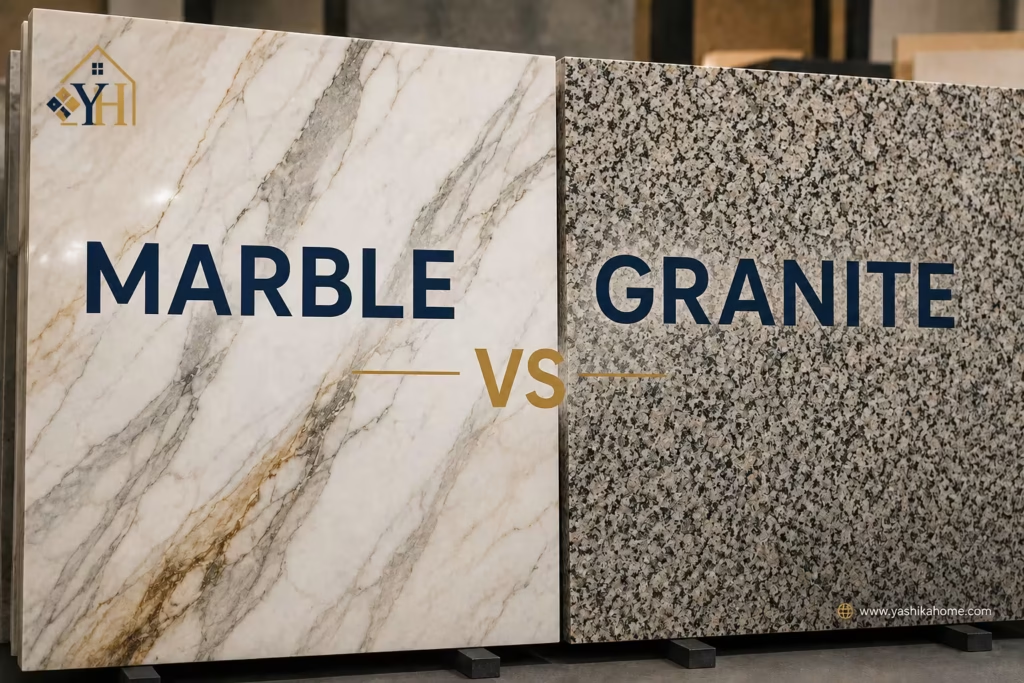
Granite is an igneous rock. It started as molten magma deep underground and cooled slowly into a dense, hard stone made mostly of quartz, feldspar and mica. That’s why it looks speckled and grainy, and why it’s so hard.
Marble is a metamorphic rock. It began as limestone, then heat and pressure over ages recrystallised it into the soft, glowing stone with those flowing veins. That veining is the beauty. That softness is the catch.
Hold the two side by side and you can almost feel it. Granite feels solid and busy. Marble feels smooth, cool and calm.
Marble vs granite: the quick comparison
Here’s the whole debate on one screen.
| Feature | Marble | Granite |
|---|---|---|
| Rock type | Metamorphic (soft) | Igneous (hard) |
| Look | Flowing veins, elegant | Speckled, uniform |
| Hardness | Softer, scratches easier | Very hard, scratch-resistant |
| Heat resistance | Moderate | Excellent |
| Stain & acid resistance | Poor — etches easily | Good (once sealed) |
| Feel underfoot | Cool, smooth | Cool, slightly grippier |
| Maintenance | Higher — reseal often | Lower — reseal occasionally |
| Best known for | Flooring, luxury interiors | Kitchen platforms, high-traffic |
| Price positioning | Budget to premium | Budget to premium |
Keep this in the back of your mind, because the winner genuinely changes room to room.
Hardness and durability
Granite is one of the hardest stones you can put in a home — it sits high on the mineral hardness scale, up there with quartz. Drag a steel vessel across it, drop a heavy pan, let the kids run riot: it shrugs most of it off.
Marble is softer. It scratches, it chips at the edges, and over years of foot traffic it can lose a little of its crisp shine. That’s not a flaw exactly — it’s the nature of the stone — but it means marble wants a gentler life than granite does.
One local exception worth knowing: Makrana marble (the same stone used in the Taj Mahal) is unusually hard and durable for a marble, and holds its shine far longer than most. It’s a genuinely different tier from cheaper marbles.
The acid problem — marble’s real weak spot
This is the part that catches people out, and it matters more in an Indian kitchen than almost anywhere.
Marble is made of calcite, and calcite reacts with acid. So the everyday stuff on our kitchen counters — lemon, tomato, curd, tamarind, vinegar — can etch marble. Etching isn’t a stain sitting on top; it’s a dull, rough mark where the acid has literally eaten into the polish. Sealing slows staining, but it doesn’t fully stop etching.
Turmeric is the other villain. Marble is porous, so a haldi spill left sitting can drive a yellow stain deep into the stone.
Granite handles all of this far better. Once it’s sealed, spills wipe away and acids don’t etch it the way they attack marble. That single fact is the biggest reason granite rules the Indian kitchen platform.
Heat resistance
Granite laughs at heat. You can set a hot tawa or kadhai on a sealed granite counter and it takes it in its stride — which is why it’s the default for cooking spaces.
Marble is only moderately heat-tolerant. It won’t burst into flames, but repeated hot contact can dull or mark the surface. In a kitchen, that’s a daily risk. On a floor or a low-use tabletop, it’s a non-issue.
Maintenance and sealing
Neither stone is fully “fit and forget.” Both are natural and porous to some degree, so both should be sealed.
The difference is how often.
- Marble wants resealing more frequently — every several months in a busy kitchen or bathroom — plus prompt wiping of any spill and gentle, pH-neutral cleaning only. No harsh acidic cleaners.
- Granite is far more forgiving. Seal it, then reseal maybe once a year or even less depending on use. Day to day, a wipe with mild soap and water is enough.
If low-maintenance is high on your list, granite wins this round comfortably.
Looks and feel
Here marble takes the crown, and it isn’t close.
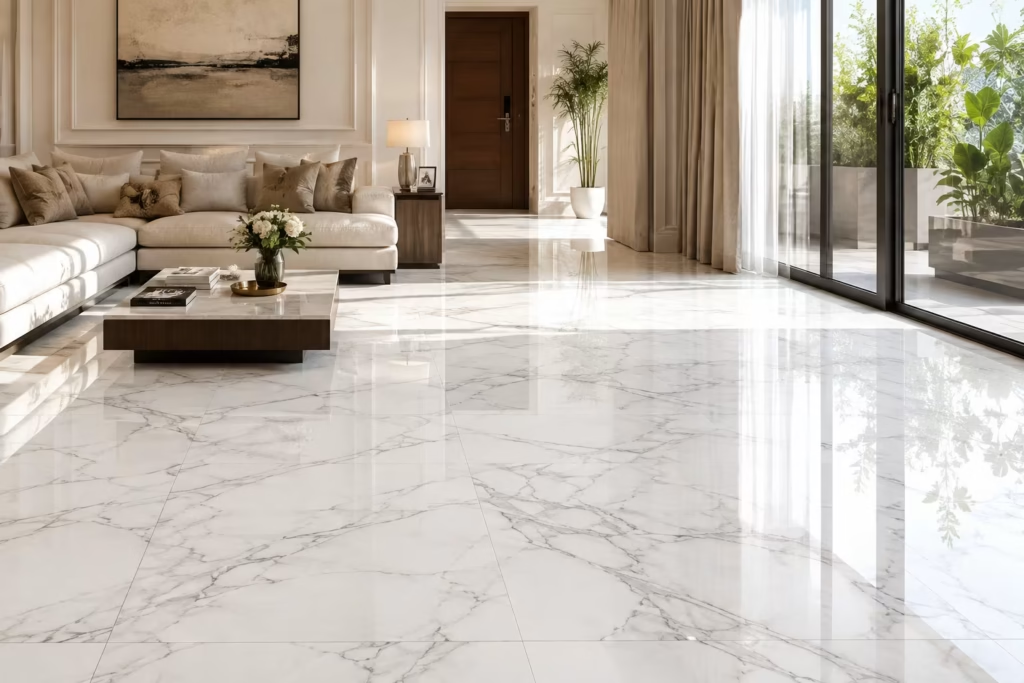
Nothing else gives you those soft, flowing veins and that quiet, luminous glow. A white marble floor makes a room feel bigger, brighter and unmistakably premium. It’s why marble has meant luxury in Indian homes for generations.
Granite is handsome in a different way — speckled, consistent, grounded. Modern designer granites can be stunning, and some pale varieties even mimic a marble look while keeping granite’s toughness. But for pure elegance, marble is the one people fall in love with.
There’s also the feel. Both are cool underfoot, which is a real blessing in Indian summers. Marble edges it for that smooth, cold, barefoot-on-a-hot-afternoon feeling in a hall or bedroom.
Where each stone belongs in an Indian home
This is the part you actually want, so let’s be direct.
| Space | Better pick | Why |
|---|---|---|
| Kitchen platform | Granite | Heat, acids, daily abuse — granite handles it all |
| Hall / living room floor | Marble | Elegance and that luminous, spacious look |
| Bedroom floor | Either | Marble for luxury, granite for zero fuss |
| Pooja room | Marble | Traditional, serene, beautiful in white |
| Bathroom floor | Neither, really | Both get slippery when wet — tiles are safer |
| Staircase | Granite (or hard marble) | Steps take heavy, constant wear |
| Outdoors / parking / facade | Granite | Weather- and wear-resistant; use a rough finish |
Notice the pattern. Marble owns the spaces you want to look beautiful and calm. Granite owns the spaces that have to work hard.
And there’s no rule saying you must pick one for the whole house. The most sensible Indian homes mix them — granite on the kitchen platform, marble on the hall floor. That’s not indecision, that’s just using each stone where it’s strongest.
One honest note on bathrooms: people love the idea of marble there, but natural stone turns slippery underfoot when wet, and marble in particular suffers from constant moisture and soap. For wet areas, purpose-made tiles are the safer, lower-worry choice — our guide to the best tiles for bathroom floors walks through why.
Popular Indian varieties worth knowing
You’ll hear these names thrown around at the dealer, so here’s a quick, honest map. (These are real, widely available varieties — but always judge the actual slab in front of you, since natural stone varies piece to piece.)
Marble
| Variety | Known for |
|---|---|
| Makrana White | India’s finest; hard, pure, holds shine (used in the Taj Mahal) |
| Morwad White | Popular white with light grey/green veining |
| Ambaji White | Clean white, widely used for flooring and cladding |
| Katni (Madhya Pradesh) | Beige/cream tones, budget-friendly |
| Udaipur Green | Deep green, dramatic accent flooring |
| Italian (Statuario, Carrara, Calacatta) | Imported, premium, luxury interiors |
Granite
| Variety | Known for |
|---|---|
| Black Galaxy | Black with golden specks; a kitchen favourite |
| Absolute Black | Deep, uniform black; elegant and tough |
| Kashmir / Alaska White | Pale, marble-like look with granite strength |
| Steel Grey | Consistent grey with silver flecks |
| Tan Brown | Warm brown-black; hides stains well |
| Kuppam / Hassan Green | Rich green; trending for statement floors |
Cost and value
I’ll keep this honest and skip the rupee figures, because natural stone prices swing wildly by variety, quality, finish, slab size and city. Prices vary — a lot.
In positioning terms:
- Common Indian marbles (Katni, basic whites, green) sit budget to mid. Premium Makrana and imported Italian marbles climb into premium territory.
- Local Indian granites are mostly budget to mid and offer excellent value. Designer and exotic granites move up to premium.
The smarter question isn’t “which is cheaper” — it’s “which is better value for that spot.” Spending premium money on delicate marble for a hard-working kitchen platform is money working against you. Put granite there, put your marble budget into a beautiful hall floor, and every rupee pulls its weight.
A practical note on slabs and joints
One thing people forget until the slabs arrive: marble slabs are usually smaller than granite slabs. Granite commonly comes in large vertical and gangsaw (jumbo) slabs, while marble pieces tend to be smaller.
Why does that matter? Smaller slabs mean more joints for the same area — more visible lines on a floor or counter, and slightly more planning to lay them well. Granite’s bigger slabs can mean fewer joins on a long kitchen platform.
Whichever way you go, work out your quantities before you order — natural stone is expensive to over-buy and awkward to run short on. Our Granite & Marble Measurement Sheet helps you record and total your slab areas cleanly (and it’s easy to share on WhatsApp with your dealer), and if you’re doing the maths yourself, how to calculate marble quantity walks you through it step by step.
So which should you choose?
Strip away the noise and it comes down to two honest questions.
Choose granite if you want low maintenance and real toughness — kitchen platforms, staircases, high-traffic floors, anything outdoors. It’s the practical, get-on-with-life stone.
Choose marble if you want beauty and are willing to care for it a little — hall and bedroom floors, pooja rooms, feature areas where elegance matters more than daily abuse.
And if you’re doing a whole home, the best answer is usually both — each in the place it was born for.
Bottom line
Marble and granite are both gorgeous natural stones, but they’re built for different jobs.
Granite is harder, more heat- and acid-resistant, and far lower maintenance — which is why it dominates the Indian kitchen platform and any hard-working surface. Marble is softer and needs more care, but nothing matches its flowing veins and luminous shine, which is why it remains the first choice for elegant flooring and pooja rooms.
Match the stone to the space, mix them where it makes sense, and measure carefully before you buy. Do that, and you won’t just get the right stone — you’ll get a home that looks right and lives right for decades.
FAQ
Is marble or granite better for a kitchen platform? Granite, in almost every Indian kitchen. It resists heat, scratches and acids like lemon and curd once sealed, and it needs far less babying than marble. Marble looks beautiful but etches and stains too easily around daily cooking.
Is marble or granite better for flooring? For living rooms, halls and bedrooms, marble usually wins on looks — that luminous, spacious glow is hard to beat. Granite is the tougher, lower-maintenance floor for high-traffic areas, staircases and anywhere you don’t want to fuss.
Which is more expensive, marble or granite? Both span a wide range. Common Indian granites and basic marbles are budget-to-mid; premium Makrana and imported Italian marble sit at the top end, as do designer granites. Prices vary by variety, quality, and finish, so compare actual slabs.
Does marble stain easily? Yes, more than granite. Marble is porous and acid-sensitive, so turmeric, lemon, curd and tomato can stain or etch it if not wiped quickly. Sealing helps with staining but won’t fully prevent acid etching.
Which needs more maintenance, marble or granite? Marble. It should be resealed more often, cleaned only with gentle pH-neutral products, and wiped promptly after spills. Granite is more forgiving — seal it, then reseal occasionally, and wipe with mild soap and water.
Can I use marble in the bathroom? It’s not ideal. Natural stone gets slippery when wet, and marble also suffers from constant moisture and soap. For wet areas, purpose-made anti-slip tiles are safer — see our guide to the Best Tiles for Bathroom Floor.
Which is the best marble in India? Makrana is widely regarded as India’s finest — hard, pure white, and long-lasting (it’s the marble used in the Taj Mahal). Morwad and Ambaji whites are popular mid-range choices, while imported Italian marbles like Statuario and Calacatta are the premium splurge.
How much marble or granite do I need for my home? Measure each area’s length and width, total the square footage, and add a little for cutting and wastage. Our Granite & Marble Measurement Sheet makes it easy to record and share your figures, and how to calculate marble quantity shows the full method.
