
Here’s the part nobody tells you at the shop: porcelain is ceramic. Same family, made from clay, fired in a kiln. So when someone asks about porcelain vs ceramic tiles like they’re two completely different species, the honest answer is that one is just a tougher, denser version of the other.
But that difference is not small. It decides whether your bathroom floor shrugs off water for twenty years or starts lifting in three. It changes how the tile cuts, what it costs, and where you can safely use it.
So let’s sort it out properly — no jargon, no sales pitch. Just what actually matters when you’re standing in front of two tiles that look almost identical and cost very different amounts.
The one number that separates them
If you remember nothing else from this guide, remember this: water absorption.
Porcelain is defined by a single spec. To be called true porcelain, a tile has to absorb 0.5% or less of its own weight in water. That’s the industry line (measured under the ASTM C373 test). Anything above that is ceramic.
Ceramic soaks up more — sometimes a little, sometimes a lot. A regular ceramic floor tile might sit around 3%. Wall tiles can go higher still.
That’s the whole story in miniature. Porcelain is denser, so water struggles to get in. Ceramic is more porous, so it drinks more. Everything else — the durability, the price, the cutting, where you put it — flows from that.

How they’re actually made
Both start as clay and end up in a kiln. The difference is what goes in and how hot it gets.
Porcelain uses a finer, purer clay — heavy on refined kaolin and feldspar — and it’s fired much hotter, often north of 1,200°C. That heat does something almost magical: the clay particles fuse tight, squeezing out the tiny gaps that let water in. What comes out is dense, hard, and close to non-porous.
Ceramic uses coarser, more natural clay and fires at a lower temperature. The result is lighter and a bit softer, with more air pockets inside the body. Not weak — just not built like a tank.
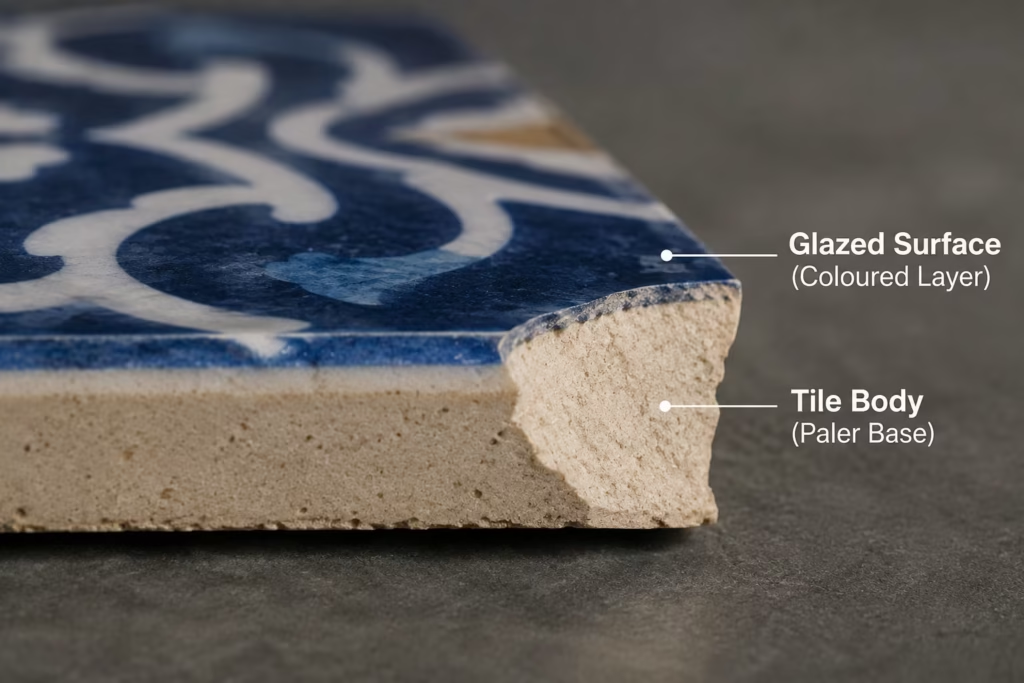
You can often see this in an offcut. Snap a porcelain tile and the broken edge looks tight and uniform. Snap a ceramic one and the body is usually paler and slightly chalkier.
Porcelain vs ceramic tiles: the quick comparison
Here’s the whole debate on one screen.
| Feature | Porcelain | Ceramic |
|---|---|---|
| Water absorption | 0.5% or less | Higher — often ~3%+ |
| Density & hardness | Denser, harder | Softer, lighter |
| Best for wet areas | Excellent | Okay for walls, less so for wet floors |
| Outdoor / cold climates | Yes (frost-resistant) | Generally no |
| Durability underfoot | Very high | Good for light to medium traffic |
| Ease of cutting | Harder — needs a wet saw | Easier — score and snap works |
| Design range | Huge, including stone/wood looks | Huge, especially glossy wall styles |
| Weight | Heavier | Lighter |
| Price positioning | Mid to premium | Budget to mid |
Keep this table in mind as we go, because the “which is better” answer genuinely depends on the room.
Water resistance: where it really counts
This is the deciding factor for most homes, so it deserves its own moment.
Because porcelain barely absorbs water, it’s the safer pick anywhere things get wet or humid — bathroom floors, shower walls, kitchens, laundry areas, entryways that catch rain. Water sits on top and wipes away instead of working its way into the tile body.
Ceramic can still do wet walls perfectly well. A glazed ceramic bathroom wall tile has a hard, sealed surface on the face, and walls don’t take standing water or foot traffic. That’s a completely fine use.
Where ceramic gets risky is a wet floor that sees heavy use — especially if a tile chips and exposes the more porous body underneath. That’s when moisture creeps in over time.
If you’re weighing up a wet space right now, it’s worth reading our full take on the best tiles for bathroom floor alongside this — the two guides answer slightly different questions.
Durability and the PEI rating
Both materials are hard-wearing. Porcelain just has more in the tank.
There’s a handy scale for surface wear called the PEI rating, running from 1 to 5. It tells you how much abrasion a glazed tile can take:
- PEI 1 – walls only, no foot traffic
- PEI 2 – light traffic, like a guest bathroom
- PEI 3 – normal household floors
- PEI 4 – busy homes, light commercial
- PEI 5 – heavy commercial, shops, entrances
Ceramic floor tiles usually land around PEI 3. That’s genuinely fine for a bedroom, a study, or a room that doesn’t see boots and trolleys all day.
Porcelain routinely hits PEI 4 or 5, which is why you see it in showrooms, malls, and hallways. If a room is going to take a beating, porcelain earns its keep.
One more thing on porcelain: some of it is full-body (also called through-body), meaning the colour runs all the way through, not just on a glazed surface. A scratch or chip on full-body porcelain is far less noticeable because there’s no different-coloured layer underneath. That’s a quiet advantage in high-traffic spots.
(Photo spot: a chipped tile edge showing a glazed surface layer over a paler body — great for explaining full-body vs glazed.)
Where to use each one, room by room
This is the part people actually want, so let’s be direct.
| Space | My pick | Why |
|---|---|---|
| Bathroom floor | Porcelain | Wet, needs low absorption and grip |
| Bathroom / shower walls | Either | Ceramic is fine and often cheaper here |
| Kitchen floor | Porcelain | Traffic, spills, dropped pans |
| Living room / bedroom | Either | Ceramic works well in lower-traffic rooms |
| Entryway / hallway | Porcelain | Grit, water, constant footfall |
| Outdoors / balcony / parking | Porcelain | Must be frost- and weather-resistant |
| Backsplash / feature wall | Ceramic | Light duty, more glossy styles, easier on budget |
Notice the pattern. Ceramic shines on walls and in calmer rooms where you’d rather save money. Porcelain takes over the moment water, weather, or heavy use enters the chat.
And if you’re doing a whole home, there’s no rule that says you must pick one. Plenty of well-planned houses use porcelain on the hard-working floors and ceramic on the walls. That’s not a compromise — that’s just spending sensibly.
Cutting and installation: the practical stuff
Here’s where the trade side matters, because “better tile” means nothing if it’s a nightmare to lay.
Ceramic is forgiving. It’s softer, so a basic score-and-snap cutter handles straight cuts, and you don’t fight it. Great news for a first-time DIYer.
Porcelain is stubborn. That same density that keeps water out also resists the blade. For anything beyond the odd cut you’ll want a wet saw with a diamond blade, and you’ll go slower. It’s very doable — just don’t expect to snap it like a biscuit.
There’s an adhesive angle too. Because porcelain is so non-porous, ordinary methods don’t always grip it well. Modern porcelain really wants a proper polymer-modified tile adhesive, applied well, ideally back-buttered on big pieces. Skip that and you invite hollow spots and, eventually, lifting tiles.
If you’re at this stage, two of our guides will save you grief: tile adhesive vs cement explains why the old sand-cement approach struggles with modern tiles, and how much tile adhesive do i need helps you buy the right amount without a second trip to the shop.
And whatever you choose, always work out your quantities before you order. Our tile calculator gives you tiles and boxes for any room in seconds, waste factor included — because ordering short and getting a mismatched second batch is one of the most common (and avoidable) tiling regrets.
Cost and value: what you’re really paying for
I’ll keep this honest and avoid throwing numbers around, because tile prices swing wildly by design, brand, size and where you shop. Prices vary — a lot.
In positioning terms:
- Ceramic generally sits in the budget-to-mid range.
- Porcelain generally sits mid-to-premium.
The gap exists for good reasons: purer materials, hotter kilns, denser output, longer lifespan. You’re not paying more for a logo — you’re paying for a tile that lasts longer in tough spots.
But “more expensive” isn’t the same as “better value for you.” If you’re tiling a low-traffic bedroom, spending premium money on porcelain there is a bit like buying off-road tyres for a car that only does school runs. Match the tile to the job and your budget stretches further.
Want to sanity-check the total before you commit? Our tile cost estimate calculator lets you build an area-by-area estimate so there are no surprises at the counter.
Looks and design: is one better looking?
Not really — and this surprises people.
Both come in enormous ranges. Glossy, matte, textured, patterned, plain. Ceramic in particular does bright glazed wall styles beautifully, which is why bathrooms and kitchens lean on it for splashbacks and feature walls.
Porcelain has gone further with realistic stone-look and wood-look designs. If you want the warmth of timber or the drama of marble without the upkeep, modern wood- and stone-effect porcelain is genuinely convincing now.
There’s also rectified tile to know about — edges cut precisely square after firing, so they sit with very thin, neat grout lines. You’ll find rectified options in both, but it’s more common in larger porcelain formats.
How to tell them apart in the shop
Sales labels aren’t always clear, so a few quick checks help:
- Look at the back. Porcelain is usually a consistent white, grey or beige right through. Ceramic backs are often a reddish or tan terracotta shade.
- Feel the weight. Porcelain is noticeably heavier for the same size.
- Ask for the water absorption figure. If it’s 0.5% or under, it’s porcelain. If the staff can’t tell you, that itself is a small red flag.
- Check the box symbols. A foot icon means floor-rated; a hand or wall icon means wall-only. A snowflake means frost-resistant (outdoor-safe).
Thirty seconds of this at the counter beats months of regret at home.
Bottom line
Porcelain and ceramic are the same family, but porcelain is the denser, tougher, more water-resistant cousin — and it costs more because of it.
Choose porcelain for anywhere wet, busy, or outdoors: bathroom and kitchen floors, hallways, balconies. It’s the low-worry option where it counts.
Choose ceramic for walls, backsplashes, and calmer rooms where you’d rather keep the budget in check. It’s easier to cut, easier on the wallet, and perfectly capable in the right spot.
The smartest homes usually use both — porcelain on the hard-working floors, ceramic on the walls. Match the tile to the job, run your numbers through the tile calculator before you buy, and you’ll get it right the first time.
FAQ
Is porcelain tile better than ceramic tile? For wet areas, floors, heavy traffic and outdoors — yes, porcelain is the stronger choice because it barely absorbs water and resists wear better. For walls and low-traffic rooms, ceramic is perfectly good and usually cheaper. “Better” really depends on the room.
Can I use ceramic tiles in a bathroom? On the walls, absolutely — glazed ceramic is a common, cost-effective bathroom wall tile. On the floor of a wet bathroom, porcelain is the safer bet because of its very low water absorption and better grip when chosen with a suitable finish.
Are porcelain and vitrified tiles the same thing? They overlap heavily. Vitrified tiles are made by a similar high-heat, low-porosity process, and most porcelain qualifies as vitrified. The naming just differs by market. We break the terminology down fully in our guide on vitrified vs ceramic tiles.
Why is porcelain more expensive than ceramic? Purer clay, higher firing temperatures and a denser finished tile all cost more to produce. You’re paying for lower water absorption and a longer lifespan in demanding spots — not just the name.
Is porcelain harder to install than ceramic? The cutting is harder. Porcelain’s density means you’ll want a wet saw with a diamond blade rather than a simple snap cutter, and it needs a good polymer-modified adhesive to bond properly. Ceramic is more forgiving and friendlier for a first DIY project.
Which lasts longer, porcelain or ceramic? Porcelain generally lasts longer under stress — heavy footfall, moisture, temperature swings. Ceramic can last decades too, as long as it’s used in the right, gentler setting.
Can porcelain and ceramic tiles be used outdoors? Porcelain, yes — look for a frost-resistant (snowflake) rating, since its low absorption stops water from freezing inside and cracking it. Standard ceramic is not recommended outdoors in cold or wet climates.
How do I know how many porcelain or ceramic tiles to buy? Measure your room’s length and width, then run the figures through our tile calculator. It works out tiles, boxes and a waste allowance so you don’t order short — the most common tiling mistake there is.
