
Choosing between vitrified and ceramic tiles is one of the first real decisions you’ll face when planning a new floor or wall — and it’s one people get stuck on, because the two look similar in the showroom but behave very differently once they’re down. Pick the wrong one and you either overspend on an area that didn’t need it, or end up with a floor that wears, stains, or cracks far sooner than it should.
This guide explains the difference in plain language, room by room, so you can decide with confidence. We’ll cover how each tile is made, how they compare on strength, water resistance, cost, looks, and maintenance, and exactly which one to choose for each part of an Indian home. By the end you’ll know not just which is “better,” but which is better for your specific project — because that’s the honest answer.
The quick answer
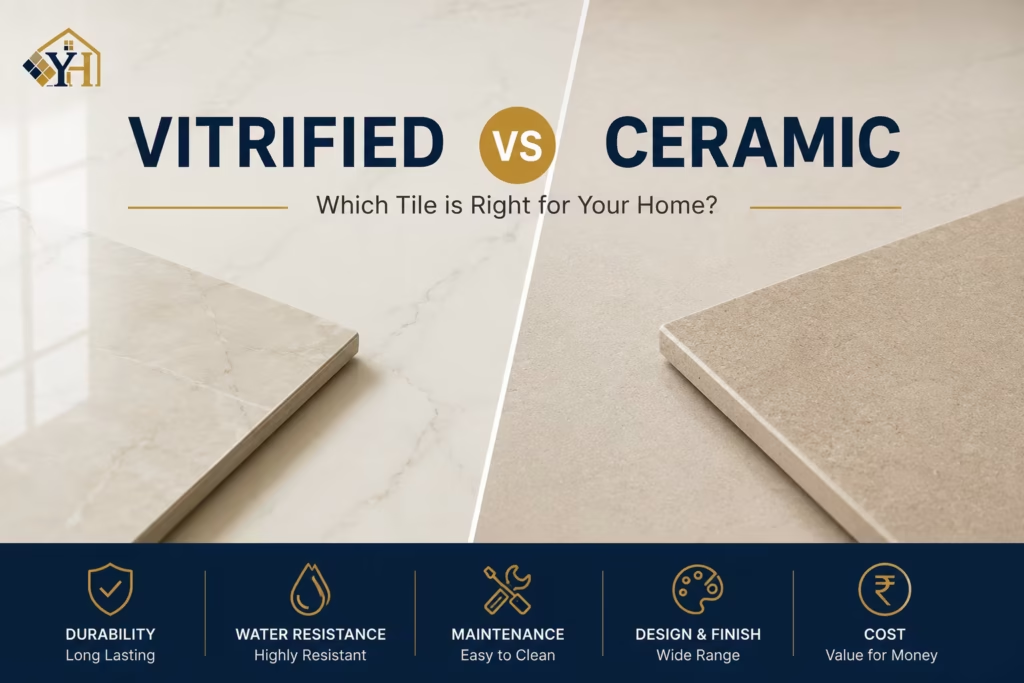
If you want the short version: vitrified tiles are harder, denser, and more water-resistant, making them the better choice for most floors and wet areas. Ceramic tiles are softer, more affordable, come in more designs, and are ideal for walls and low-traffic spaces. Most Indian homes end up using both — vitrified on the floors, ceramic on the walls.
But the details matter, because “better” depends on where the tile is going, how much foot traffic it gets, and your budget. Let’s break it down properly.
What are ceramic tiles?
Ceramic tiles are made from natural clay that is shaped, glazed, and fired in a kiln at a relatively moderate temperature. The glaze — a liquid glass coating applied before firing — gives the tile its colour, pattern, and finish, and seals the surface.
Because they’re fired at lower temperatures than vitrified tiles, ceramic tiles remain slightly softer and more porous. That porosity is the key characteristic to understand: the body of the tile can absorb a small amount of water, which affects where it should and shouldn’t be used.
Ceramic tiles are easy to cut and shape, which makes them forgiving to install, especially around fittings and corners. They come in an enormous range of colours, prints, and finishes, and they’re the most affordable tile category — which is why they dominate walls and budget-friendly projects.
In short: ceramic tiles are affordable, versatile, and easy to work with, but softer and more absorbent than vitrified.
What are vitrified tiles?
Vitrified tiles are made from a mixture of clay and other minerals such as silica, quartz, and feldspar, pressed and fired at very high temperatures. That intense heat causes “vitrification” — the raw materials partially melt and fuse into a glass-like mass. This is where the name comes from, and it’s what makes the tile dense, hard, and almost non-porous.
Because vitrified tiles absorb very little water and are much harder than ceramic, they resist stains, scratches, and heavy foot traffic far better. They’re the standard choice for Indian floors — living rooms, bedrooms, halls, kitchens, and commercial spaces.
Vitrified tiles come in several sub-types, which are worth knowing because they affect appearance and durability:
- Full-body vitrified tiles carry their colour all the way through the tile, not just on the surface. This means chips and everyday wear are far less visible — ideal for very high-traffic areas.
- Double-charge vitrified tiles are printed with a double layer of pigment pressed into the surface (around 3–4 mm thick), giving a durable, long-lasting design suited to busy floors.
- Glazed vitrified tiles (GVT) have a glazed printed surface, allowing intricate designs, wood looks, and marble looks — combining vitrified strength with decorative flexibility.
- Polished vitrified tiles (PGVT) have a glossy, mirror-like finish that gives floors a premium, reflective look.
In short: vitrified tiles are dense, tough, and water-resistant, making them excellent for floors and wet areas, with sub-types that balance durability and design.
The core difference: porosity
If you remember only one thing from this article, make it this: the real difference between ceramic and vitrified tiles is porosity — how much water the tile body absorbs.
Ceramic tiles have a water absorption rate typically above 3%. Vitrified tiles absorb well under 0.5%, and full-body vitrified tiles even less. This single property drives almost every other difference:
- Lower porosity means more water resistance, so vitrified suits bathrooms, kitchens, and outdoors.
- Lower porosity means more stain resistance, because spills can’t soak in.
- The dense body that creates low porosity also makes the tile harder and stronger.
So when someone asks “which is more durable” or “which is better for a bathroom,” the answer traces back to porosity every time.
Head-to-head comparison
Here’s how the two stack up across the factors that actually matter when you’re choosing.
Strength and durability
Vitrified wins clearly. The high-temperature firing makes vitrified tiles denser and harder, so they resist scratches, chips, and cracking under heavy furniture and constant foot traffic. Ceramic tiles are perfectly durable for walls and light-traffic floors, but in a busy hallway or a commercial space they’ll show wear sooner.
Water and stain resistance
Vitrified wins. Its near-zero porosity means water and spills sit on the surface instead of soaking in, so it shrugs off stains and suits wet areas. Ceramic’s glaze resists surface water well, but the more porous body makes it less ideal where water is constant, and an unglazed edge or a chip can absorb moisture.
Appearance and design
This one is closer, and depends on the look you want. Ceramic offers the widest range of colours, prints, and artistic patterns at low cost, which is why feature walls and decorative work often use ceramic. Vitrified — especially glazed vitrified (GVT) — now offers stunning wood-look and marble-look designs with a more premium, seamless finish, and polished vitrified gives that glossy, high-end floor. For sheer design variety on a budget, ceramic; for a premium, uniform floor, vitrified.
Cost
Ceramic wins on price. Ceramic tiles are noticeably cheaper per square foot, which makes them attractive for walls, rentals, and tight budgets. Vitrified costs more, but you’re paying for durability and water resistance where it counts. The smart move is to spend on vitrified where it matters (floors, wet areas) and save with ceramic where it doesn’t (dry walls).
Installation
Ceramic is slightly easier to cut and fix, and works with standard adhesives. Vitrified — being dense and often large-format — needs a good-quality tile adhesive rather than traditional cement, because its low porosity gives cement little to grip. This is a common reason vitrified tiles come loose when fixed incorrectly, so always use the right adhesive. (You can work out how much adhesive you need with our tile adhesive calculator.)
Maintenance
Both are low-maintenance, but vitrified has a slight edge because its non-porous surface wipes clean easily and resists staining. Ceramic is also easy to clean, though grout lines and any porous edges need a little more care in wet areas.
Slip resistance
Neither is automatically safer — it depends on the finish, not the tile type. Glossy tiles (ceramic or polished vitrified) can be slippery when wet, so for bathroom and balcony floors choose an anti-skid or matte finish regardless of which category you pick.
Which should you choose, room by room?
This is where the decision becomes simple. Here’s the practical, room-by-room guidance for a typical Indian home.
Living room and bedrooms
Best choice: vitrified. These are high-traffic dry areas where you want a durable, easy-to-clean, good-looking floor. Vitrified tiles — glazed or polished — give a premium, seamless look and handle years of foot traffic. A 600×600 mm vitrified tile is the standard here.
Kitchen
Floor: vitrified (matte or anti-skid, so spills aren’t slippery). Wall / backsplash: ceramic. The wall behind the counter takes no foot traffic and benefits from ceramic’s design range and lower cost, while glossy ceramic wipes clean of oil and splashes easily.
Bathroom
Floor: anti-skid vitrified (or anti-skid ceramic for a tighter budget), because the floor is constantly wet and safety matters most. Walls: ceramic, which offers glossy, decorative options at low cost and only needs to resist surface water. Smaller floor tiles help the floor slope to the drain.
Balcony and outdoor areas
Best choice: vitrified, anti-skid, and frost/fade-resistant. Outdoor areas face sun, rain, and temperature swings, so you want the density and low water absorption of vitrified. Avoid glossy finishes outdoors — they’re slippery when wet.
Commercial spaces and high-traffic areas
Best choice: full-body or double-charge vitrified. Shops, offices, and entryways see constant footfall, and full-body vitrified hides wear because the colour runs through the whole tile.
Common myths and mistakes
“Vitrified is always better, so I’ll use it everywhere.” Not quite — using premium vitrified on a dry feature wall wastes money where ceramic would look just as good for less. Match the tile to the job.
“Ceramic tiles are weak.” They’re not weak — they’re perfectly strong for walls and normal-traffic floors. They’re just less suited to heavy traffic and constant water than vitrified.
“I can fix vitrified tiles with cement like the old days.” This is a frequent and costly mistake. Vitrified tiles are too dense for cement to grip well; use a proper polymer-modified tile adhesive of the right type, or the tiles may sound hollow and lift over time.
“All that matters is the price per box.” Boxes contain different numbers of tiles and cover different areas, so compare price per square foot, and factor in durability. A cheaper tile that needs replacing sooner isn’t cheaper overall.
How to buy the right quantity
Once you’ve chosen your tile, the next step is ordering the right amount — enough to finish the job with spares, but not so much that boxes sit unused. Measure your area, account for the grout gap and cutting waste, and always keep one spare box from the same batch for future repairs, since tile shades vary between production lots.
Rather than doing this by hand, you can use our free tile calculator to work out exactly how many boxes you need for any floor or wall, and our adhesive calculator to work out the bags of adhesive to fix them. Together they take the guesswork out of ordering.

The bottom line
Vitrified and ceramic tiles aren’t really rivals — they’re partners. Vitrified gives you the hardness and water resistance you want underfoot and in wet areas, so it’s the right call for floors, bathrooms, kitchens, balconies, and busy spaces. Ceramic gives you affordability and design variety where durability matters less, making it ideal for walls and decorative work.
The best homes use both, deliberately: vitrified where the floor takes a beating and water is present, ceramic where you want a beautiful wall without overspending. Decide room by room, match the tile to how the space is actually used, buy from a single batch, use the correct adhesive, and your tiles will look good and last for decades.
Frequently asked questions
Is vitrified tile better than ceramic?
For floors and wet areas, yes — vitrified is harder and more water-resistant. For walls and low-traffic, decorative areas, ceramic is often the better value. Neither is universally “better”; it depends on where it’s going.
Can I use ceramic tiles on the floor?
Yes, in low-traffic dry rooms ceramic floor tiles are fine. For busy areas, bathrooms, and outdoors, vitrified is the safer, longer-lasting choice.
Are vitrified tiles slippery?
Polished and glossy vitrified tiles can be slippery when wet. For bathrooms and balconies, choose a matte or anti-skid finish — this applies to both vitrified and ceramic.
Why do vitrified tiles need special adhesive?
Because they’re dense and non-porous, traditional cement can’t grip them well. A polymer-modified tile adhesive of the correct type bonds properly and prevents tiles from coming loose.
Which is cheaper, vitrified or ceramic?
Ceramic is generally cheaper per square foot. Vitrified costs more but offers greater durability and water resistance, so it’s worth the extra where those qualities matter.
