
Some tiles are manufactured. Athangudi tiles are made — by hand, one at a time, with nothing more than soil, cement, colour, water and sunlight.
No machines. No kilns. No electricity. In a small village in Tamil Nadu, artisans still make these vivid, glossy tiles the same way their great-grandfathers did, poured by hand onto sheets of glass and left to cure under the sun. The result is a floor that shines like a mirror, stays cool even on the hottest day, and carries a story going back more than a century.
If you’ve seen photos of grand Chettinad mansions with their richly patterned, jewel-toned floors and wondered what they are — this is it. Here’s the full story of Athangudi tiles: where they came from, how they’re made, what makes them special, and whether they’re right for a modern home.
What are Athangudi tiles?
Athangudi tiles are handmade cement tiles produced in the village of Athangudi, in the Sivaganga district of Tamil Nadu, India. They’re named after that village, and you’ll also hear them called Chettinad tiles or Karaikudi tiles, after the wider region they come from.
They’re made from simple, local materials — sand, cement, and coloured oxides — poured by hand into patterned moulds over a sheet of glass, then dried in the sun. That glass base is the secret behind their signature glossy, reflective surface, achieved without any chemical polish.
What sets them apart from ordinary factory tiles is that they are genuinely handcrafted. No two are ever perfectly identical, each carries the small variations of the hand that made it, and the whole process uses no electricity or firing — making them one of the most eco-friendly flooring options you can find.
The history and origin of Athangudi tiles
The story begins with the Chettiars — properly the Nattukottai Chettiars, or Nagarathars — a wealthy merchant and banking community from the Chettinad region. From the 19th century onwards, they traded extensively across Europe and Southeast Asia, and they came home with grand architectural tastes.
Their palatial mansions were built with the finest imported materials: Burma teak, Italian marble, Japanese and Belgian ceramics, and beautiful encaustic floor tiles brought from England, Germany and Italy. These vibrant European tiles became a hallmark of luxury in Chettinad homes.
But there was a problem. When those imported tiles aged, cracked or broke, replacing them was slow and hugely expensive — the spares had to come all the way from Europe. So the enterprising local community did something clever: they set out to make their own replicas using local materials and skills.
That’s how the craft was born. Artisans in Athangudi worked out how to recreate the look of the imported encaustic tiles using the village’s own soil, and over time developed the distinctive handmade tile we know today. What started as a practical substitute became a celebrated art form in its own right — a craft now passed down through four or more generations of village families, and one that has been put forward for a Geographical Indication (GI) tag to protect its heritage.
How Athangudi tiles are made (step by step)
This is where Athangudi tiles are truly special. The process is simple in principle but demands real skill and patience, and it has barely changed in a hundred years. A single batch can take around ten days from start to finish.
1. The materials. The core ingredients are local sand, cement (white and grey), coloured oxide pigments, and water. The local sand is key — it has a very high quartz (silicate) content, and the region’s soil is rich in laterite, which together give the finished tiles their natural shine and lasting lustre.
2. The glass plate. Each tile is made on a small, clean sheet of glass. This is the trick behind the glossy finish: the side of the tile that sets against the smooth glass comes out mirror-smooth and shiny, with no need for any chemical polish or coating.
3. The stencil and colours. A metal frame is placed on the glass, and a metal stencil of the chosen design — floral or geometric — is set inside it. Artisans then hand-pour the coloured oxide mixtures into the different sections of the stencil, like painting inside the lines. Some skilled artisans work freehand instead of using a stencil.
4. Building up the tile. Once the coloured design is laid, a thin layer of fine local sand is sifted over it, followed by dry cement, and then a thicker layer of cement, sand and small stone aggregate to give the tile its body and thickness. The stencil is carefully lifted away, leaving the pattern behind.
5. Sun-drying and curing. The tiles — still sitting on their glass plates — are left out to dry in the sun. After initial drying, they’re immersed in water to cure for several days, which strengthens them and prevents cracking. Only then is the glass gently removed, revealing the glossy patterned surface beneath.
No furnace, no kiln, no machine touches the tile at any point. It’s earth, water, colour and sunlight — which is exactly why the craft is so admired today.

What makes Athangudi tiles unique
Several qualities set these tiles apart from ordinary flooring:
They shine without polish. That mirror-like gloss comes purely from being set against glass — not from any chemical coating. It’s a natural finish that’s part of the tile itself.
They stay cool underfoot. One of their most loved qualities: Athangudi tiles remain cool even in intense heat. You can walk on them comfortably barefoot even when it’s 40°C outside — a real advantage in hot climates.
They’re genuinely eco-friendly. Made from local, natural materials with no firing, no kiln and no electricity, they have a tiny environmental footprint compared with factory-made tiles. Nothing toxic, nothing energy-hungry.
They’re durable and age well. Well-made and well-laid, these tiles last for decades — many original floors in century-old mansions are still going strong. The colour is set deep into the tile, not just printed on the surface, so it stays vivid through years of wear.
They can be repaired individually. Because each tile is a separate handmade piece, a damaged one can be lifted and replaced on its own, without disturbing the whole floor — something mass-produced tiling can’t always offer.
Every tile is one of a kind. The handmade process means slight variations from tile to tile, giving a floor a warmth and character that machine-perfect tiles simply don’t have.
Designs, patterns and colours
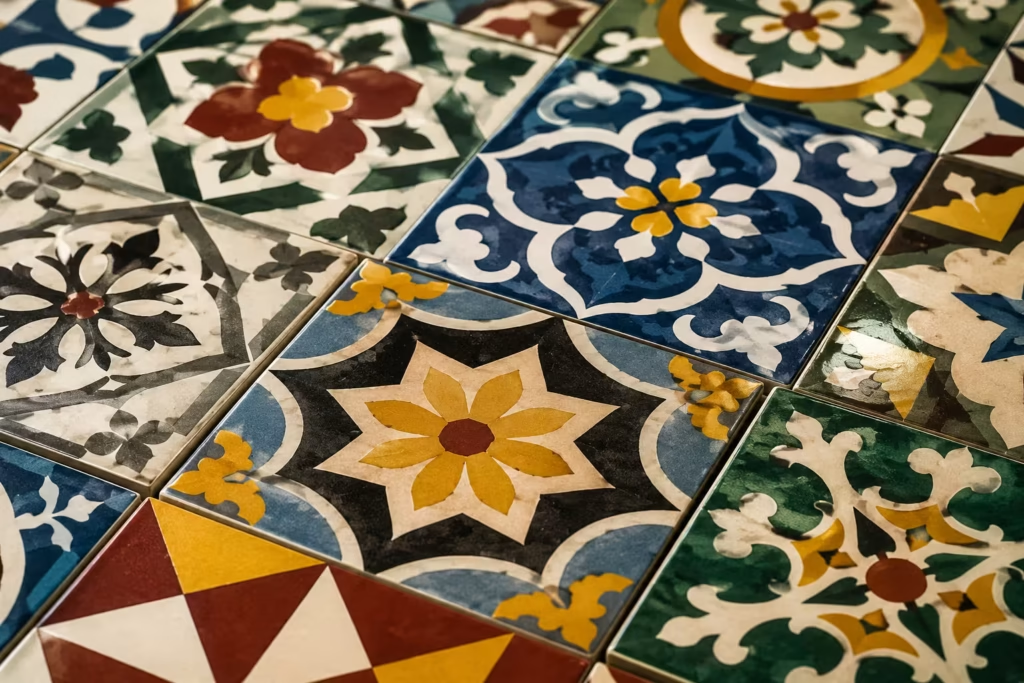
Athangudi tiles are famous for their vibrant colours and intricate patterns. The traditional palette centres on rich, earthy and jewel tones — red, mustard yellow, green, grey and blue — though a wide range of colours is possible today.
The patterns fall broadly into geometric and floral designs. You’ll see everything from bold repeating geometric motifs and borders to delicate flower patterns, and simple classics like black-and-white checks (originally imitating Italian marble floors). Because the designs are created with stencils — or freehand — the possibilities are almost endless, and many makers will produce custom patterns to a designer’s specification.
Laid across a floor, these repeating patterns create striking, seamless designed surfaces. In the old Chettinad mansions, different rooms and courtyards often had entirely different colour schemes, turning each space into its own composition.
Athangudi tiles in modern homes
For years, these tiles were associated mainly with heritage Chettinad mansions. But they’re enjoying a strong revival, appearing well beyond their traditional home. As more people look for materials with history, craft and character — and turn away from mass-produced synthetic flooring — Athangudi tiles have found a fresh audience.
Today you’ll find them in modern homes, apartments, boutique hotels, cafés, restaurants and design studios, used in ways that go beyond traditional flooring:
- As statement floors in living rooms, entryways and courtyards
- On feature walls and accent areas
- As backsplashes in kitchens
- To define a specific zone — a reading nook, a dining area — with a patterned “rug” of tiles
- In bathrooms and balconies for their cool, characterful surface
Their handmade, earthy appeal makes them a favourite for people wanting to add warmth, colour and a sense of story to contemporary interiors.
The honest pros and cons
Like any material, Athangudi tiles have trade-offs. Here’s a fair look at both sides.
The pros:
- Stunning, unique handmade appearance with deep colour and natural gloss
- Stay cool underfoot in hot weather
- Eco-friendly, made with no firing or electricity
- Durable and long-lasting when properly laid and cared for
- Individually repairable
- Fully customisable designs and colours
The cons — worth knowing before you choose:
- They need skilled laying. Because the tiles are handmade and their edges aren’t machine-perfect, only experienced masons can lay them level and neat. It’s strongly recommended to use masons familiar with Athangudi tiles rather than ordinary tile layers, or the finish can suffer.
- They’re softer than vitrified tiles. Being cement-based, they’re more porous and can be more prone to staining and scratching than dense porcelain, so they need a little more care.
- They require maintenance. To keep their shine, they benefit from periodic care — traditionally a gentle wax or oil treatment — and prompt cleaning of spills, since the surface is more absorbent than glazed tiles.
- The process is slow and the supply limited. Being handmade in one region, they take time to produce, and availability outside that area can mean waiting and higher transport considerations.
- The craft depends on a shrinking pool of artisans, which can affect availability.
None of these are dealbreakers — but they mean Athangudi tiles suit someone who values craft and character and is willing to look after them, rather than someone wanting the lowest-maintenance, cheapest floor.
Caring for Athangudi tiles
Looking after these tiles is straightforward but worth doing properly. Clean them with a soft cloth or mop and mild, non-acidic cleaners — harsh chemicals can dull the natural surface. Wipe up spills promptly, since the cement surface is more absorbent than glazed tile. Many owners periodically apply a light wax or a traditional oil treatment to maintain the glossy sheen. Traditionally, freshly laid tiles were even polished with rice husk rather than machines. With this simple care, an Athangudi floor keeps its lustre for generations.
The bottom line
Athangudi tiles are far more than flooring — they’re a living craft, handmade from earth and sunlight in a single Tamil Nadu village using methods over a century old. Their natural gloss, cool touch, vivid patterns and eco-friendly making have taken them from the palatial mansions of the Chettiars into modern homes, hotels and cafés around the world.
They ask for a little more — skilled laying and gentle upkeep — than a mass-produced tile. But in return they give something no factory tile can: genuine handmade character, a floor that’s cool underfoot and kind to the planet, and a piece of heritage you can live on every day. For anyone who values craft, colour and a story beneath their feet, few tiles come close.
Frequently asked questions
What are Athangudi tiles made of? Athangudi tiles are made from local sand, cement (white and grey), coloured oxide pigments and water. The mixture is hand-poured onto a glass plate through a metal stencil, then sun-dried and water-cured — with no firing, kiln or electricity involved.
How are Athangudi tiles made? Each tile is made by hand on a sheet of glass. A metal stencil sets the pattern, coloured oxides are poured in by hand, then layers of sand and cement are added for body. The tile is sun-dried and cured in water for several days before the glass is removed, revealing a glossy patterned surface.
Why do Athangudi tiles shine without polish? Their glossy finish comes from being set against a smooth glass plate as they cure — the surface that forms against the glass comes out mirror-smooth naturally, with no chemical polish or coating needed.
Are Athangudi tiles durable? Yes. When properly made, laid and maintained, they last for decades — many century-old floors in Chettinad mansions are still in use. They are, however, cement-based and more porous than vitrified tiles, so they need gentle care to stay at their best.
Do Athangudi tiles stay cool? Yes — one of their most valued qualities is that they remain cool underfoot even in very hot weather, making them comfortable to walk on barefoot in warm climates.
Are Athangudi tiles eco-friendly? Very. They’re made from natural, locally sourced materials using sunlight to dry, with no kiln firing and no electricity, giving them a far smaller environmental footprint than factory-made tiles.
Where can Athangudi tiles be used? They work as floors, feature walls, backsplashes and accent zones in homes, and are popular in boutique hotels, cafés and restaurants. They suit living rooms, entryways, courtyards, kitchens, bathrooms and balconies — anywhere you want colour, character and a cool surface.
Do Athangudi tiles need special laying? Yes. Because they’re handmade with slightly uneven edges, they should be laid by masons experienced with Athangudi tiles to get a level, neat finish. Ordinary tile layers unfamiliar with them can struggle to lay them well.
