
A water closet, or WC, is just the formal name for a toilet. You’ll also hear it called a Western toilet, a commode, or an EWC (European water closet). Whatever you call it, it’s the one bathroom fixture you cannot afford to get wrong, because you use it more than anything else in the room and swapping it out later is a genuinely miserable job.
The Indian market has come a long way. A water closet used to mean a plain floor-mounted commode and not much else. Now you’re choosing between one-piece toilets, wall-hung WCs, rimless bowls that barely need scrubbing, tankless systems, water-saving dual-flush models and full-blown smart toilets with heated seats and app control.
Plenty of good companies compete for that business, and they’re not all good at the same things. This is the top 10 water closet manufacturing companies in India, with an honest read on what each one is actually best at, who it suits, and where it sits on price. No specific figures, because prices move constantly, so treat the positioning as your guide.
How this list is ranked
Quick word on method, because most “top 10” lists don’t bother with one.
This isn’t an official market-share table. It’s a practical ranking built on the things that matter when you’re actually buying: brand presence in India, manufacturing capability, the breadth of the water-closet range, reputation for quality, technology, and after-sales service. That last point is the one people forget and later regret. A brilliant WC from a brand with no service technician in your town is a problem waiting to happen.
The top few are genuinely close, and you could reasonably reshuffle them depending on your budget and what’s well stocked near you. Below that, the list splits between the big Indian manufacturers and the international bathroom specialists, all of them dedicated bathware brands rather than tile companies with a side business. Where a brand is best at one specific thing, I’ve said so plainly.
Here’s the shortlist, then the detail.
The top 10 at a glance
| Rank | Company / Brand | Best known for | Positioning |
|---|---|---|---|
| 1 | CERA Sanitaryware | Wide range and value | Value to Premium |
| 2 | Hindware (HSIL) | Indian manufacturing and huge range | Value to Premium |
| 3 | Roca / Parryware | Legacy plus international technology | Value to Luxury |
| 4 | Jaquar | Premium design and smart WCs | Mid to Luxury |
| 5 | Kohler India | Luxury toilets and technology | Premium to Luxury |
| 6 | TOTO India | Japanese hygiene technology | Premium to Luxury |
| 7 | VitrA | European design, pure sanitaryware | Mid to Premium |
| 8 | Duravit | Design-led luxury bathrooms | Luxury |
| 9 | Geberit | Concealed cisterns and wall-hung systems | Premium |
| 10 | American Standard | Trusted international name at sensible prices | Value to Mid |
(Featured Partner slot: this space is reserved for a clearly disclosed partner brand. It is marked as a partnership and does not affect the merit-based rankings above or the profiles below.)
The profiles
1. CERA Sanitaryware
If you want the safest all-round pick, start here. CERA was founded in 1980, is headquartered in Ahmedabad, and makes its sanitaryware at Kadi in Gujarat. Over four decades it’s turned into one of India’s most trusted names, and it did it by being brilliant at value without looking cheap.
The range is the real strength. A homeowner on a tight budget can get a plain, dependable Western toilet, and someone doing up a contemporary bathroom can pick a sleek one-piece or a rimless model from the same brand. CERA also pushes hard on water-saving flush systems and runs its own R&D, so the efficiency isn’t just marketing.
That mix makes it the go-to for regular homes, apartments, builders, hotels and renovations alike.
Best for: buyers who want the sweet spot of price, design, availability and a name they can trust.
2. Hindware (HSIL)
If you grew up in India, you’ve used a Hindware WC somewhere. Hindware, made by HSIL (Hindustan Sanitaryware and Industries Limited), dates back to 1960 and has one of the widest water-closet catalogues in the country.
And “widest” is not an exaggeration. Hindware covers standard floor-mounted WCs, one-piece models, wall-mounted and wall-hung designs, coupled WCs, rimless bowls, even coloured sanitaryware. It also goes further than most on technology, with tankless WCs that flush off direct water pressure instead of a cistern, and intelligent (smart) toilets with electronic features. Many models add soft-close seats and low-litre dual flushing as standard.
For a dealer, builder or anyone who wants everything from an entry-level commode to a smart toilet under one roof, that spread is hard to beat.
Best for: buyers who want the broadest range and rock-solid nationwide availability.
3. Roca / Parryware
This is two brands working as one, and it’s a clever combination. Parryware is one of the oldest sanitaryware names in India, tracing back to 1952, and since 2006 it’s been part of the Spanish Roca Group (Roca itself was founded in 1917). That marriage gives Parryware global manufacturing standards even on its affordable ranges, which shows up as unusually consistent quality at the value end, plus water-efficient dual-flush WCs and antibacterial glazing.
Roca, sold under its own name, sits higher up. It’s where you go for European design and proper smart toilets: its In-Wash range brings rimless vortex flushing, an automatic lid, a heated seat, a self-cleaning nozzle, a dryer and app control.
So you effectively get two price bands from one family: Parryware for dependable value, Roca for design-led luxury.
Best for: buyers who want Indian familiarity and international technology, at whichever budget suits.
4. Jaquar
Jaquar made its name on taps and fittings, but it’s now a full complete bathroom solutions brand with a serious WC line-up. Founded in 1960 by N.L. Mehra and headquartered in Manesar, Haryana, it also runs Artize at the luxury end and Essco for value buyers.
Two things set Jaquar apart. First, design, its WCs simply look a cut above, from rimless wall-hung models to smart single-piece units. Second, and this is the quiet superpower, its service network is enormous, with thousands of trained technicians and long warranties behind the product. For a premium fixture you’ll keep for years, that back-up is worth real money. Jaquar’s Bidspa range folds bidet functions into the toilet with warm-water washing, drying and deodorising.
Best for: mid-to-premium bathrooms where design and dependable after-sales service both matter.
5. Kohler India
Kohler is American luxury and plays the part proudly. The parent company goes back to 1873 in the US, and Kohler has been in India since 1999, manufacturing here in Gujarat and Haryana.
This is showpiece territory. Kohler’s intelligent toilets come with heated seats, bidet functions, automatic lids and app control, alongside beautifully engineered one-piece, two-piece, wall-hung and rimless conventional WCs. Nobody buys Kohler to save money. You buy it when design, finish and technology justify the spend, which is why it turns up in luxury homes, high-end apartments and premium hotels.
Best for: premium and luxury projects where design and advanced features are the point.
6. TOTO India
TOTO is the Japanese brand that more or less invented the modern smart toilet. Founded in 1917 as Toyo Toki, it pioneered the Washlet, the electronic bidet seat, and it remains the global benchmark for toilet hygiene.
TOTO treats a toilet as a complete hygiene system rather than a lump of ceramic. Its premium models bring powerful yet water-efficient flushing, dirt-resistant bowl glazes, warm-water cleansing, air drying, deodorising, automatic operation and personalised settings. If cutting-edge cleanliness is your priority and the budget allows, TOTO is the specialist.
Best for: buyers who care most about hygiene technology and the Japanese smart-toilet experience.
7. VitrA
VitrA is a proper bathroom specialist. Founded in 1942 in Turkey and part of the Eczacıbaşı Group, it actually started in tiles and then switched over to sanitaryware in the late 1950s to chase demand, so bathrooms have been its main business for well over half a century. Today it’s a global name for WCs, wash basins, bathroom furniture and brassware.
The appeal is European design at a price that doesn’t reach top-luxury territory. VitrA leans into clean, contemporary styling, rimless bowls and water-saving flush systems, and it’s available in India through dealers with proper manufacturer backing. It’s a smart shortlist pick if you want a design-forward, dedicated bathroom brand without paying Duravit money.
Best for: buyers who want European design and a pure bathroom brand at a sensible premium price.
8. Duravit
Unlike most names on this list, Duravit does one thing: bathrooms. Founded all the way back in 1817 in Hornberg, Germany, it’s a genuine, pure bathroom-products maker, sanitary ceramics, bathroom furniture, bathtubs and shower toilets, sold in over 130 countries. That focus is exactly why designers reach for it.
Duravit is the design house of the bunch. It’s famous for collaborations with big-name designers like Philippe Starck, and its WCs and shower toilets (its SensoWash range) turn the fixture into a genuine piece of design, backed by Red Dot and German Design Award wins. It isn’t just imported, either: Duravit India has its own manufacturing set-up, plus design tools that can plan a bathroom as small as 2.6 square metres, which is a real help in space-tight city flats.
Best for: design-led luxury bathrooms and architect-driven projects where the WC is meant to be admired.
9. Geberit
Geberit is the Swiss brand behind the part of the toilet you never see. Founded in 1874, it effectively created the category of concealed, in-wall flushing systems, the hidden cisterns and flush plates that let a wall-hung WC sit clean against the wall. Ask almost any architect or plumber in India about in-wall systems and Geberit is the first name they’ll say.
That makes it a slightly different entry from the rest, and a useful one. If you’re going for a wall-hung WC, the concealed cistern and frame doing the hard work behind the wall is very often Geberit, and it also offers complete WC solutions. It’s a premium choice, but this is the kind of hardware you don’t want to cut corners on, because unlike a tap, you can’t easily swap it out once it’s buried in the wall.
Best for: wall-hung WC setups and premium, modern bathrooms where the cistern is hidden in the wall.
10. American Standard
American Standard is a proper bathroom heritage brand, making toilets and bath fixtures since 1875. Since 2013 it’s been part of the global LIXIL group (the same family as Grohe), which gives it access to shared international engineering and manufacturing standards.
In India it plays a smart game. Rather than chasing the luxury smart-toilet crowd, American Standard sits in the budget-to-mid segment with reliable, easy-to-install WCs and faucets and a focus on water-efficient design. It’s the pick when you want a genuine, internationally recognised bathroom name on the wall without paying premium-tier money for it.
Best for: buyers who want a trusted international bathroom brand at a sensible, everyday price.
Quick comparison
| Brand | Indian / International | Positioning | Major strength |
|---|---|---|---|
| CERA | Indian | Value–Premium | Value plus variety |
| Hindware | Indian | Value–Premium | Widest range, availability |
| Roca / Parryware | Spanish-owned, Indian legacy | Value–Luxury | Design plus technology |
| Jaquar | Indian | Mid–Luxury | Premium design plus service |
| Kohler | US (made in India) | Premium–Luxury | Luxury and smart tech |
| TOTO | Japanese | Premium–Luxury | Hygiene and smart toilets |
| VitrA | Turkish | Mid–Premium | European design, pure bathroom brand |
| Duravit | German (made in India) | Luxury | Design-led, architect favourite |
| Geberit | Swiss | Premium | Concealed cisterns, wall-hung systems |
| American Standard | US (LIXIL) | Value–Mid | Trusted global name, sensible price |
Positioning is a general guide only. Actual prices vary a lot by model, size, flush system, seat and dealer.
Which type of water closet should you buy?
Picking the brand is only half the job. The type of WC matters just as much, and getting it wrong is expensive.
Standard floor-mounted WC. The conventional option, and still the safest for a budget-conscious home. It’s affordable, simple to install, easy to service and available everywhere. Nothing flashy, nothing to go wrong.
One-piece WC. The tank and bowl are moulded as a single unit. It looks modern, has fewer joints and crevices, and is easier to wipe down and keep looking sharp. A strong choice for a contemporary bathroom, and now widely stocked across CERA, Hindware and most brands here.
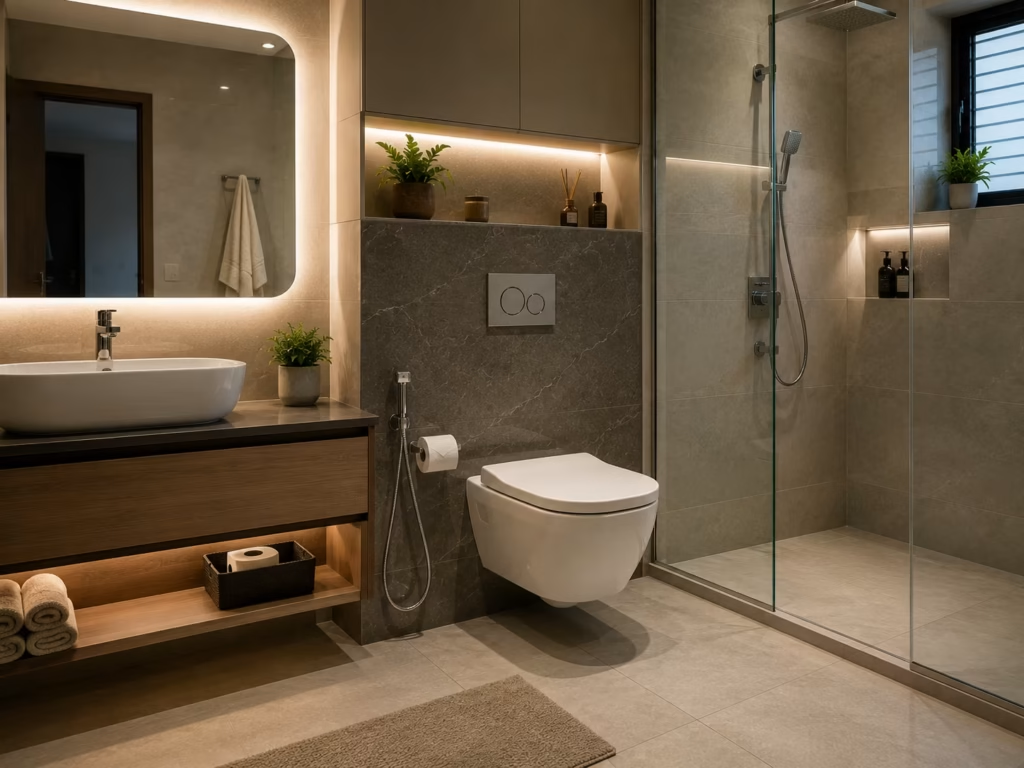
Wall-hung WC. The bowl mounts on the wall with the cistern hidden inside it. It frees up visible floor space, makes mopping underneath easy, looks sleek, and lets you set the height to suit your household. The trade-offs are real, though: it needs a concealed cistern frame (a carrier) built into the wall, proper wall support to take the load, and an access panel for maintenance. Decide on it early, because it changes your plumbing. If you’re weighing this against a standard commode, our wall-hung vs floor toilet guide runs through the full pros and cons.
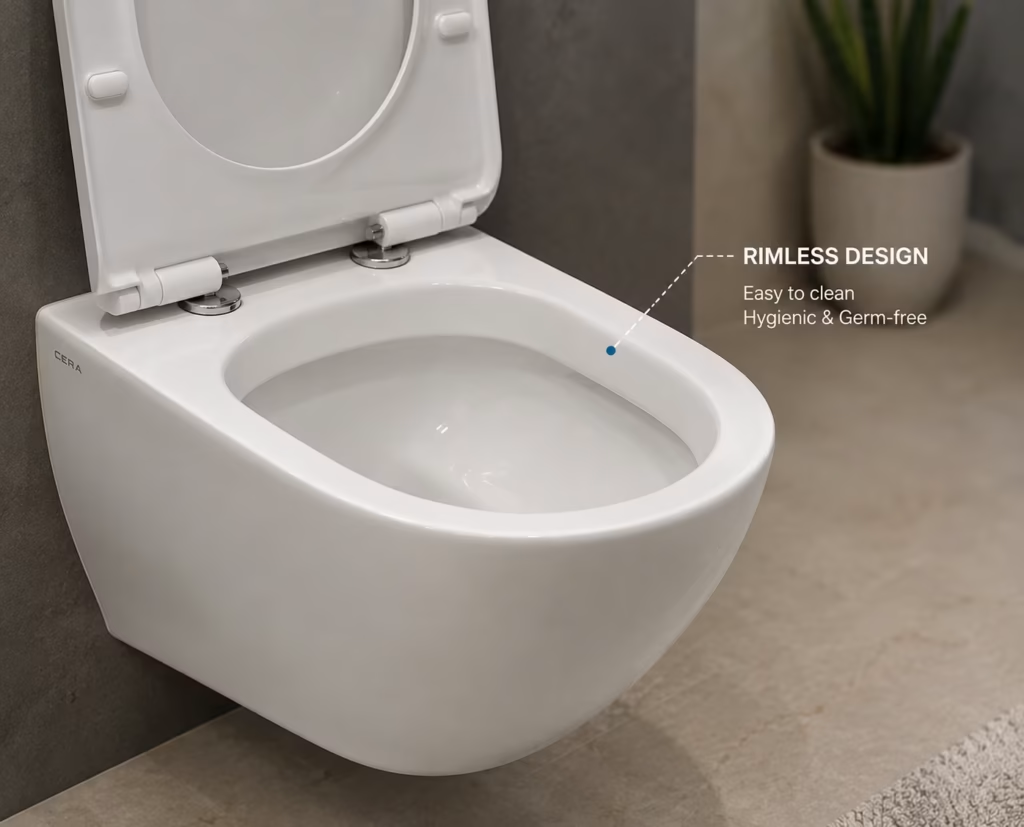
Rimless WC. This one’s less about looks and more about your weekends. A rimless bowl removes the traditional hidden rim where grime and germs collect, so it’s far easier to clean and more hygienic. Most leading brands now offer rimless models, and honestly, if the budget stretches, it’s one of the better upgrades you can make.
Smart / intelligent WC. The top end, combining a normal WC with electronics: heated seat, warm-water wash, dryer, auto lid, deodoriser, sometimes UV self-cleaning and sensor operation. Lovely to use, but remember two practical things most people miss, covered just below.
What to check before you buy
A beautiful WC is useless if it doesn’t fit your bathroom or your plumbing. Run through this before you pay.
Trap type (S-trap or P-trap). The waste outlet has to match your drainage. An S-trap exits down through the floor; a P-trap exits back through the wall. Get this wrong and the toilet simply won’t connect. Check what your bathroom has before you choose.
Rough-in (set-out) measurement. This is the distance from the finished wall to the centre of the waste outlet, and it’s the number that trips up renovations most often. Measure it, note the manufacturer’s spec, and make sure they agree. A gorgeous WC with the wrong rough-in is a return and a delay.
Flush system and water use. Look past the shape to how it flushes: single flush, dual flush, siphonic, vortex or rimless. A good dual-flush model (often around 3 to 4 litres for a full flush and less for a half) saves water on every single use, and India’s water-labelling standards make efficient models easy to spot. This is one detail worth being fussy about.
Bathroom size. In a small bathroom, a compact or wall-hung WC with a short projection buys you precious space. In a larger room you’ve got the freedom to go for a statement one-piece.
Seat quality. A premium bowl with a flimsy seat is a daily annoyance. Check whether you’re getting a plain seat or a soft-close, quick-release one that’s easy to lift off and clean. On smart WCs the seat is the electronic heart of the product, so it matters even more.
Power and water pressure for smart toilets. Here’s what the showroom often forgets to mention. A smart WC needs a power point near the toilet (plan it before you tile) and enough water pressure to run properly. Sort both out in advance or your fancy toilet won’t work as intended.
Germ-resistant glazes. Many brands now offer antibacterial or germ-resistant glazing, often paired with rim-free bowls that leave nowhere for grime to hide. Hindware, Parryware and several others offer it. If hygiene is a priority, it’s a genuine, low-cost upgrade to ask about.
Warranty and spare parts. Check the ceramic warranty, the seat and flush-mechanism warranty, and, crucially, whether spares and service exist near you. The big Indian brands win here on sheer coverage, which is exactly why service network sits in this list’s ranking criteria.
Which brand is best for you?
There’s no single winner, because “best” depends on what you’re doing.
Best all-round value: CERA, for its blend of price, variety and reputation. Widest range under one brand: Hindware, from plain commodes to tankless and smart WCs. Premium design with great service: Jaquar. Outright luxury and technology: Kohler. Design-led, architect-driven bathrooms: Duravit. European design without top-luxury pricing: VitrA. Wall-hung WCs and concealed cisterns: Geberit. Hygiene tech and the Japanese experience: TOTO. Indian legacy plus international tech across budgets: Roca / Parryware. A trusted global name at a sensible price: American Standard.
Bottom line
India’s water-closet market is competitive and genuinely good, so you don’t need to buy on brand name alone. CERA, Hindware and Parryware are the most practical starting points for a typical home, thanks to their range, value and availability. Step up to Jaquar, Kohler, TOTO, Roca, Duravit or VitrA when design and technology justify the spend. American Standard is the safe international pick at a sensible price, and Geberit is the name to know for the concealed cistern behind a wall-hung WC. Every brand here is a dedicated bathroom maker, not a tile company moonlighting in bathware.
Whatever you pick, sort the unglamorous details first: the trap type, the rough-in measurement, the flush rating, and local service and spares. Nail those and almost any brand here will serve you well for years. While you’re planning the room, our guide to the best tiles for bathroom floor helps you get the surface underneath sorted at the same time.
FAQ
Which is the best water closet brand in India? For most homes, CERA, Hindware, Parryware and Jaquar are the strongest all-round choices, combining quality, wide availability and good service. The right one depends on your budget and what’s well serviced in your area. For luxury or smart toilets, Kohler, TOTO and Roca lead.
What is the difference between a water closet, a commode and a WC? In everyday Indian use they mean the same thing: the Western-style sitting toilet. “Water closet” and “WC” are the formal terms, “commode” and “Western toilet” the casual ones.
Is CERA or Hindware better? Both are excellent Indian brands. CERA is the value-and-variety champion with strong water-saving designs, while Hindware offers the widest overall range, including standard, one-piece, wall-mounted, tankless and smart WCs. For pure range, edge to Hindware; for value styling, edge to CERA.
Which brand makes the best smart or intelligent toilet? TOTO and Kohler lead at the top end, TOTO for hygiene technology and Kohler for luxury design, while Roca and Jaquar also offer sophisticated smart WCs and Hindware has intelligent models at more accessible points. Remember a smart WC needs a nearby power point and good water pressure.
Do I need a Geberit cistern for a wall-hung WC? Not necessarily Geberit specifically, but a wall-hung WC does need a concealed in-wall cistern and support frame, and Geberit is the best-known specialist for that in India. Whichever brand you use, don’t cut corners on it, because once it’s built into the wall you can’t easily swap it out like a tap.
Are Indian sanitaryware brands as good as imported ones? For everyday use, yes. CERA, Hindware, Jaquar and Parryware make reliable, water-efficient WCs that suit the vast majority of homes, and Parryware even shares Roca’s global manufacturing standards. Imported premium brands mainly pull ahead on cutting-edge design and smart features, not basic quality.
What should I check before buying a water closet? Confirm the trap type (S-trap or P-trap) and the rough-in measurement match your plumbing, check the flush type and water-efficiency rating, decide between floor-mounted and wall-hung early, and make sure the brand has service and spares near you. For smart toilets, plan a power point and check water pressure first.
Which water closet is easiest to keep clean? A rimless WC, hands down. Removing the hidden rim gets rid of the spot where grime and germs collect, so cleaning is quicker and more hygienic. Pairing rimless with a germ-resistant glaze and a soft-close, quick-release seat makes maintenance easier still.
