
You’ve picked the size. You’ve picked the colour. Then the showroom guy asks one more question — matte or glossy? — and suddenly you’re stuck.
It sounds like a small choice. It isn’t.
The finish changes how a tile looks, how it feels underfoot, how much cleaning it demands, and — this is the big one — how likely someone is to slip on it when it’s wet. Get it right and the floor almost looks after itself. Get it wrong and you’re mopping up smudges every day, or worse, watching a family member skate across a wet bathroom.
So let’s settle the matte vs glossy tiles question properly. No sales pitch. Just what each finish is actually good at, where it lets you down, and how to match the finish to the room.
What “matte” and “glossy” actually mean
Both are just surface treatments on the same tile body. A ceramic, porcelain or vitrified tile can be made in either finish — the difference is the top layer, not what’s underneath.
Glossy (polished) tiles have a smooth, reflective surface. On a glazed tile that shine comes from the glaze; on a full-body vitrified tile it’s mechanically polished after firing. Either way, light bounces straight off it. That’s the mirror-like look people love.
Matte tiles have no reflective coating. The surface is flat, sometimes lightly textured, and it scatters light instead of bouncing it back. That’s why matte reads as soft and understated rather than shiny.
There’s also a middle child — satin or lappato — but we’ll come to that near the end. First, the head-to-head.
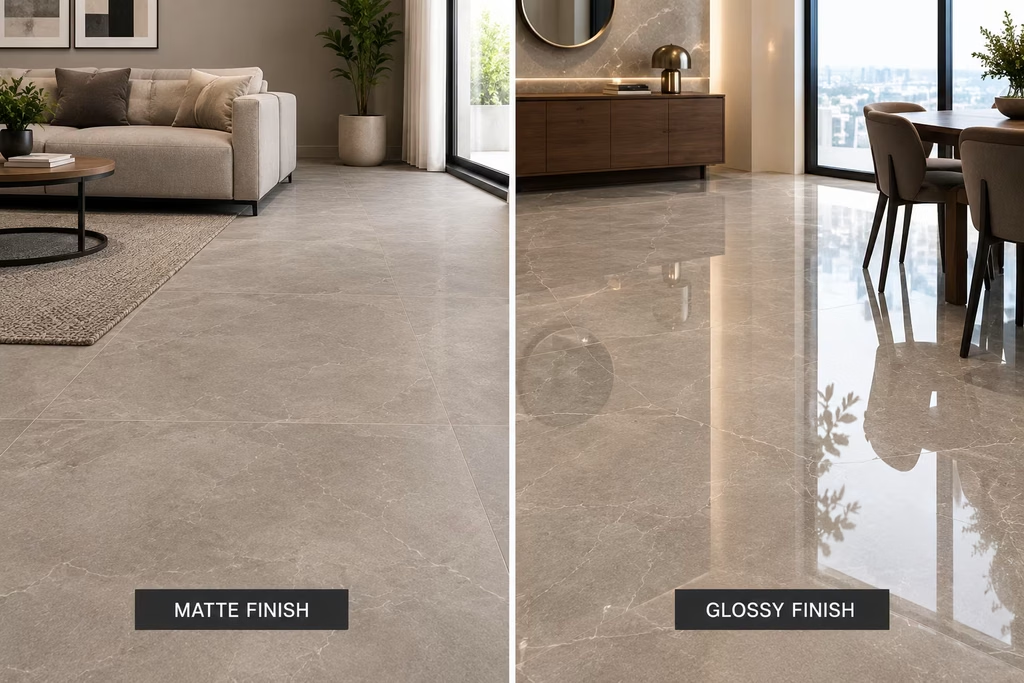
What actually makes a tile matte or glossy
It’s just the surface.
A glossy tile has been polished, or finished with a shiny glaze, so light bounces straight off it. That’s the mirror effect.
A matte tile skips that polish. The surface scatters light instead of reflecting it, which is why it looks soft and flat.
Same clay body underneath in a lot of cases — porcelain, ceramic, vitrified. The finish is the last step, and it’s the thing that changes how the tile behaves in your home. Worth knowing, because people assume glossy = higher quality. It doesn’t. It’s a different surface, not a better one.
Glossy tiles: the good bits, and the bits nobody warns you about
The appeal is obvious the second you see them. Glossy tiles throw light around a room. Colours look richer. A small, dim bathroom can feel twice as open with a light glossy wall tile and a mirror facing it. On a kitchen backsplash, a smooth glossy surface wipes clean in one pass — oil splatter doesn’t stand a chance.
Now the part the showroom won’t mention.
Gloss shows everything. Every water droplet, every soap streak, every fingerprint, every bit of settled dust. In a hard-water area especially, a glossy shower wall will wear a film of white spots within days if you’re not squeegeeing it. It’s not dirtier than matte — it just advertises the dirt.
And on the floor, gloss and water are a bad mix. A polished floor tile that’s fine when dry can get genuinely slippery the moment it’s wet. That’s the real reason we steer people away from glossy bathroom floors — not the look, the safety.
Matte tiles: forgiving, but not flawless
Matte is the quiet workhorse. It hides the small stuff — dust, footprints, dried water marks, tiny scratches — because there’s no shine to catch them. That’s a big deal in a busy house where the floor gets mopped twice a week, not twice a day.
It grips better too. A matte or textured surface gives your feet something to hold onto, which is why it’s the sensible pick for anywhere that gets wet. (More on slip ratings below, because “matte” alone isn’t a guarantee.)
But matte has two honest downsides.
First, texture traps dirt. A smooth matte tile is easy to clean. A deeply textured, structured matte tile — the kind that mimics rough stone — collects grime and grease in its little grooves, and in a kitchen that means a stiff brush now and then, not just a mop.
Second, matte doesn’t brighten a room. In a north-facing room, or any space that’s short on natural light, a dark matte floor can read as flat and a little gloomy. If your room is already dim, matte won’t help — and might make it worse.
Matte vs glossy tiles: the quick comparison
| What matters | Matte | Glossy |
|---|---|---|
| Look | Soft, natural, modern | Bright, reflective, dressy |
| Reflects light | Low | High — brightens a room |
| Grip when wet | Better | Poorer — can be slippery |
| Shows water marks | Barely | Yes, clearly |
| Shows fingerprints & dust | Hides them | Shows them |
| Easy daily wipe | Good (smooth) / fussier (textured) | Very easy to wipe |
| Best on | Floors, wet areas, high traffic | Walls, backsplashes, small rooms |
| Weak spot | Textured versions trap dirt | Slippery wet; needs frequent wiping |
The slip factor — the one thing to actually check
This is where finish alone will let you down. “Matte” is not a safety rating, and some glossy floor tiles are made and rated for floors. So don’t guess from the shine.
For any wet floor — bathroom, shower, kitchen, balcony, poolside — ask the seller for the tile’s slip rating and buy on that, not the finish:
- R-rating (the ramp test): look for R10 or above for a bathroom floor, R11+ for a shower floor or anything outdoors.
- DCOF: a value of 0.42 or higher is the usual benchmark for floors that’ll get wet.
A textured matte tile usually clears these easily. A high-gloss tile usually doesn’t. But check the number — that’s the point.
If you’re specifically sorting out a wet room, our full guide to the best tiles for bathroom floor walks through grip, size and grout for exactly that job.
Room by room: where each finish earns its place
Instead of forcing one finish on the whole house, put each where it’s strong.
Bathroom — matte (or properly slip-rated) on the floor, glossy on the walls. This combo is popular for a reason: the floor stays safe underfoot, the walls bounce light and wipe clean, and the contrast looks intentional rather than accidental. A matte stone-look floor with a glossy marble-look wall is a very safe, very good-looking pairing.
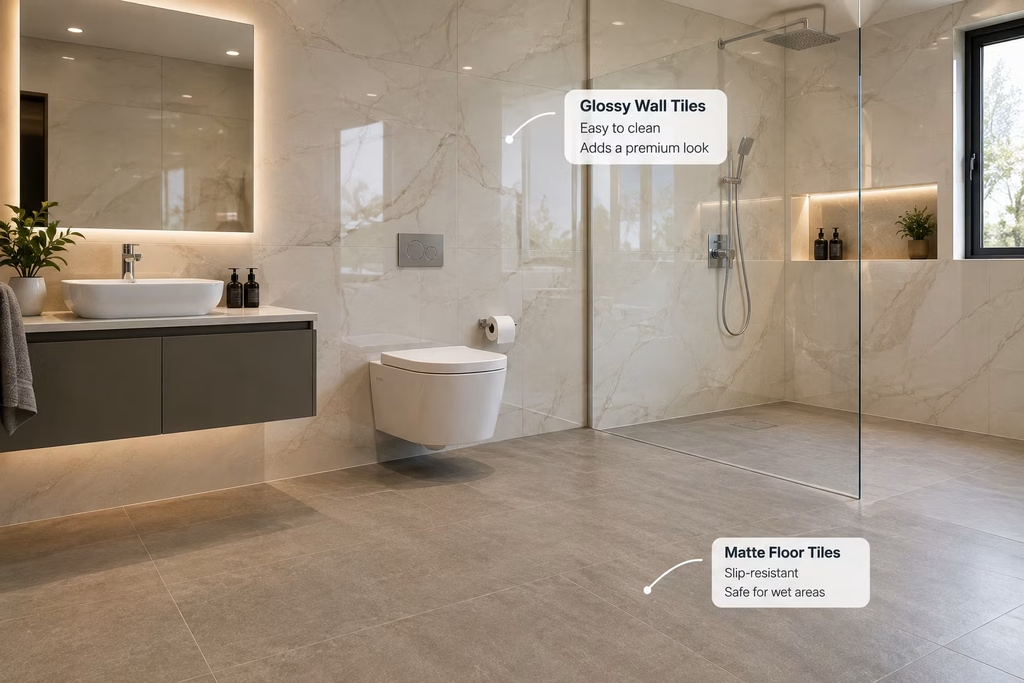
Kitchen — matte floor, glossy backsplash. The floor takes dropped food, grease and constant traffic without showing every mark. The backsplash sits behind the hob where you want a smooth surface you can wipe in seconds.
Living room — either works, so choose on style. Matte gives a calm, modern, stone-or-concrete look and hides footprints. Glossy makes a big bright room feel more formal and luxurious, especially in a marble-look. Just remember gloss shows dust and can throw glare under strong light.
Bedroom — matte, usually. It’s softer underfoot to look at, less reflective when you flick the light on at night, and more forgiving of the odd sock-dragged dust bunny.
Small, dark rooms — this is glossy’s home turf. A light glossy tile plus good lighting genuinely opens the space up. A light matte tile in a large format with thin grout lines is a close second if you’re worried about slip.
The middle ground nobody mentions: lappato / satin
If you’re torn, there’s a genuine third option that most people don’t know about.
Satin (also called silk or semi-matte) sits between the two — a gentle, low-level sheen. It carries a little of gloss’s warmth and light without the mirror-shine or the worst of the slipperiness. It’s a lovely all-rounder for living areas.
Lappato (or “sugar” finish) is a partly-polished tile — patches of shine and matte across the same surface. It gives depth and a premium look while keeping more grip than full gloss.
Neither is a magic fix — a lappato floor is still more slippery than a true matte one, so it’s not a shortcut for a shower. But for a living room or bedroom where you want some glow without full gloss, satin and lappato are worth asking to see.
A quick word on buying and quantity
Finish doesn’t really change the price bracket on its own — you’ll find matte and glossy at budget, mid and premium levels alike, and prices vary by brand, size and quality. Choose the finish for the room first; the cost sorts itself out within your range.
What does cost you money is buying the wrong quantity. Order too little and you risk a second batch with a slightly different shade; order too much and it sits in your garage. Work out your area, add the usual 10% for cuts and wastage, and buy it all in one go from the same batch.
Rather than guess, run your numbers through the free tile calculator — pop in your room size and it tells you how many tiles and boxes you need, wastage included. Do it once and you’ll order with confidence.
Bottom line
There’s no universally “better” finish — there’s only the right finish for the room.
- Choose matte for floors, wet areas, high-traffic zones and bright rooms. It’s safer underfoot, hides wear and everyday dirt, and forgives an imperfect subfloor.
- Choose glossy for walls, backsplashes, dry low-traffic floors and small or dark rooms that need brightening. It wipes clean instantly and adds shine — just accept that it shows smudges and gets slippery when wet.
- Torn? A satin or lappato finish splits the difference for living spaces.
Match finish to function and you’ll never regret the choice. And before you order, get the quantity right with the tile calculator so the only thing left to do is enjoy the floor.
Frequently Asked Questions
Are matte tiles better than glossy tiles? Neither is better overall — it depends on the room. Matte is better for floors and wet areas because it grips and hides wear; glossy is better for walls and small dark rooms because it’s easy to wipe and reflects light. Match the finish to how the space is used.
Which is more slippery, matte or glossy tiles? Glossy tiles are more slippery, especially when wet, because the polished surface offers little grip. Matte and textured tiles have a higher slip rating and are the safer choice for bathrooms, kitchens, entrances and outdoor areas.
Are matte tiles harder to clean than glossy? For everyday spills, glossy is easier — a quick wipe lifts everything off the smooth surface. Matte hides dirt so it looks clean for longer, but any texture can trap grime, so it occasionally needs a proper scrub rather than a wipe.
Do glossy tiles scratch easily? Glossy tiles show scratches and dulling more than matte ones, because there’s a shine to lose. The tile itself may be just as tough, but wear becomes visible sooner on a polished surface. Matte hides scratches and micro-wear well.
Are glossy tiles good for bathroom floors? Not for the floor. Glossy tiles get dangerously slippery when wet, which is exactly what a bathroom floor becomes. Save gloss for the bathroom walls and use a matte or textured tile (around R10, or R11 for showers) on the floor.
Do matte tiles make a room look smaller? They can feel a touch cosier because they absorb light rather than bounce it, but they won’t shrink a room. If you specifically want a small or dark space to feel bigger and brighter, glossy tiles do that better.
Can I mix matte and glossy tiles in one room? Yes, and it often looks deliberate and high-end. A classic combination is a matte floor with glossy walls in a bathroom — grippy underfoot, bright and wipe-clean above. Keep the colours coordinated so the two finishes look like one plan.
What is a lappato or satin finish? They’re the middle ground between matte and glossy. Satin has a soft, low sheen; lappato is partly polished for a mix of shine and grip. Both look premium and suit living spaces, but they’re still more slippery than true matte, so they’re not ideal for showers.
