
Grout is the part of a tile job nobody thinks about until it goes wrong.
The tiles get all the attention. Then a year later the grout in the shower turns grey, the kitchen splashback lines go patchy behind the stove, and suddenly you’re on your knees with a toothbrush wondering where it all went sideways.
That’s what the epoxy grout vs cement grout question is really about. Not chemistry. Just: which one is going to hold up, and which one is going to make you regret it.
Both do the same basic job — fill the gaps, lock the tiles in, keep water out. But they behave very differently once they’re down. This guide walks through the honest differences, room by room, so you pick the right one the first time.
The quick answer
If you’re in a hurry, here’s the short version:
- Wet areas — showers, wet rooms, kitchen splashbacks: go epoxy. This is where it earns its keep.
- Dry floors and walls, tight budget, or you’re doing it yourself: cement grout is fine. Just seal it.
- You want easy DIY with better stain resistance than plain cement: look at a pre-mixed grout (more on that below).
- Polished marble or glass tiles: use an unsanded grout so you don’t scratch the surface.
Everything under here is the “why” behind those calls.
What is cement grout?
Cement grout is the traditional stuff — the one most tiled floors and walls have had for decades.
It’s basically Portland cement, pigment for colour, and (in the sanded version) fine sand. You mix it with water on site, work it into the joints, wipe off the excess, and let it cure.
It’s cheap. It’s forgiving. It gives you a long working window, so if you’re slow, it won’t punish you. That’s why it’s the default for most jobs and the friendliest option for a first-timer.
The catch is that cement grout is porous. It soaks up water like a sponge, which means it also soaks up soap scum, spilled coffee, cooking grease and everything else. Over time it stains, darkens and can grow mildew in damp corners. To slow that down you have to seal it — and then re-seal it every year or two. Skip the sealing and it ages fast.
Sanded vs unsanded cement grout
Here’s a bit most articles skip, and it matters.
Cement grout comes in two forms, and the right one depends on how wide your grout lines are — not personal preference.
| Category | Unsanded grout | Sanded grout |
|---|---|---|
| Joint width | Up to about 3 mm (1/8″) | About 3 mm (1/8″) and wider |
| Texture | Smooth | Slightly gritty |
| Best for | Walls, polished marble, glass, mosaics | Floors, high-traffic areas |
| Watch out | Cracks and shrinks in wide joints | Sand can scratch soft or polished tiles |
The rule of thumb tilers actually use: narrow joints get unsanded, wider joints get sanded. Around 3 mm is the dividing line. Put unsanded grout in a wide joint and it’ll shrink and crack as it dries. Put sanded grout on polished marble or glass and the grit can leave scratches.
If you’re not sure how wide your joints should be in the first place, that’s a whole decision on its own — worth sorting before you buy anything.

What is epoxy grout?
Epoxy grout is the modern, heavy-duty option.
Instead of cement and water, it’s a resin, a hardener and a filler that you mix together. It cures by a chemical reaction, not by water evaporating — and that changes everything about how it performs.
The headline feature: it’s non-porous. Epoxy grout absorbs almost no water (well under 1%), which makes it effectively waterproof and genuinely stain-resistant. Wine, curry, coffee, grease — it wipes off instead of soaking in. It never needs sealing. And because the colour is baked into the resin, it stays consistent instead of going blotchy.
It’s also tougher. Epoxy grout is harder and more crack-resistant than cement, which is why you’ll find it in commercial kitchens, hospitals, swimming pools and anywhere that takes a beating.
So why doesn’t everyone use it? Because it’s harder to live with during the job — which we’ll get to.
Epoxy grout vs cement grout: side by side
Here’s the whole comparison in one place:
| Factor | Cement grout | Epoxy grout |
|---|---|---|
| Made from | Cement, pigment, (sand) + water | Resin + hardener + filler |
| Water resistance | Porous, absorbs water | Non-porous, waterproof |
| Stain resistance | Low to medium | Very high |
| Needs sealing? | Yes, periodically | No, never |
| Strength | Good | Excellent, very hard |
| Colour over time | Can blotch or fade | Stays consistent |
| Working time | Long, forgiving | Short, sets fast |
| DIY-friendly? | Yes | Not really |
| Wiping off the tiles | Easy | Can leave a haze if you’re slow |
| Cost positioning | Budget | Premium |
| Best for | Dry areas, walls, budget jobs | Wet areas, kitchens, high-traffic |
What it costs (roughly)
No specific numbers here — prices vary a lot by brand and region — but the positioning is clear.
Cement grout is the budget choice. Epoxy is premium, usually several times the price by the bag, and many tilers also charge more to install it because it’s fiddlier.
Here’s the thing worth remembering though: grout is a tiny slice of the total cost of a tiling job. The tiles, the adhesive and the labour dwarf it. So “upgrading” to epoxy in a shower or behind a stove often adds only a small amount to the overall spend — for a big jump in how long it lasts. In the places that get wet, that trade is usually worth it.
Durability and staining: the real difference
This is the whole argument for epoxy in one section.
Cement grout works fine in a dry hallway or a bedroom floor for years. The problem is water and stains. Because it’s porous, a cement-grouted shower slowly turns grey and mouldy, and a cement-grouted kitchen splashback picks up grease and turmeric stains that never fully scrub out. Sealing helps, but sealer wears off and needs redoing.
Epoxy sidesteps all of that. Nothing soaks in, so there’s nothing to stain and far less for mould to cling to. In a busy family bathroom or a kitchen that actually gets cooked in, that difference shows up within the first year.
If your grout has already gone grey and you’re not ready to redo it, cleaning and refreshing it is a separate route worth trying first.
How hard is each one to install?
This is where cement grout wins — and where a lot of DIY epoxy jobs go wrong.
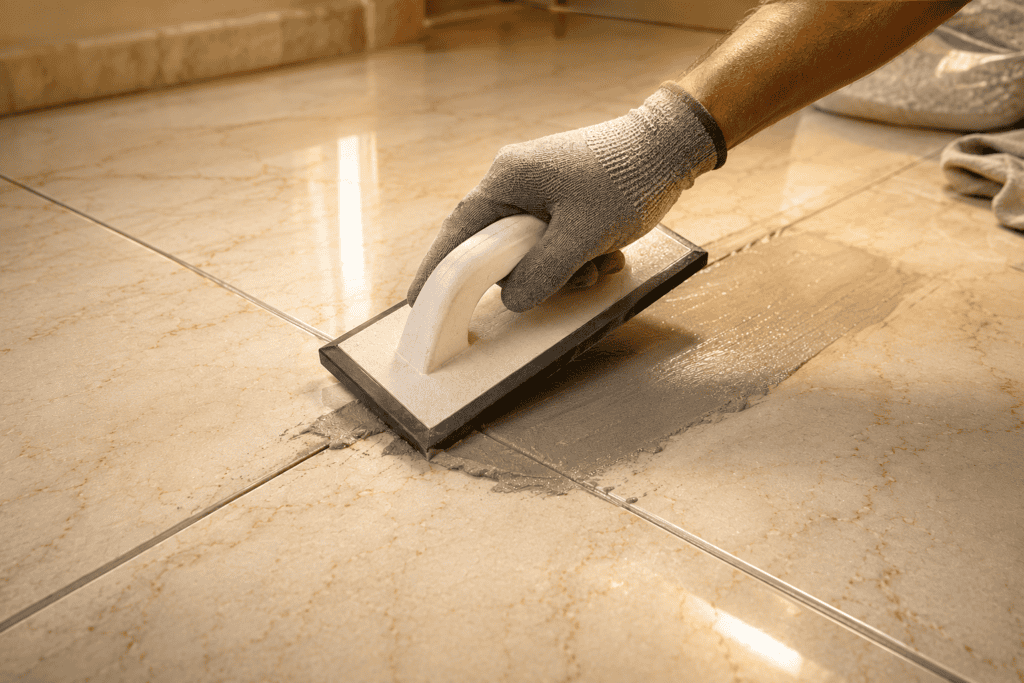
Cement grout is patient. You’ve got a long working time, cleanup is just water and a sponge, and small mistakes are easy to fix. If you’ve never grouted before, this is the one to learn on.
Epoxy grout is not patient. Once you mix the two parts, the clock starts. Modern epoxy gives you somewhere around 45 to 80 minutes of working time — and less than that when it’s hot, because heat speeds up the reaction and it can start setting in the bucket before you’ve finished. So you mix small batches and move fast.
The bigger issue is haze. Epoxy is sticky, and if you don’t sponge it off the tile faces at the right moment, it dries into a dull film that’s a nightmare to remove later. It’s especially unforgiving on textured, matte or slightly porous tiles, where it can lodge in the surface. This is exactly why some tilers quietly steer customers toward cement — not because it’s better, but because epoxy is more work to get right.
If you’re hiring someone, ask whether they’ve done epoxy before and ask for a sample. If you’re doing it yourself, epoxy is doable — but start on a small, flat area, not a whole floor.
Drying and curing time
People underestimate this and ruin good grout by getting it wet too soon. Here’s a realistic guide:
| Stage | Cement grout | Epoxy grout |
|---|---|---|
| Touch dry | A few hours | A few hours |
| Light foot traffic | ~24 hours | ~24 hours |
| Safe to get wet / first shower | ~48–72 hours | ~72 hours |
| Fully cured / harsh cleaners OK | A few days | ~7 days |
Two things to know. First, “dry” and “cured” aren’t the same — epoxy in particular can feel hard on top while it’s still curing underneath, so resist the urge to test it early. Second, these are ballpark figures. Cold, heat and humidity all shift them, so always follow the times on your specific product’s datasheet. In a humid climate or a bathroom with poor ventilation, give it longer.
Cleaning and maintenance
Day to day, epoxy is the low-effort one: a wipe with normal cleaner and it stays looking new, no sealing ever.
Cement grout needs more from you — a seal after it cures, re-sealing periodically, and gentler cleaning so you don’t wear the sealer off. It also responds better to a proper deep clean now and then.
Whichever you have, skip the harsh acidic cleaners and stiff wire brushes. Acid eats cement grout, and aggressive scrubbing damages the surface of both. A soft brush and the right cleaner does more good long-term.
A third option: pre-mixed grout
It’s not just epoxy vs cement. There’s a middle ground worth knowing about.
Pre-mixed grout comes ready to use in a tub — no mixing, usually acrylic or urethane based. It’s more water- and stain-resistant than plain cement, it doesn’t need sealing, and it’s much friendlier for DIY than epoxy. No pot-life panic, no haze drama.
The trade-offs: it usually takes longer to fully cure, it costs more than cement, and it’s not as bulletproof as true epoxy in constantly wet or high-heat spots. Many pre-mixed grouts also aren’t rated for permanently submerged areas or steam showers, so check the label.
For a backsplash, a powder-room wall or a light-duty floor, it’s a genuinely good, low-stress choice.
Can you put epoxy grout over old cement grout?
Short answer: not as a thin smear over the top. It won’t bond.
Epoxy needs real depth in the joint to key in properly. Skimming it over existing cement grout just leaves a thin layer that peels or lifts. If you want to switch to epoxy, the old grout has to be raked out to a decent depth first, then regrouted — which is real work, but doable without removing the tiles.
If your only goal is to make tired grout look better and resist stains a bit more, and the grout itself is still sound, deep-cleaning and refreshing it is a far easier path than tearing it all out.
Which grout for which room
A quick room-by-room steer:
- Showers, wet rooms, steam showers: epoxy. This is its home turf.
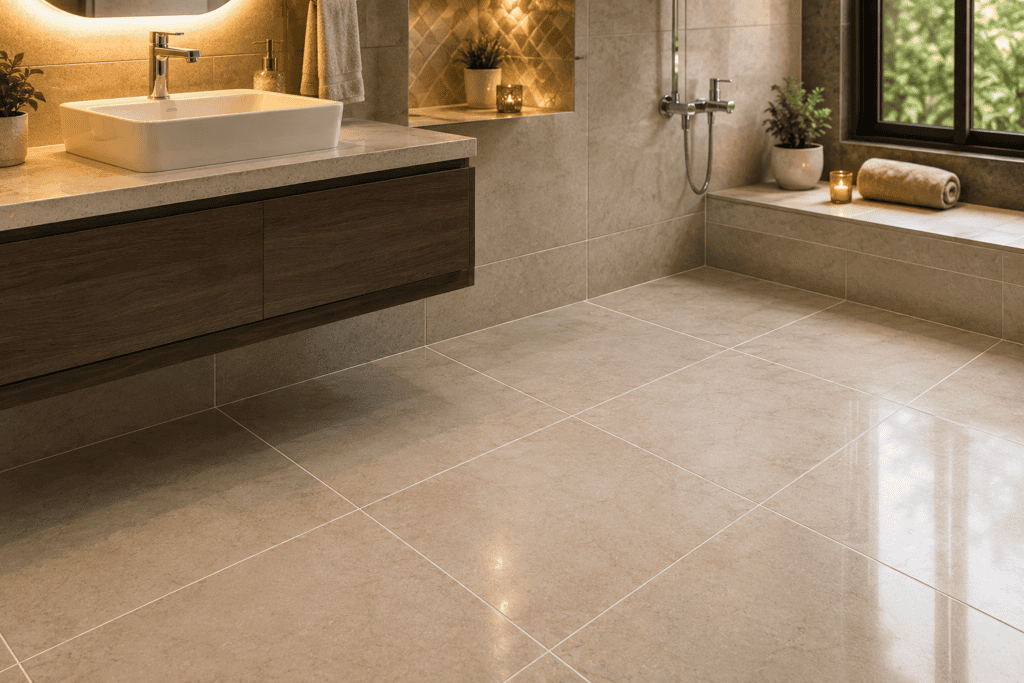
- Bathroom floors: epoxy is ideal. Good sealed cement grout is an acceptable budget option. (Pick the tile carefully too — some floor tiles handle water and grip far better than others.)
- Kitchen splashbacks and around the stove: epoxy. Grease and food acids are exactly what it shrugs off.
- Kitchen and utility floors: epoxy, or sanded cement if you’re watching the budget.
- Living room and bedroom floors (dry): cement grout is perfectly fine. Epoxy here is overkill.
- Polished marble, natural stone or glass tiles: use unsanded grout — cement or epoxy — to avoid scratching.
- Outdoors in direct sun: be cautious with epoxy. Strong UV can make some epoxy grouts yellow or darken over time, so check that the product is rated for it, or use cement.
How much grout do you need?
Buy too little and you’re back at the shop mid-job with grout drying on the tiles. Buy too much and you’ve wasted money — epoxy especially isn’t cheap.
Grout quantity depends on your tile size, the joint width and the depth of the joint. Rather than guess, run the numbers through the grout calculator before you order. It’ll tell you roughly how much to buy so you’re not left short or over.
Common mistakes to avoid
With cement grout:
- Using too much water in the mix or when wiping — it weakens the grout and leaves pale, blotchy lines and pinholes.
- Skipping the sealer, then wondering why it stained.
- Using the wrong type (sanded vs unsanded) for the joint width.
- Grouting before the tile adhesive has properly set underneath.
With epoxy grout:
- Mixing a bigger batch than you can install before it starts setting.
- Not sponging the haze off the tiles in time — the hardest mistake to reverse.
- Grouting in hot conditions, where it flash-sets on you.
- Getting it wet or using it before it’s fully cured.
- Choosing a whole shower floor as your very first epoxy attempt.
Bottom line
The epoxy grout vs cement grout decision really comes down to one question: does this area get wet or dirty?
If yes — showers, wet rooms, kitchen splashbacks, busy floors — epoxy is worth the extra money and effort. It’s waterproof, stain-proof, never needs sealing, and it still looks good years later when cement grout has gone grey.
If no — dry floors, feature walls, low-traffic rooms, or a budget job you’re doing yourself — cement grout is genuinely fine. Just match sanded or unsanded to your joint width, and seal it.
And if you want something in between that’s easy to apply, a quality pre-mixed grout splits the difference nicely.
Get the grout right and you’ll forget it exists — which, for grout, is exactly the goal.
FAQ
Is epoxy grout really waterproof? Effectively, yes. It absorbs almost no water because it’s non-porous, so it doesn’t soak up moisture the way cement grout does. It’s one of the main reasons it’s used in showers, pools and wet rooms.
Can I use epoxy grout in a shower? Yes — a shower is one of the best places for it. It resists water, soap scum and mould far better than cement grout, and it never needs sealing. Just let it fully cure before the first shower, usually around 72 hours for use and up to about a week for full strength.
Do you need to seal epoxy grout? No. Because it’s non-porous, epoxy grout doesn’t need sealing at all — that’s a big part of why it stays looking clean. Cement grout, on the other hand, does need periodic sealing.
Why do tilers still use cement grout if epoxy is better? Cement grout is cheaper, easier and more forgiving to install. Epoxy sets fast and can leave a haze on the tiles if it isn’t cleaned off at the right moment, so it takes more skill. Cement is still the right call for dry areas and budget jobs.
Can you put epoxy grout over existing cement grout? Not as a thin layer on top — it won’t bond properly. You’d need to rake out the old grout to a proper depth first, then regrout. If you just want to freshen up sound grout, cleaning and refreshing it is much easier.
Which grout is best for a bathroom floor? Epoxy is the ideal choice for a bathroom floor because it handles constant moisture and resists stains. A well-sealed cement grout works as a budget alternative, but you’ll need to maintain the seal.
Is epoxy grout worth the extra cost? In wet and high-use areas, usually yes. Grout is a small part of the total tiling cost, so paying more for epoxy in a shower or kitchen often adds only a little to the overall job for a big gain in durability. In dry rooms, it’s not worth the premium.
How long does epoxy grout take to cure before you can shower? Plan on roughly 72 hours before regular use and around 7 days for full chemical resistance, though this shifts with temperature and humidity. Always check your product’s datasheet and give it longer in a cold or humid room.
