
Two toilets, same job, very different lives.
One floats off the wall as it belongs in a hotel — clean floor underneath, nothing to mop around, tank hidden out of sight. The other sits solidly on the floor the way toilets always have: cheaper, simpler, and easy to fix when something goes wrong.
That’s the wall-hung vs floor-mounted toilet decision in a nutshell. But the right answer depends on things you can’t see from the showroom — what’s inside your wall, how you’ll fix it in ten years, and how much bathroom you’re working with.
Let’s break it down properly, so you don’t fall for the look and regret the plumbing.
What’s actually the difference?
It comes down to where the tank lives.
A floor-mounted toilet is the classic design: a bowl that connects down to the floor, with the cistern (the tank) sitting visibly on top or just behind. It’s what most homes have had for decades.
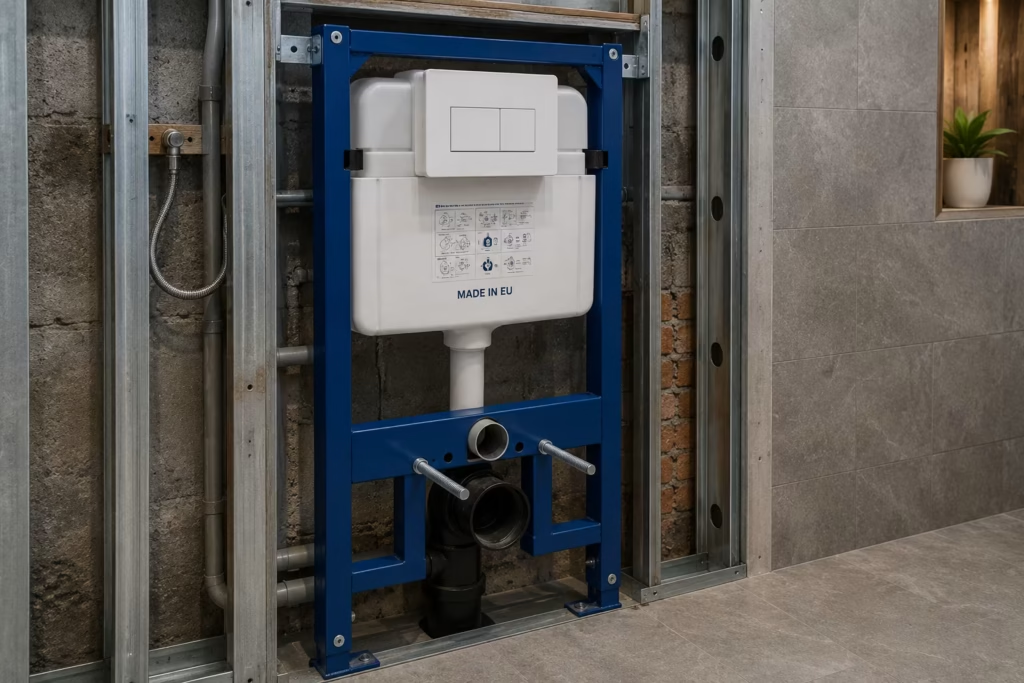
A wall-hung toilet mounts the bowl straight onto the wall, with the cistern hidden inside the wall on a steel support frame. All you see is the bowl appearing to float, plus a slim flush plate on the wall. The plumbing and tank are tucked away behind the tiles.
That single design change — hiding the tank — is what drives every difference that follows.

Wall-hung vs floor-mounted: the quick comparison
Here’s the whole debate on one screen.
| Feature | Wall-Hung | Floor-Mounted |
|---|---|---|
| Look | Modern, floating, minimal | Classic, familiar |
| Floor space | Saves space; tank hidden | Takes more room |
| Cleaning | Easy — clear floor underneath | Harder — base and crevices |
| Installation | Complex; needs in-wall frame | Simple; often DIY-friendly |
| Repairs | Trickier; tank behind wall | Easy; everything accessible |
| Height | Adjustable when fitting | Fixed (comfort models exist) |
| Cost | Higher (unit + frame + labour) | Lower to buy and install |
| Best for | Remodels, modern/small baths | Budget jobs, replacements |
Keep this in mind as we go, because the winner genuinely flips depending on your priorities.
Space and looks
This is where wall-hung toilets win hands down.
Because the tank sits inside the wall, the fixture has a smaller footprint in the room. In practical terms you claw back roughly 9 to 12 inches of visual and physical space compared to a standard toilet with its tank out in the open. In a small or narrow bathroom, that’s the difference between cramped and comfortable.
The floating look also makes a room feel bigger and less cluttered — there’s no bulky tank breaking up the space, and the clean lines read as modern and high-end.
Floor-mounted toilets are more visually “present.” The exposed tank and the base take up room and can make a small bathroom feel busier. That said, plenty of one-piece floor models look sleek and tidy in their own right, so it’s not as if they’re all bulky.
Cleaning
If you hate cleaning around a toilet, a wall-hung model is a small daily gift.
With nothing touching the floor, you can run a mop straight underneath in one pass. No awkward base to scrub around, no grimy gap behind the pedestal where dust and hair collect.
Floor-mounted toilets are the opposite. The base meets the floor in a shape that’s fiddly to clean, and the area behind and around it traps dirt. It’s not a dealbreaker — it’s just more effort, every single time.
That easy-clean advantage is one reason wall-hung units suit busy family bathrooms, even though they cost more upfront. And whichever you pick, keeping the surrounding tiles and joints clean matters just as much — our guide on how to clean grout covers the part most people neglect.
Installation: the big practical divide
Here’s where floor-mounted toilets take the lead, and it’s a big one.
A floor-mounted toilet is straightforward to fit. It bolts to the floor, connects to standard plumbing, and doesn’t need any structural work inside the wall. If you’re simply replacing an old toilet, it’s the easy path — and often a confident DIY job.
A wall-hung toilet is a bigger project. It needs a sturdy steel carrier frame anchored inside the wall to hold both the bowl and the concealed cistern, and then the wall has to be built out and tiled over the frame. That usually means it only makes sense during a proper renovation or new build — not a quick swap.
So if you’re not already tearing into the bathroom, a wall-hung toilet suddenly costs a lot more in time, labour and disruption than the fixture’s price tag suggests.
Cost
I’ll keep this honest and skip the currency figures, because prices swing wildly by brand, model and region. Prices vary — a lot. But the positioning is clear.
- Floor-mounted toilets sit in the budget-to-mid range, and they’re cheaper to install and cheaper to maintain over time.
- Wall-hung toilets are mid-to-premium, and the real cost isn’t just the bowl — it’s the concealed cistern, the carrier frame, and the extra labour to build and tile the wall.
Think of it as total cost, not sticker price. A wall-hung setup is an investment in looks, space and easy cleaning. A floor-mounted one is the sensible, economical workhorse. Neither is “better value” in the abstract — it depends on what you’re optimising for.
Will a wall-hung toilet hold my weight?
This is the number one worry, so let’s put it to bed.
Yes — a properly installed wall-hung toilet is plenty strong. The load isn’t carried by the porcelain or the wall surface; it’s carried by the steel carrier frame anchored to the structure behind it. Quality carrier frames are typically rated to hold somewhere between 500 and 880 pounds, which is far beyond any normal user.
The important catch: there’s no single universal weight limit, because the real capacity depends on the specific frame, how it’s anchored, and whether it was installed correctly. This is exactly why a wall-hung toilet is not the place to cut corners on the frame or the fitting. Buy a rated carrier, have it installed properly, and strength is a non-issue.
Floor-mounted toilets sidestep the question entirely — they’re sitting on the floor, so they’re inherently sturdy with no special reinforcement needed. For very high-traffic or heavy-use settings, that simplicity is reassuring.
Repairs and maintenance
Floor-mounted toilets win this round.
Everything you might need to fix — the flush valve, the fill valve, the connections — is right there, visible and accessible. A repair is usually quick and cheap.
With a wall-hung toilet, the cistern is behind the wall. Day-to-day and minor servicing is handled through a small access panel behind the flush plate, and good systems are designed so common parts can be reached that way. But if a major fault develops deep in the concealed tank, getting to it can mean opening up part of the wall and sourcing specific parts — more time, more money, more hassle.
The takeaway: wall-hung repairs are rarer and usually manageable, but when a big one hits, it’s a bigger job. Buying a good-quality concealed system from the start is the best insurance.
Height and accessibility
One quiet advantage of wall-hung toilets: you choose the mounting height when it’s installed.
That flexibility is genuinely useful. You can set it higher for tall adults or anyone with mobility issues, or lower in a children’s bathroom. A floor-mounted toilet comes at a fixed standard height — though “comfort height” models do exist if you want a taller seat.
If accessibility matters in your home, the ability to dial in the perfect height is a real point in the wall-hung column.
So which should you choose?
Strip away the noise and it comes down to what you value most.
Choose a wall-hung toilet if you’re already renovating, you want a modern floating look, you’re tight on floor space, you hate cleaning around a base, or you want to set a custom height. You’ll pay more and installation is involved — but the payoff is looks, space and easy upkeep.
Choose a floor-mounted toilet if you want the simpler, cheaper option, you’re replacing an existing toilet without rebuilding the wall, you want easy future repairs, or you just prefer the familiar. It’s the practical, low-fuss, get-on-with-it choice.
If you’re planning the whole bathroom from scratch, it’s worth thinking about the flooring in the same breath — our guide to the best tiles for bathroom floors pairs naturally with whichever toilet you land on.
Bottom line
Wall-hung and floor-mounted toilets do the same job, but they suit different homes and different budgets.
Wall-hung toilets are the modern, space-saving, easy-clean choice — beautiful in a renovation, with adjustable height and a floating look — but they cost more, need an in-wall frame, and are trickier to repair. Floor-mounted toilets are simpler, cheaper, sturdier by default and far easier to fix, at the cost of taking up more space and being fiddlier to clean around.
If you’re remodelling and want the premium feel, go wall-hung and don’t skimp on the frame or the fitting. If you want reliable, affordable and easy, floor-mounted has served homes well for generations for good reason.
FAQ
Is a wall-hung or floor-mounted toilet better? Neither is universally better. Wall-hung toilets are better for modern looks, saving space and easy cleaning, but cost more and are harder to repair. Floor-mounted toilets are better for budget, simple installation and easy maintenance. The right choice depends on whether you’re renovating and what you value most.
Can wall-hung toilets hold a lot of weight? Yes, when installed correctly. The weight is carried by a steel carrier frame inside the wall, not the porcelain — and quality frames are typically rated for 500 to 880 pounds. There’s no single universal limit; it depends on the frame and a proper installation, so don’t cut corners on either.
Are wall-hung toilets hard to repair? Minor servicing is done through an access panel behind the flush plate, which is manageable. But because the cistern is concealed in the wall, a major fault can require opening part of the wall, making big repairs more involved than on a floor-mounted toilet where everything is accessible.
Do wall-hung toilets really save space? Yes. Because the tank is hidden inside the wall, the fixture takes up less room — you typically gain around 9 to 12 inches compared with a standard toilet that has an exposed tank. That makes wall-hung models a strong pick for small or narrow bathrooms.
Are wall-hung toilets more expensive than floor-mounted? Generally yes, and not just the bowl. The concealed cistern, the carrier frame and the extra labour to build and tile the wall all add up. Floor-mounted toilets are cheaper to buy, cheaper to install and cheaper to maintain over time.
Can I install a wall-hung toilet in an existing bathroom? You can, but it usually means a proper renovation, since the wall has to be opened up to fit the carrier frame and concealed cistern, then rebuilt and tiled. It’s rarely a simple swap, so it makes the most sense when you’re already remodelling.
Which toilet is easier to clean? Wall-hung, clearly. With no base touching the floor, you can mop straight underneath and there are no crevices around a pedestal to trap dirt. Floor-mounted toilets take more effort to clean around the base and behind.
Are floor-mounted toilets outdated? Not at all. They remain reliable, affordable and easy to install and repair, and many one-piece models look sleek and modern. They’re simply the more traditional, practical choice, while wall-hung toilets lead on contemporary style and space-saving.
