
Which tiles are you going to buy for your bathroom floor?
It’s a bigger decision than most people realise. Stand in any tile showroom and you’re surrounded by hundreds of options that all look beautiful under the bright lights — but a bathroom floor isn’t a showroom.
It gets wet every single day, bare feet walk across it, water pools and drains, and soap and shampoo leave a slippery film. The tile that looks stunning dry can become dangerously slick when wet, or stain and wear within a couple of years if it’s the wrong type.
Choosing the right bathroom floor tile is about getting the balance right between safety, water resistance, durability, easy cleaning, and looks — in that order. This complete guide walks you through everything that matters: what makes a good bathroom floor tile, the best tile types compared with honest pros and cons, how slip resistance is actually measured, the best sizes and finishes, and a practical way to choose the right tile for your own bathroom. By the end, you’ll be able to walk into that showroom and know exactly what to look for.
What makes a good bathroom floor tile?
Before comparing tile types, it helps to understand the qualities that separate a good bathroom floor tile from a poor one. A bathroom floor faces conditions no other floor in the home does, so five things matter more than anything else.
1. Slip resistance (the most important factor)
This is the one people overlook and later regret. A bathroom floor is wet, soapy, and walked on with bare, wet feet — the exact recipe for a slip. A beautiful glossy tile that’s perfectly safe in a dry bedroom can become genuinely hazardous in a wet bathroom. Slip resistance should be your first filter, not an afterthought, especially in homes with children or elderly people. We’ll cover how slip resistance is measured (the R-rating and DCOF) in detail below.
2. Water resistance and low porosity
Bathroom floors are constantly exposed to water, so the tile must absorb as little of it as possible. Porosity — how much water a tile soaks up — is the key. A dense, low-porosity tile resists water, doesn’t stain, and won’t harbour bacteria or odours. A porous tile absorbs moisture, which can lead to staining, weakening, and mould over time. For a bathroom floor, low porosity is essential.
3. Durability
Bathroom floors take daily foot traffic, dropped bottles, and constant moisture. A good floor tile is hard enough to resist scratches, chips and cracks for years. Wall tiles can be softer because nothing walks on them, but a floor tile needs to be tough. Tile hardness is often described by the PEI rating (a scale of surface wear resistance) — for a residential bathroom floor, a mid-range rating is plenty.
4. Easy to clean
Bathrooms need frequent cleaning, so the floor should wipe clean without trapping grime. Very rough anti-slip textures grip well but can be harder to clean; very smooth tiles clean easily but can be slippery. The best bathroom floor tiles strike a balance — enough texture to be safe, smooth enough to clean easily. Grout lines matter here too: more grout means more to keep clean.
5. Looks and style
Only after the practical boxes are ticked should you choose on appearance — and the good news is that modern tiles offer safety and beauty together. Colour, pattern, finish and size all shape how the bathroom feels, and we’ll cover design choices later. But never let looks override safety on a bathroom floor.
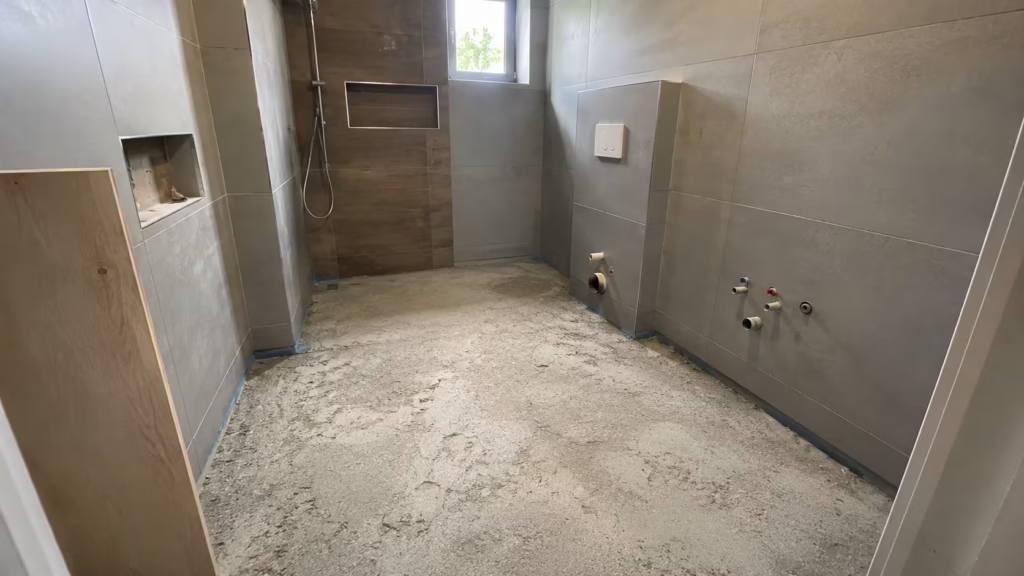
Best tile types for a bathroom floor (compared)
Not all tiles suit a bathroom floor. Here are the main options, each with honest pros and cons, followed by an overall comparison table and a verdict.
Porcelain tiles
Porcelain is widely considered the best all-round choice for bathroom floors. It’s a type of tile fired at very high temperatures, making it extremely dense, hard and almost completely non-porous.
Pros:
- Very low water absorption — excellent for wet areas
- Extremely durable and hard-wearing
- Available in anti-slip (textured/matte) finishes
- Huge range of designs, including wood-look and stone-look
- Easy to clean and stain-resistant
Cons:
- Costs more than standard ceramic
- Hard and heavy, so it needs proper fixing (and can be less forgiving to cut)
- Glossy porcelain versions are slippery — you must choose a matte/anti-skid finish
Ceramic tiles (matte / anti-slip)
Ceramic tiles are made from clay and fired at a lower temperature than porcelain. They’re more affordable and come in endless designs, but they’re softer and more porous, so for a bathroom floor you must choose a matte, anti-slip, glazed ceramic rather than a glossy one.
Pros:
- Affordable and widely available
- Huge range of colours and patterns
- Easy to cut and install
- Glazed surface resists surface water well
Cons:
- Softer and more porous than porcelain
- Glossy ceramic is slippery when wet — only matte/anti-skid suits floors
- Less durable underfoot over the long term than porcelain
Anti-skid vitrified tiles
Vitrified tiles are dense, hard and water-resistant, and when made with an anti-skid surface they’re an excellent, popular bathroom floor choice — combining strength and low porosity with the grip a wet floor needs.
Pros:
- Dense and low-porosity — great water resistance
- Strong and durable
- Anti-skid variants give good wet grip
- Wide range of designs and sizes
Cons:
- Standard polished/glossy vitrified is very slippery — only anti-skid suits floors
- Premium versions cost more
- Needs proper adhesive for a lasting bond
Natural stone (marble, granite, slate)
Natural stone brings a premium, unique look — no two tiles are identical. But stone is porous and needs care, so it’s a higher-maintenance choice for a wet bathroom floor.
Pros:
- Beautiful, premium, natural appearance
- Unique variation in every tile
- Can last a very long time if maintained
- Slate and textured stone offer natural grip
Cons:
- Porous — needs regular sealing to resist water and stains
- Higher maintenance than porcelain or vitrified
- Polished marble/granite is slippery when wet
- More expensive, and can be cold underfoot
Mosaic tiles
Small mosaic tiles (often on mesh sheets) are a strong option specifically for bathroom floors because the many grout lines dramatically increase grip — which is why they’re common in wet rooms and shower floors.
Pros:
- Excellent slip resistance (lots of grout lines = lots of grip)
- Conform to slopes and drains easily — ideal for shower floors
- Decorative and distinctive
Cons:
- Many grout lines mean more cleaning and more grout to maintain
- More labour-intensive to install
- Can feel busy over a large floor area
Comparison table: bathroom floor tile types
| Tile type | Water resistance | Slip resistance* | Durability | Maintenance | Cost |
|---|---|---|---|---|---|
| Porcelain | Excellent | Good (matte/textured) | Excellent | Low | Higher |
| Ceramic (matte) | Good | Good (matte only) | Moderate | Low | Low |
| Anti-skid vitrified | Excellent | Good | Very good | Low | Medium |
| Natural stone | Poor–moderate (needs sealing) | Varies (slate good, marble poor) | Good | High | High |
| Mosaic | Good–excellent | Excellent | Good | Higher (grout) | Medium |
*Slip resistance depends heavily on the specific finish — always check the tile’s actual rating.
The verdict: for most bathroom floors, porcelain or anti-skid vitrified in a matte finish is the best all-round choice — safe, water-resistant, durable and easy to clean. Matte ceramic is the budget-friendly option. Mosaic is ideal for shower floors and wet rooms where grip matters most. Natural stone is for those who want a premium look and accept the extra maintenance.
The slip-resistance factor explained
Because slip resistance is the single most important quality for a bathroom floor, it’s worth understanding how it’s actually measured — so you can check it rather than guess.
Two rating systems are common. The R-rating (R9 to R13) measures slip resistance on a ramp: the higher the number, the more grip. For a residential bathroom floor, look for around R10 or R11 — enough grip for wet, bare feet without being so rough it’s hard to clean. R9 is smoother (better for dry areas), while R12–R13 are very grippy (used in commercial wet areas and pool surrounds).
The other measure is the DCOF (Dynamic Coefficient of Friction). A DCOF of 0.42 or higher is the widely accepted threshold for floors that may get wet. Many tile boxes or manufacturer datasheets state the DCOF, so it’s worth checking.
The practical takeaway: don’t rely on how a tile feels dry in the showroom. Ask for its R-rating or DCOF, and for a bathroom floor choose a tile rated for wet conditions. This one check prevents the most common and dangerous bathroom-tile mistake.
Best tile size for a bathroom floor
Tile size affects both safety and looks, and there’s a genuine trade-off between small and large tiles. Neither is simply “better” — it depends on your bathroom.
The case for smaller tiles
Smaller floor tiles (and mosaics) have long been the traditional bathroom-floor choice for practical reasons:
- More grout lines mean more grip — the grout between small tiles gives the foot extra traction, making the floor safer when wet.
- They follow the slope to the drain — a bathroom floor must slope slightly so water runs to the drain. Small tiles flex around that slope easily, while large rigid tiles can’t bend to a gradient without awkward cuts.
- Ideal for shower floors — where the slope is steepest and grip matters most, small tiles and mosaics excel.
The case for larger tiles
Large-format tiles have become increasingly popular for bathroom floors too, and they bring real benefits:
- Fewer grout lines — which means less grout to clean and, crucially, less grout to trap dirt and grow mould. A large-tile floor looks cleaner for longer and is easier to wipe down.
- A more spacious, seamless look — fewer lines make a small bathroom feel bigger and more modern.
- Faster to clean — less grout means less scrubbing.
The catch is the slope: large tiles work best on the main bathroom floor where the gradient is gentle, but they’re not ideal for a steeply sloped shower floor, where smaller tiles or mosaics remain the better choice. A common modern solution is to use large tiles on the main floor and small tiles or mosaics in the shower area — getting the clean look where you can and the grip where you need it.
Size guide
| Tile size | Best use in a bathroom |
|---|---|
| Small / mosaic (up to ~100 mm) | Shower floors, sloped wet areas — maximum grip |
| Medium (200–400 mm) | Traditional all-round bathroom floor choice |
| Large (600 mm and above) | Main bathroom floors — clean, seamless, low-grout look |
Practical tip: in a small bathroom, medium or large tiles can make the space feel bigger, but keep grip in mind and reserve small tiles/mosaics for the shower zone.
Best finish: matte vs glossy
If you remember only one rule about bathroom floor finishes, make it this: glossy tiles are slippery when wet — choose matte for a bathroom floor.
Glossy tiles have a shiny, reflective surface that looks luxurious and reflects light, making a room feel brighter. But that same smoothness becomes slick the moment it’s wet, which makes glossy a poor and risky choice for a bathroom floor. Save glossy tiles for the walls, where they look great, reflect light, and never get walked on.
Matte tiles have a non-reflective, often slightly textured surface that provides far more grip underfoot when wet. They hide water spots and soap film better too. For a bathroom floor, matte (or a light anti-skid texture) is almost always the right call.
There’s also a middle option: lappato / semi-polished finishes offer some sheen with more grip than full gloss — a compromise, but for a floor, a true matte or anti-skid surface is still safest.
Colour and design tips
With the practical choices made, you can focus on how the bathroom looks. A few design pointers:
- Light colours (white, cream, light grey) make a small bathroom feel larger and brighter, but show soap scum and hair more readily.
- Mid and darker tones (grey, charcoal, stone) hide marks better and feel warm and modern, though they can make a small space feel smaller.
- Wood-look and stone-look porcelain give the warmth of timber or the elegance of marble with the practicality of porcelain — very popular for bathrooms.
- Coordinate floor and wall — a common approach is a neutral floor with a feature wall, or the same tile family on both for a seamless look.
- Mind the grout colour — a grout close to the tile colour looks seamless; a contrasting grout highlights the pattern but shows dirt more.
How to choose the right tile for your bathroom (a practical approach)
Bringing it all together, here’s a simple step-by-step way to choose:
- Start with slip resistance. Filter to tiles rated for wet floors (around R10–R11, or DCOF 0.42+). This alone rules out the unsafe options.
- Choose a low-porosity type. Porcelain or anti-skid vitrified for the best water resistance; matte ceramic for budget; mosaic for shower floors.
- Pick a matte or anti-skid finish — never glossy on the floor.
- Decide on size — large tiles for a clean main floor, small tiles/mosaics for the shower slope (or a combination).
- Then choose colour and design to suit your style.
- Confirm the details with your dealer — ask specifically for the tile’s slip rating and water absorption, not just the price and look.
What to tell your tiler: make sure the floor is laid with a slight slope towards the drain, fixed with proper tile adhesive (not just cement, especially for dense porcelain and vitrified tiles), and grouted well so no water seeps beneath. Good installation matters as much as the tile itself.
Common mistakes to avoid
- Choosing a glossy tile for the floor because it looked good dry — the number-one mistake, and a safety hazard when wet.
- Ignoring the slip rating entirely and buying on looks alone.
- Using large rigid tiles on a steep shower floor where they can’t follow the slope.
- Picking a porous tile or unsealed natural stone that stains and harbours mould.
- Forgetting the slope to the drain, leaving water pooling on the floor.
- Skipping proper adhesive for dense tiles, leading to loose or hollow tiles later.
- Over-matching everything to the same glossy finish — walls can be glossy, but the floor should not be.
How many tiles to buy, and fixing them
Once you’ve chosen your tile, order the right quantity — enough to finish with spares, but not so much that boxes sit unused. Measure your floor area, add around 10% for cutting waste and breakage, and keep a spare box from the same batch for future repairs, since tile shades vary between production lots.
Rather than working it out by hand, you can use our free tile calculator to get the exact number of boxes for your bathroom floor and walls, and our adhesive calculator to work out how much adhesive you’ll need to fix them. If you’re still deciding between tile types, our guide to vitrified vs ceramic tiles explains the difference in more depth.
The bottom line
The best tile for a bathroom floor is one that’s safe when wet, water-resistant, durable and easy to clean — and only then, beautiful. In practice that means a matte or anti-skid finish, a low-porosity tile type like porcelain or anti-skid vitrified (with matte ceramic as the budget option and mosaic for shower floors), and a size that suits your space — large tiles for a clean main floor, smaller tiles or mosaics where grip and slope matter most.
Get the slip resistance right first, choose a dense low-porosity tile, keep the floor matte, and lay it properly with a slope to the drain and the correct adhesive. Do that, and your bathroom floor will be safe, good-looking and easy to live with for many years — whichever design you fall in love with in the showroom.
Frequently asked questions
What type of tile is best for a bathroom floor? Porcelain and anti-skid vitrified tiles in a matte finish are the best all-round choice — they’re low-porosity, durable, easy to clean and grippy when wet. Matte ceramic is a good budget option, and mosaic tiles are ideal for shower floors.
Are glossy tiles okay for a bathroom floor? No — glossy tiles become slippery when wet, making them unsafe for a bathroom floor. Use matte or anti-skid tiles on the floor, and save glossy tiles for the walls.
What is the best size tile for a bathroom floor? Large tiles give a clean, low-grout look on the main floor, while small tiles and mosaics give more grip and follow the slope better on shower floors. Many bathrooms use large tiles on the main floor and small tiles or mosaics in the shower area.
How do I know if a tile is slip-resistant? Check its R-rating (aim for R10–R11 for a bathroom floor) or its DCOF value (0.42 or higher is suitable for wet floors). These are usually listed on the tile’s box or the manufacturer’s datasheet.
Is porcelain or ceramic better for a bathroom floor? Porcelain is generally better for bathroom floors because it’s denser, less porous and more durable. Matte ceramic is a fine, more affordable choice, but avoid glossy ceramic on the floor.
Do I need anti-slip tiles in the shower? Yes — the shower floor is the wettest, most slip-prone area, so anti-slip small tiles or mosaics (with plenty of grout lines for grip) are strongly recommended there.
How many tiles do I need for my bathroom floor? Measure the floor area, add about 10% for cutting and waste, and keep a spare box. Our tile calculator works out the exact number of boxes for you.
