
Walk into almost any tile showroom in India and two names come up before you’ve even sat down. Kajaria and Somany.
Ask the dealer which one is better and you usually get a shrug, or a gentle push toward whichever brand he stocks more of that month.
So let us settle the Kajaria vs Somany question properly.
This is an honest look at both, written by people who care more about your floor still looking good in fifteen years than about moving another box off the shelf. No brand loyalty. No sales pitch. Just what actually separates the two, where each one pulls ahead, and how to decide for your own rooms.
Both are giants. Both make genuinely good tiles. That part is true and worth saying upfront. But they are not the same company with two logos, and the differences matter more than most buyers realise until it is too late.
The short answer, before we dig in
If you only want the one line version, here it is.
Kajaria is India’s largest tile brand. It carries the widest catalogue and holds a slight edge on premium designs and big slab tiles.
Somany is the older house. It is strong on value, unusually strong on bathware, and its tile range runs nearly as deep.
Neither choice is a mistake. The right pick comes down to your budget, the exact tile you fall in love with, and what your local dealer actually keeps in stock.
Everything below is the detail that decides where your money is won or lost. If you are spending on a full home, it is worth ten minutes.
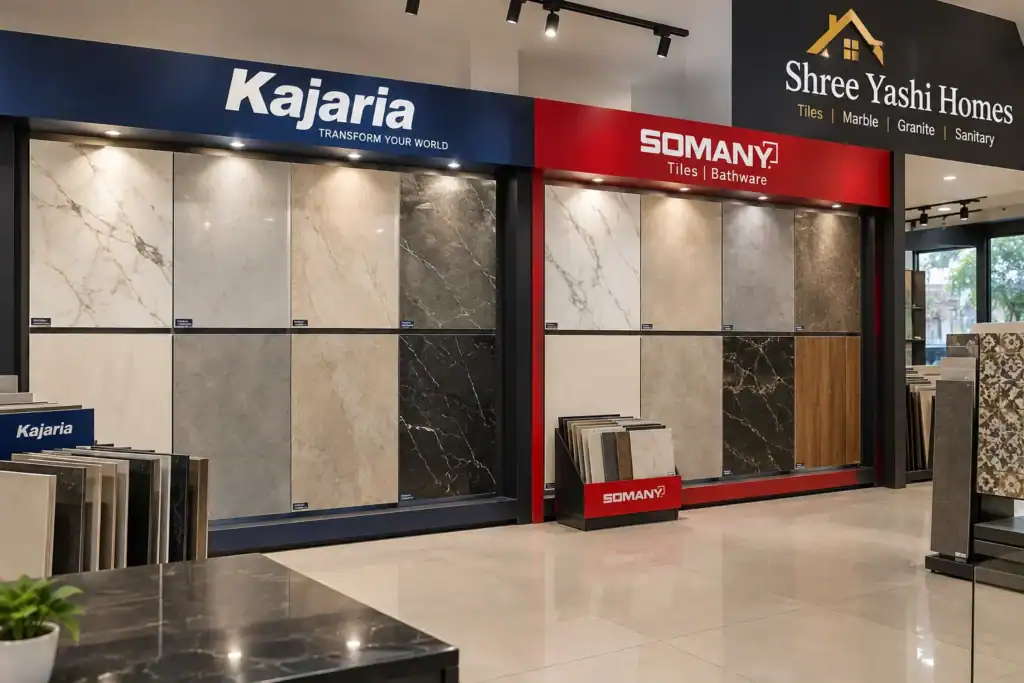
Meet the two brands
You cannot compare two companies fairly without knowing where they come from. Their history explains a lot about how they behave today.
Kajaria in short
Kajaria Ceramics began commercial production in the late 1980s from a single plant in Uttar Pradesh. From that one factory it grew into the largest maker of ceramic and vitrified tiles in the country, and one of the biggest tile companies in the world.
Today it runs a spread of plants across Uttar Pradesh, Rajasthan, Gujarat, Andhra Pradesh, Telangana and even Nepal. The company is still led by the Kajaria family, with Ashok Kajaria as chairman.
Its tile catalogue runs to more than three thousand designs across ceramic wall and floor tiles, glazed vitrified tiles and polished vitrified tiles. On the bathroom side it sells sanitaryware and faucets under its own brand, Kerovit.
The one word most people attach to Kajaria is scale. Biggest range, biggest reach, most showroom presence.
Somany in short
Somany is older. It was founded in 1968 by the late Hiralal Somany, first as a joint venture and then renamed Somany Ceramics a few years later once the family took full control. Its first factory came up in Haryana, and a second followed in Gujarat.
The company is headquartered in Noida and led today by Shreekant Somany and Abhishek Somany. It exports to dozens of countries across several continents.
Somany makes the full spread of ceramic, glazed vitrified and polished vitrified tiles. What sets it apart is how complete its bathroom offering is. Alongside tiles it makes toilets, basins, cisterns, urinals, faucets, showers, water heaters, and even tile laying products like adhesives and grouts.
If Kajaria’s word is scale, Somany’s is legacy. A slightly older name, a slightly deeper bathware line, and a strong reputation for value.
Here is the quick side by side.
| Point | Kajaria | Somany |
|---|---|---|
| Roughly how old | Late 1980s onward | Founded 1968 |
| Market position | India’s largest tile maker | One of the oldest and largest |
| Headquarters | New Delhi region | Noida |
| Tile catalogue | Very wide, 3000 plus designs | Very wide, deep value range |
| Bathware brand | Kerovit | Somany (in house) |
| Best known for | Scale and premium slabs | Value and complete bathware |
If you want to see where these two sit against the wider field of players, our ranked guide to the top tile brands in India puts them in proper context.
Product range: what each brand actually makes
For a homeowner, the range question is simple. Does the brand make the tile I want, in the size and finish I want, for the room I am tiling?
On that test, both pass easily. The overlap between the two catalogues is huge.
Both make ceramic wall tiles, which suit bathroom and kitchen walls where you do not need heavy strength.
Both make glazed vitrified tiles, usually shortened to GVT, which are the workhorse floor tiles in most Indian homes today. Marble look, wood look, stone look, plain, textured, they cover it all.
Both make polished vitrified tiles, the bright mirror finish floors many families still love for the drawing room.
Both now push large slab tiles, the very big formats that create a floor with almost no joints. This is where Kajaria tends to show off a little more, with a wider premium slab collection.
Somany matches most of this and then goes further into the bathroom itself. Its sanitaryware and fittings range is broader and more developed than Kajaria’s Kerovit line, simply because Somany has been building it for longer.
| Product | Kajaria | Somany |
|---|---|---|
| Ceramic wall tiles | Yes | Yes |
| Glazed vitrified tiles (GVT) | Yes, wide | Yes, wide |
| Polished vitrified tiles | Yes | Yes |
| Large slab formats | Yes, strong premium range | Yes |
| Sanitaryware and fittings | Via Kerovit | Deep in house range |
| Tile adhesive and grout | Limited | Yes |
The takeaway is not really about who has more. It is that for a normal home, both give you every tile type you could reasonably want. The decision has to be made on other things.
Tile quality and durability: the part that actually matters
This is where buyers get nervous, and where a lot of online comparisons wave their hands instead of giving you something useful.
Here is the honest truth. At the same specification and the same price band, the quality gap between a Kajaria tile and a Somany tile is small. Much smaller than the brand rivalry suggests.
What matters far more than the logo is the type and grade of the tile you buy from either of them.
So learn to read the two numbers that decide durability.
The first is water absorption. Lower is stronger. A true vitrified tile absorbs very little water, which is what makes it hard, dense and stain resistant. Both brands make vitrified tiles that meet the Indian standard for low absorption. A cheap ceramic tile from either brand will always be weaker than a vitrified one, so do not judge the brand, judge the tile.
The second is the abrasion rating, often called the PEI rating. It tells you how much foot traffic a floor tile can take before the surface wears. For a busy living room or a shop, you want a higher rating. For a bedroom, a lower one is fine and cheaper.
Both companies invest in surface technology too. Anti skid finishes for wet areas, stain resistant tops, and germ resistant coatings show up across both catalogues under different marketing names.
There is one practical quality point worth knowing. Larger, well established brands like these two generally give you better shade consistency from box to box than a small unbranded factory. When you are laying a big floor, tiles from the same batch should match. This is a real, everyday reason people pay a little more for a known name.
So on quality, call it a near tie. The winner is whichever one sells you the correct tile type for the room, at the right specification.
Design, finishes and trends
Looks are personal, so no comparison table can pick your favourite for you. But there are patterns worth knowing.
Kajaria tends to move fast on premium trends. Big statement slabs, book match veining that runs a marble pattern across a wall like a mirror, and the newest imported style finishes usually appear in its top collections first. If you want the showpiece foyer or a feature wall that makes visitors stop, Kajaria’s high end range gives you plenty to choose from.
Somany is no slouch on design. Its mid range GVT collections are genuinely attractive and often better value for the same visual effect. For a family doing a full home on a sensible budget, Somany frequently gives you ninety percent of the look for a friendlier price.
Both cover every current trend. Warm marble look tiles, wood plank tiles for a softer feel, matte earthy tones, glossy classics, and fluted or textured feature tiles for walls.
The smart move is to ignore the brand while you shortlist designs. Pick the looks you love from both, lay the samples on the floor in daylight, and only then check price and specification.
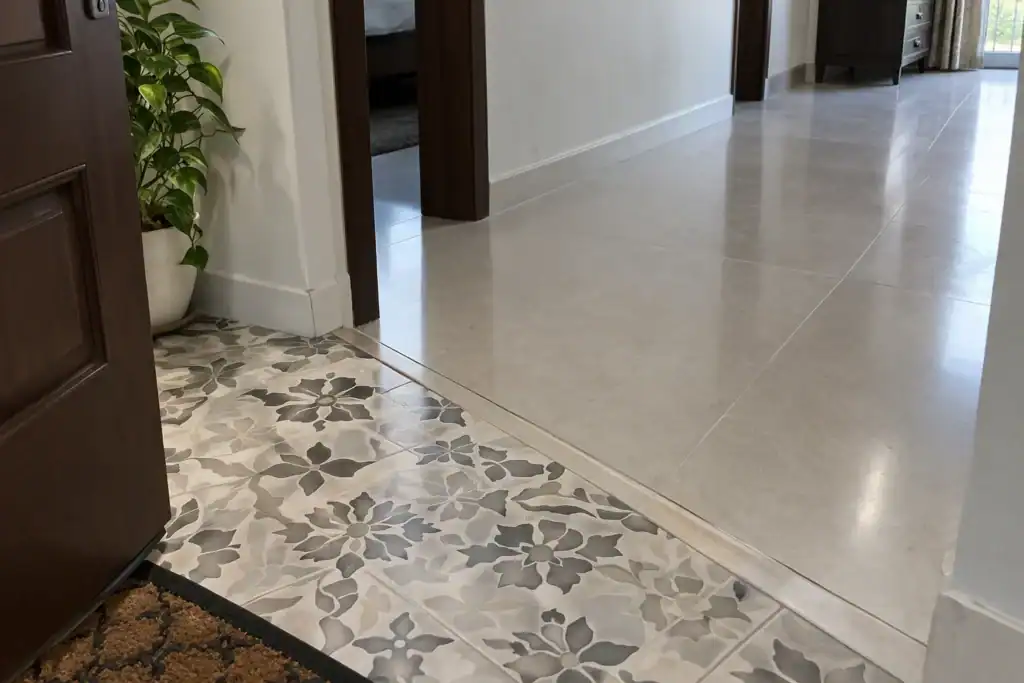
Pricing and value
We will not put figures here, because tile prices move with size, collection, finish and your city, and any number would be out of date within months.
But the positioning is stable and worth knowing.
For two tiles of similar type, size and finish, Kajaria usually sits a notch above Somany on price. You are partly paying for the design freshness and the biggest brand name in the category.
Somany, for the same room and the same look, will often come in a little cheaper. That is its core appeal in the value and mid segments.
Below both of them sit the unbranded tiles from Morbi in Gujarat, which can be a fair bit cheaper again. Those can be good buys if you know exactly what to check, but you lose the batch consistency and after sales comfort a big brand gives you.
Here is a simple way to think about where each one earns its keep.
| Budget mindset | Better fit |
|---|---|
| Lowest price, willing to inspect carefully | Unbranded, or Somany value range |
| Best balance of price and peace of mind | Somany, and Kajaria’s standard ranges |
| Premium look, statement spaces, latest slabs | Kajaria’s high end collections |
Value is not the same as cheap. A slightly costlier tile that lasts fifteen years with no fuss is better value than a bargain floor you regret in three.
Availability, dealers and after sales
This is the quiet factor that decides a lot of real purchases, and it rarely gets discussed.
Kajaria has the widest dealer and showroom network in the country. In most towns you will find a Kajaria stockist without much trouble, and you will usually find the design you want in stock or quickly arranged.
Somany also has strong national reach, especially in the north and in metros, though in some smaller markets Kajaria’s spread is a touch wider.
Why does this matter beyond convenience? Two reasons.
First, replacements. If a tile cracks in a few years, or you extend a room later, you want to buy a matching tile from the same series. A brand with wide, lasting distribution makes that far more likely.
Second, batch matching. Ordering from a dealer who moves a lot of stock means you are more likely to get all your tiles from one production batch, so the shades line up on the floor.
Whatever brand you choose, the adhesive holding those tiles down matters just as much as the tile itself. A beautiful tile fixed with weak or wrong adhesive still lifts and pops later. Before you fix anything, read our guide to the top tile adhesive brands so the floor stays put.
Bathware: Kerovit vs Somany
Since both brands sell more than tiles, a quick word on the bathroom, because many families buy tiles and fittings together.
Somany has the deeper, longer running bathware story. Its sanitaryware and fittings line is broad and well developed, covering toilets, basins, cisterns, faucets, showers, and even smart sensor products and water heaters. If you like the idea of matching your tiles and your bathroom fittings from one brand under one bill, Somany makes that easy.
Kajaria sells bathware under the Kerovit name. It is capable, well made and growing, but it is a younger line than Somany’s and the range is not quite as wide.
So if bathware is a real part of your project and you want everything under one roof, Somany has the edge here. If you mainly care about tiles and see fittings as a separate buy, this section will not swing your decision.
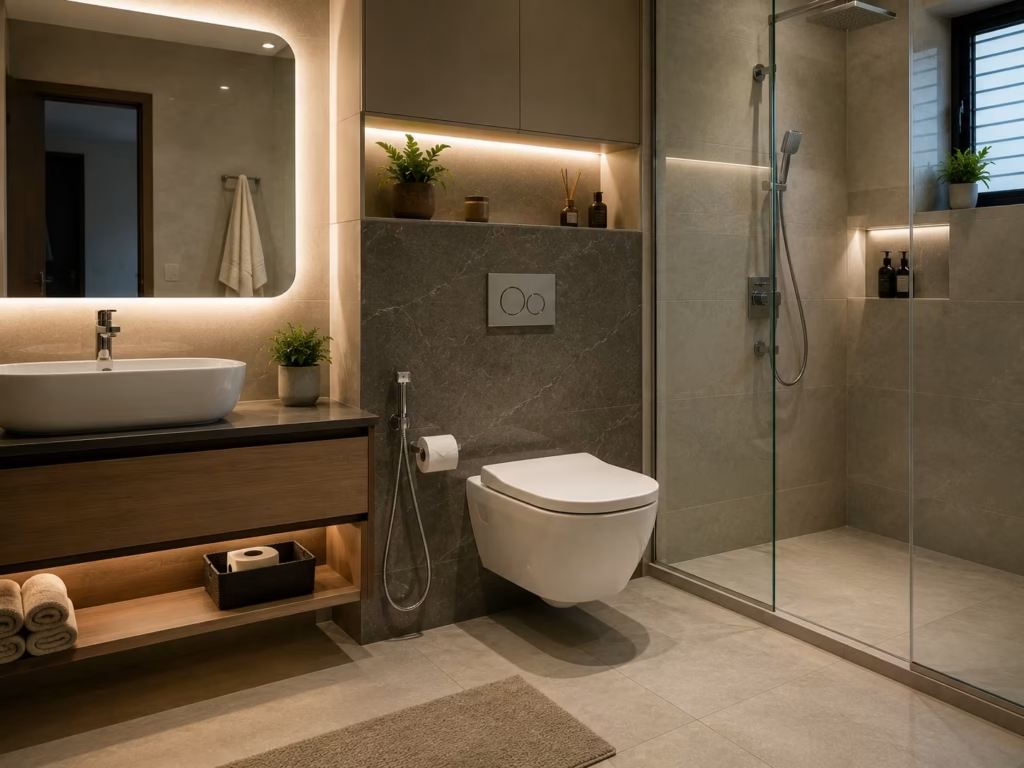
Warranty and what it really covers
Both companies stand behind many of their ranges with a manufacturer warranty. The exact terms change by product and collection, so always ask for the warranty on the specific tile you are buying, and keep the bill.
Just be clear about what a warranty is for. It covers manufacturing defects, not accidents, not misuse, and not bad installation.
Most tile complaints in Indian homes are not tile faults at all. They are laying faults. Hollow spots under the tile, wrong adhesive, no expansion gaps, or moisture trapped below. No warranty from either brand will save you from a bad tiling job.
That is why choosing a careful tiler and the right fixing method often protects your floor more than the brand name printed on the box.
Common myths buyers fall for
A few beliefs cost people money on every tile purchase. Clearing them up is more useful than any brand cheerleading.
Myth one, a branded tile is unbreakable. It is not. A tile is fired clay and glaze. Drop a heavy steel vessel on any tile, from any brand, and it can chip or crack. Branding buys you consistency and support, not indestructibility.
Myth two, the bigger brand is automatically better for every room. Wrong. A high grade Somany vitrified tile beats a low grade Kajaria ceramic for a busy floor, and the other way round too. Room and grade decide this, not brand rank.
Myth three, shade variation means you got a defective batch. Some slight variation is natural in tiles, and premium ranges sometimes build it in on purpose for a natural stone effect. Dry lay a few boxes before fixing so you know what to expect.
Myth four, price maps one to one onto quality. A costlier tile is often a newer design or a bigger format, not a stronger one. Two tiles at different prices can have the same durability. Check the specification, not just the sticker.
How to actually choose between them
Forget the rivalry for a minute. Here is the process that gets you the right floor from either brand.
Match the tile type to the room first. Vitrified for floors and busy areas. Ceramic is fine for walls. Anti skid finishes for bathrooms, balconies and any wet zone.
Check the two numbers. Low water absorption for strength, and a suitable abrasion rating for how much traffic the floor will take.
Shortlist by looks from both brands together, then compare the finalists on price and specification side by side.
Ask three showroom questions. Is this the current batch, can I get a matching replacement later, and what is the warranty on this exact series.
Confirm local stock and spares before you commit. A design that is discontinued or hard to reorder is a headache waiting to happen.
Buy a little extra. Order roughly five to ten percent more than your room needs, to cover cutting wastage and future repairs from the same batch.
Once you have your tile picked and your room measured, work out exactly how many boxes to order, and how much wastage to budget for, with our free tile calculator. It saves you from the classic mistake of running short halfway through the job.
Bottom line
So, Kajaria or Somany?
There is no single winner, and anyone who tells you otherwise is usually selling one of them.
Kajaria gives you the biggest range, the widest availability and the strongest premium and slab collections. If you want the latest designs, statement spaces, and a brand you will find in almost every town, it is a safe and satisfying choice.
Somany gives you strong value, a tile range nearly as deep, and clearly the better bathware if you want tiles and fittings from one house. For a full home on a sensible budget, it is often the smarter spend.
For most families, the honest answer is this. Decide the tile type each room needs, shortlist the designs you love from both brands, then let price, local stock and specification make the final call. Do that, and you will get a floor you are happy with whichever logo ends up on the box.
The brand matters far less than the tile, the fixing and the tiler. Get those three right and you win either way.
FAQ
Is Kajaria better than Somany?
Not outright. Kajaria is larger with a wider range and stronger premium slabs, while Somany offers better value and deeper bathware. For a given room and budget, the better tile is usually the one with the right specification, not the bigger brand name.
Which is cheaper, Kajaria or Somany?
For tiles of similar type, size and finish, Somany usually sits a little lower on price, which is a big part of its appeal in the value and mid segments. Kajaria tends to price a notch higher, partly for its design freshness and market leading brand name. Prices vary by collection and city, so always compare the exact tiles.
Which brand is best for bathroom tiles?
Both make suitable bathroom tiles, so choose an anti skid finish for the floor and a good ceramic or vitrified tile for the walls. If you also want matching sanitaryware and fittings from the same brand, Somany’s bathware range gives you more to work with.
Are Somany tiles good quality?
Yes. Somany is one of the oldest and largest tile makers in India, and its vitrified ranges meet the same national standards as other major brands. As with any brand, the quality depends on buying the correct grade for the room rather than the cheapest option on the shelf.
Which is better for kitchen floor tiles?
For a kitchen floor you want a hard, low absorption vitrified tile with a finish that is not slippery when wet. Both brands offer this, so pick on design, price and grip rather than brand alone. Matte or lightly textured vitrified tiles tend to work best underfoot in a kitchen.
Do Kajaria and Somany offer a warranty?
Both back many of their ranges with a manufacturer warranty, though the terms change by product, so confirm the warranty on your exact tile and keep the invoice. Remember that a warranty covers manufacturing defects, not damage from misuse or poor installation.
Is Kajaria or Somany better for large format tiles?
Both make large formats and big slabs, but Kajaria generally carries a wider and more developed premium slab collection. If a near seamless floor with very few joints is your goal, start with Kajaria’s high end range, then check whether Somany has a similar design at a friendlier price.
Are branded tiles worth it over local unbranded tiles?
Unbranded tiles from hubs like Morbi can be cheaper, but with a known brand you get better batch to batch shade consistency, easier replacements later, and after sales support. If you can inspect tiles carefully and do not mind the risk, local tiles can save money. If you want peace of mind on a big floor, a brand like Kajaria or Somany earns its small premium.
