
Walk into any modern kitchen, bathroom or showroom lately and you’ll notice tiles are getting bigger — much bigger. The small squares and busy grout lines of the past are giving way to large, smooth tiles that stretch across floors and walls with barely a joint in sight. These are large-format tiles, and they’ve become one of the most popular choices in modern interiors.
But bigger isn’t automatically better. Large-format tiles create a stunning, seamless look — yet they come with real demands, especially when it comes to installation. Choose them for the wrong space, or lay them the wrong way, and the result can disappoint.
So this guide covers everything you need to decide: what large-format tiles actually are, their honest pros and cons, where they work best, where they don’t, and what a proper installation really involves. By the end, you’ll know whether they’re the right choice for your project.
What counts as a “large-format” tile?
There’s no single official rule, but the tile industry broadly agrees on a simple definition: a large-format tile is any tile with at least one edge measuring around 15 inches (roughly 400–600 mm) or more.
That covers a wide range. Common large-format sizes include 300×600 mm (12×24 in), 600×600 mm (24×24 in), 600×1200 mm (24×48 in), and larger. At the extreme end, huge porcelain slabs are now made up to around 1600×3200 mm — big enough to cover a whole wall or countertop in a single piece.
One detail surprises people: long, narrow wood-look planks count too. A plank tile that’s only 6 inches wide but 24, 36 or 48 inches long is considered large-format, because one edge is well over the threshold. So “large format” isn’t only about big squares — it’s about any tile with a long side.
It’s worth knowing that the goalposts have moved over the years. Decades ago, a 12×12 inch tile was considered large. Today, that’s a standard size, and “large format” means something considerably bigger. The trend has been steadily toward larger and larger tiles, with no real limit in sight.
Why large-format tiles became so popular
The appeal comes down to one main thing: fewer grout lines.
Because each tile covers more area, you need far fewer of them, which means far fewer joints across a floor or wall. That single fact drives most of the benefits people love — a cleaner look, a more spacious feel, and less grout to keep clean. In a world where surveys show most homeowners want minimal or no visible grout, large-format tiles deliver exactly that.
Add in advances in porcelain manufacturing — which allow big, thin, strong, beautifully printed tiles that can mimic stone, concrete, marble or wood — and it’s easy to see why they’ve moved from hotel lobbies and commercial spaces into ordinary homes.
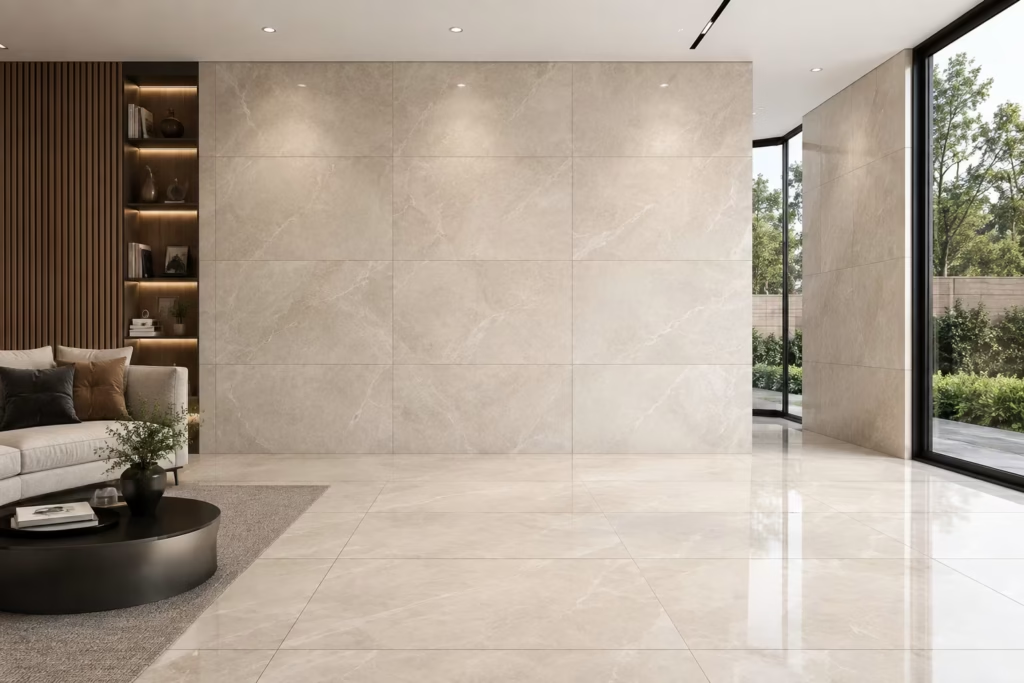
The pros of large-format tiles
Here’s what makes them worth considering.
A seamless, spacious look
This is the headline benefit. With fewer grout lines interrupting the surface, the eye sees a smooth, continuous expanse rather than a busy grid. This makes a room feel larger, calmer and more open — which is why large-format tiles are so effective in small bathrooms and compact spaces, not just big ones.
Easier to clean and less grout to maintain
Grout is the part of a tiled surface that stains, discolours and harbours grime and mould. Fewer grout lines means less grout to scrub and maintain, and a tile face is always easier to wipe clean than a grout joint. For busy households and wet areas, this is a genuine, everyday advantage.
Fewer joints for mould and dirt
Beyond just cleaning, fewer joints mean fewer places for water, mould and dirt to collect — a real benefit in bathrooms, kitchens and other damp areas where grout lines are the weak point.
Faster to lay, with fewer cuts
Because each tile covers more ground, a room needs fewer pieces, so the field goes down faster once installation is underway. There are also fewer cuts at edges — often just one large tile to trim rather than several small ones — which can mean cleaner edges around the room.
A modern, premium appearance
Large-format tiles simply look contemporary and high-end. They give floors and walls a sleek, architectural quality, and with modern printing they can convincingly imitate expensive marble or natural stone at a fraction of the cost and upkeep.
Durable and versatile
Made mostly from dense porcelain, large-format tiles are hard-wearing and water-resistant, and they work across many settings — floors, feature walls, shower surrounds, countertops and even outdoor areas with the right product.
The cons of large-format tiles
Now the honest drawbacks — most of which come down to installation.
They demand a very flat surface
This is the big one. Tiles don’t bend, so a large tile needs a very flat substrate beneath it. Where a small tile can ride over minor dips in a floor, a large tile can’t — any unevenness in the base shows up as a problem. Industry guidance calls for the surface to be flat to within about 1/8 inch over 10 feet, which is far stricter than for small tiles. An uneven floor usually has to be levelled first, adding cost and time.
The risk of lippage
Closely related is lippage — where the edge of one tile sits higher than the tile next to it, creating an uneven ridge you can see and feel (and even trip on). Because large tiles have long edges, even a tiny height difference becomes very noticeable. Preventing lippage takes a flat base, careful setting, and usually a tile levelling system (clips and wedges) during installation.
They must be back-buttered
For a large tile to bond properly, the adhesive needs to cover nearly the whole back of the tile — professionals aim for 90–95% or more coverage. Combing adhesive on the floor alone often isn’t enough, so installers back-butter the tile: spreading a layer of adhesive on the back of the tile as well as on the substrate. Skip this, and you get hollow voids underneath that lead to cracking or the tile coming loose later. (This is a common cause of tiles failing — see our guide to why tiles pop up.)
Heavy, fragile and hard to handle
Big tiles are heavy and, despite their strength once laid, surprisingly fragile to move because of their size. They can crack or chip during handling, and the largest slabs need suction lifters and two or more people to position safely. This makes them harder and slower to work with before they’re down.
Harder to cut
Cutting a large tile cleanly takes the right tools and skill. A big porcelain tile is not something to trim with a basic cutter — it needs proper equipment and a steady, precise hand, especially for cut-outs around plumbing.
Professional installation is usually recommended
Add all of the above together — flat-substrate demands, lippage control, back-buttering, careful handling, precise cutting — and large-format tiles are much harder to install well than standard tiles. For anything beyond a small, simple area, professional installation is strongly recommended. That extra labour also means a higher installation cost, even if the tiles themselves are competitively priced.
Not ideal everywhere
Finally, big tiles aren’t right for every spot. On a steeply sloped shower floor, for example, large rigid tiles can’t follow the gradient to the drain, so small tiles or mosaics remain the better choice there.
Pros and cons at a glance
| Pros | Cons |
|---|---|
| Seamless, spacious look | Needs a very flat substrate |
| Fewer grout lines to clean | Risk of lippage (uneven edges) |
| Less mould and dirt in joints | Must be back-buttered for full bond |
| Faster to lay, fewer cuts | Heavy and fragile to handle |
| Modern, premium appearance | Harder to cut cleanly |
| Durable and versatile | Professional install usually needed |
| Fewer pieces for large areas | Not ideal for steep shower floors |
Best uses for large-format tiles
Large-format tiles shine in the right settings. They’re an excellent choice for:
- Open-plan living areas and kitchens — a continuous large-format floor unifies the space and makes it feel expansive.
- Hallways and entrances — they make a strong, seamless first impression.
- Bathroom floors and walls — fewer grout lines mean a spa-like, easy-clean finish; large tiles make even a small bathroom feel bigger.
- Feature walls — a dramatic, low-maintenance alternative to paint or wallpaper that simply wipes clean.
- Walk-in showers (walls) — big wall tiles give showers a sleek, seamless look.
- Living rooms and bedrooms — for a calm, modern, spacious floor.
Where to think twice before using them: steeply sloped shower floors (use small tiles/mosaics for grip and drainage), very uneven old floors that would need extensive levelling first, and tight spaces full of cuts and obstacles where the large size offers little benefit.
What proper installation involves
If you’re set on large-format tiles, understanding what a good installation requires will help you get it right and know what to expect from your installer. The essentials are:
- A flat, sound substrate — levelled first if needed, because large tiles won’t hide dips.
- The right adhesive — a large-format or medium-bed adhesive designed for full coverage under big tiles.
- Back-buttering — adhesive on the back of the tile as well as the floor or wall, for near-full coverage and no hollow voids.
- A tile levelling system — clips and wedges to keep edges flush and prevent lippage.
- Correct grout joints — large tiles have a slight natural curve, so joints can’t be too tight; the right joint width prevents lippage.
- Careful handling and cutting — proper lifting and cutting tools to avoid breakage.
- Expansion gaps — a perimeter gap and movement joints, since large rigid areas need room to move.
Get these right and large-format tiles reward you with a beautiful, durable, low-maintenance surface. Cut corners on any of them — especially the flat base and full adhesive coverage — and you risk lippage, hollow spots and cracked or lifting tiles down the line. To make sure a job has enough adhesive for that all-important full coverage, our tile adhesive calculator can work out how much you’ll need, and our tile calculator tells you how many tiles or boxes to buy for your area.
The bottom line
So, what are large-format tiles? They’re tiles with at least one long edge of roughly 15 inches or more — from 12×24 inch planks up to room-sized slabs — and their big appeal is a seamless, spacious, low-grout look that’s easier to keep clean and feels distinctly modern.
Their trade-off is installation. Large-format tiles are less forgiving than small ones: they need a very flat base, full adhesive coverage with back-buttering, careful handling, and usually a professional to lay them well. Get that right, and few things transform a space like a large-format floor or wall. Get it wrong, and the very size that makes them beautiful also makes their flaws show.
If you love the clean, open look and you’re prepared to invest in proper installation, large-format tiles are one of the best choices you can make. Just choose the right space for them, insist on a flat base and full coverage, and they’ll look stunning for decades.
Frequently asked questions
What size is considered a large-format tile? Generally, any tile with at least one edge of around 15 inches (about 400–600 mm) or more. This includes big squares like 24×24 inches, rectangles like 12×24 inches, long wood-look planks, and huge slabs up to around 5×10 feet.
Are large-format tiles harder to install? Yes. They need a very flat substrate, full adhesive coverage with back-buttering, careful handling, precise cutting, and usually a tile levelling system to prevent lippage. For anything beyond a small area, professional installation is recommended.
What is lippage? Lippage is when the edge of one tile sits higher than the tile next to it, creating an uneven ridge. It’s more noticeable with large tiles because of their long edges, and it’s prevented with a flat base, careful setting, and a tile levelling system.
Do large-format tiles need to be back-buttered? Usually yes. Back-buttering — spreading adhesive on the back of the tile as well as the substrate — ensures near-full coverage with no hollow voids underneath, which is essential for large tiles to bond properly and not crack or lift.
Can you use large-format tiles in a small bathroom? Yes, and they often work very well. Fewer grout lines make a small bathroom feel bigger and more open, and there’s less grout to clean. Just use smaller tiles or mosaics on a sloped shower floor, where big tiles can’t follow the drainage slope.
Are large-format tiles more expensive? The tiles themselves are competitively priced, but installation usually costs more because it requires more preparation, skill, special tools and often professional labour. Factor the installation into your budget, not just the tile price.
What’s the best material for large-format tiles? Porcelain is the usual choice, because it’s dense, strong, low in water absorption and dimensionally stable — important qualities for big tiles, especially on floors. Natural stone and ceramic large-format tiles also exist and suit certain uses.
